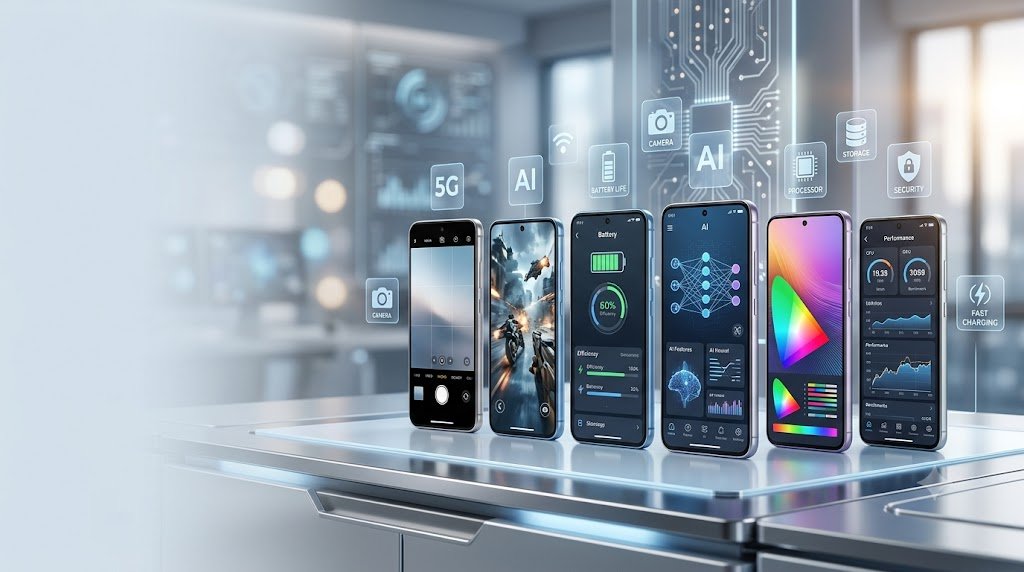
If you’re looking for a smartphone buying guide 2026 that actually makes sense, you’re in the right place. Last year, I made a mistake almost everyone makes at least once — I bought a phone because it “looked nice” and had a big number next to the camera megapixels…
Buying a smartphone in 2026 isn’t as simple as it used to be. There are more brands, more models, more confusing specs, and marketing language designed to make every phone sound like the best one ever made. But once you understand what actually matters (and what’s just marketing noise), choosing the right phone becomes so much easier.
This guide is written the way I wish someone had explained it to me before my last purchase — simple, honest, and based on real everyday use, not just spec sheets.
Why This Smartphone Buying Guide 2026 Matters
Here’s the thing — most of us keep a phone for two to three years, sometimes longer. It’s not just a device anymore; it’s your camera, your wallet, your work tool, your entertainment system, and often the first and last thing you look at every day.
A wrong choice doesn’t just waste money. It creates daily frustration — slow apps, poor photos in low light, a battery that can’t survive a full day, or storage that’s always “almost full.” On the other hand, the right phone, even a budget one, can genuinely make your daily life smoother.
So before jumping straight to “which phone should I buy,” it helps to slow down for a minute and think about how you’ll actually use it.
Set Your Budget First — Best Phones by Price Range
I always tell people: decide your budget before you start browsing, not after. Otherwise, you’ll end up comparing phones from completely different price categories and confusing yourself even more.
Budget range phones: These are perfect if you mainly use your phone for calls, messaging, social media, and basic browsing. In 2026, budget phones have gotten seriously good — smooth performance for everyday tasks, decent cameras, and battery life that easily lasts a full day. You don’t need to spend a fortune to get a reliable phone anymore.
Mid-range phones: This is where most people find the sweet spot. Mid-range phones today often include features that used to be “premium only” just a couple of years ago — better cameras, faster charging, and smoother multitasking. If you use your phone a lot for content, photos, or work, this range usually gives you the best value for your money.
Flagship/premium phones: These are for people who want the absolute best — top-tier cameras, the fastest processors, premium build materials, and the latest features first. Worth it if you actually use those advanced features daily (like professional photography or heavy multitasking). If not, you might be paying extra for things you’ll rarely touch.
Camera Quality — What Actually Matters
This is probably the most misunderstood part of buying a phone. A lot of people (myself included, once upon a time) assume more megapixels automatically means better photos. That’s not entirely true.
Megapixels vs real photo quality: Megapixel count is just one small part of the picture. What really affects photo quality is the sensor size, the software processing, and how well the phone handles light. A phone with a slightly lower megapixel count but better processing can easily take better-looking photos than one that just brags about a bigger number.
Best camera phones for photography lovers: If photography is a big part of why you’re buying a phone, look for phones known for strong photo processing, good zoom capability, and consistent color accuracy — not just the highest megapixel spec.
Best low-light camera phones: This is where the real difference shows. Some phones struggle badly in dim lighting or night shots, while others handle it beautifully. If you take a lot of photos at night, events, or indoors, prioritize this feature specifically — check sample photos, not just the spec sheet.
Battery Life & Charging — What to Look For
Nothing ruins a good phone experience faster than a battery that can’t make it through the day.
Battery capacity explained simply: Battery capacity is measured in mAh (milliamp hours) — basically, think of it as the size of the fuel tank. But capacity alone doesn’t tell the whole story. How the phone manages power (software optimization) matters just as much as the battery size itself.
Fast charging vs battery health: Fast charging is incredibly convenient, especially when you’re in a rush. But charging too fast, too often, can slightly affect long-term battery health over years of use. If you plan to keep your phone for a long time, look for a balance — decent fast charging along with good battery health management features.
Best long-battery-life phones: If you’re someone who’s constantly on your phone — streaming, gaming, working — look specifically for phones known for all-day battery life under heavy use, not just “on paper” battery numbers.
Performance & Storage — How Much Do You Really Need?
This section confuses a lot of first-time buyers, so let’s simplify it.
RAM explained in simple words: Think of RAM as your phone’s short-term memory — it decides how many things your phone can handle smoothly at once. More RAM means smoother multitasking, especially if you like switching between apps constantly.
Storage — who needs what:
- Light users (calls, messages, social media): lower storage is usually fine
- Regular users (photos, apps, some videos): mid-range storage works comfortably
- Heavy users (lots of videos, games, work files): higher storage saves you from constantly deleting things later
A good rule of thumb: buy slightly more storage than you think you need right now. Storage needs almost always grow over time, and you can’t upgrade it later on most phones.
Gaming phones vs everyday-use phones: If gaming is a priority, look for phones with strong cooling systems and higher-performance processors. For everyday use, you don’t need to overspend on gaming-focused specs you won’t fully use.
iPhone vs Android — Which One Should You Choose?
This debate isn’t going away anytime soon, and honestly, there’s no universally “correct” answer — it depends on you.
iPhone strengths: smooth software experience, longer software update support, strong ecosystem if you already use other Apple devices, generally excellent camera consistency.
Android strengths: more variety across price ranges, more customization options, often faster innovation in specific features like charging speed or camera hardware, more flexibility overall.
Simple way to decide: if you already use other Apple products and like a simple, consistent experience, iPhone makes sense. If you want more variety, customization, and options at every price point, Android gives you more freedom.
Best Smartphones for Specific Needs
Best phone for students: Look for solid battery life, decent performance for note-taking and study apps, and a price that doesn’t stretch a student budget too much.
Best phone for content creators: Prioritize camera quality, video stabilization, and storage — content creators generate a lot of photos and videos that eat up space fast.
Best phone for business use: Battery life, security features, and smooth multitasking matter most here, since business use often means constant emails, calls, and app-switching throughout the day.
Best phone for elderly users: Bigger screens, simple interface options, larger text support, and strong battery life make a huge difference in daily comfort and ease of use.
Common Mistakes People Make When Buying a Phone
Let me save you from some mistakes I’ve personally made or watched friends make:
- Buying based on megapixels alone — as we covered, it’s not the full picture
- Ignoring software update support — a phone that stops getting updates quickly becomes outdated and less secure
- Overspending on features you won’t use — like ultra-high refresh rate screens if you barely game or watch high-action video
- Underestimating storage needs — most people need more storage than they initially think
- Not checking real battery reviews — official numbers rarely match real daily use
- Choosing based on trends instead of needs — just because a phone is popular doesn’t mean it fits your lifestyle
Frequently Asked Questions
How much should I spend on a smartphone in 2026? It depends on your usage. Light users can get a great experience from budget phones, while heavy users benefit more from mid-range or flagship options where the extra cost translates into daily convenience.
Is a higher megapixel camera always better? No. Sensor quality and software processing matter more than the megapixel number alone. Always check real sample photos before deciding based on camera specs.
How much storage do I actually need? For light use, lower storage is fine. For regular photo/video use or gaming, it’s safer to go for higher storage, since you can’t expand it later on most phones.
Should I wait for the next phone model to release? If your current phone still works well for your needs, there’s rarely a strong reason to rush an upgrade. New models get released constantly, and waiting for “the next one” can become an endless cycle.
Is it better to buy iPhone or Android? Neither is universally better — it depends on your existing devices, budget, and personal preference for simplicity versus customization.
Conclusion
Buying a smartphone doesn’t have to be stressful or confusing. Once you know your budget, understand what actually matters for your daily use — camera, battery, performance, and storage — and avoid the common mistakes most people make, choosing the right phone becomes a lot simpler.
Take your time, compare based on real needs rather than trends, and remember: the “best” phone isn’t the most expensive one — it’s the one that fits how you actually live your daily life.That’s the complete smartphone buying guide 2026 you need — take your time, compare based on real needs…
If you want more detailed help, check out our other guides comparing specific phones, budget picks under different price ranges, and camera-focused smartphone reviews.