
The right tool can make a difficult job much easier. Anyone who has tried to remove a stubborn bolt, cut a piece of wood without the right saw, or repair something with a poor-quality screwdriver knows how much difference a good tool can make.
The best tools of 2026 are not limited to large power tools. This year’s tool market includes compact cordless equipment, improved hand tools, brushless motors, better battery systems, smart measuring devices, and early examples of AI moving from software into physical equipment.
That does not mean every new tool is worth buying. Some products add useful improvements, while others mainly add features that most people will never use. For that reason, it is better to look at what a tool actually does, who needs it, and whether the improvement is worth the price.
Here are 20 tool categories and newer products that stand out in 2026.
What Makes the Best Tools of 2026 Different?
Tool development has changed noticeably over the last few years. Cordless equipment is now capable of handling jobs that once required gasoline or corded machines. Brushless motors are common across many product lines, while manufacturers are also making tools smaller without giving up as much performance.
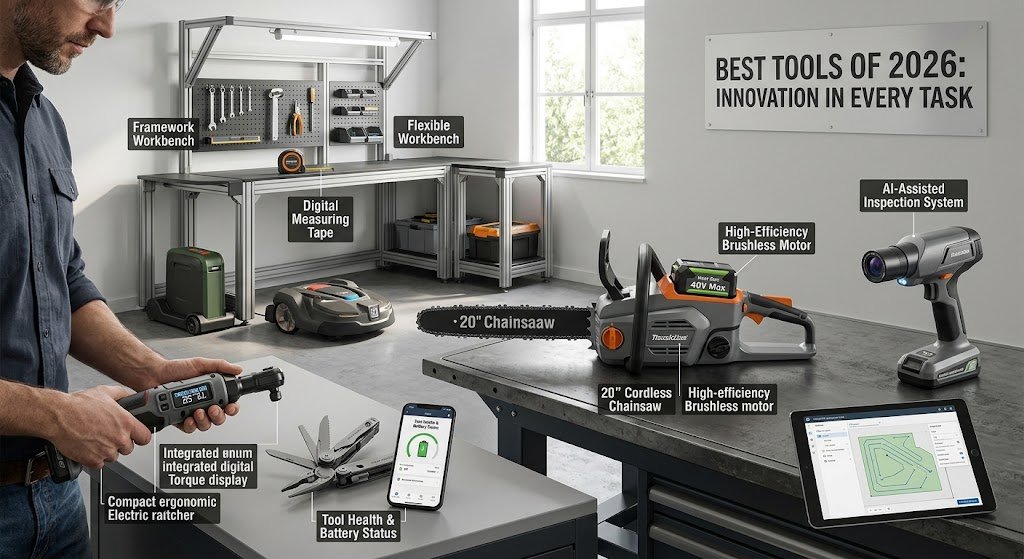
There is another change happening too: tools are becoming more connected. Digital measurements, electronic controls, battery monitoring, and eventually AI-assisted operation are bringing software into traditional workshop tasks.
But technology is not everything.
A simple ratchet that lasts for years can be a better purchase than a complicated smart tool that you rarely use. When choosing a tool, performance, comfort, reliability, safety, battery compatibility, and long-term value should all matter.
20 Best Tools of 2026
1. Milwaukee M12 Fuel Extended-Reach Ratchets
Working inside an engine bay is one of those jobs where extra reach can save a lot of frustration. Milwaukee’s new M12 Fuel extended-reach ratchets are designed around exactly that problem.
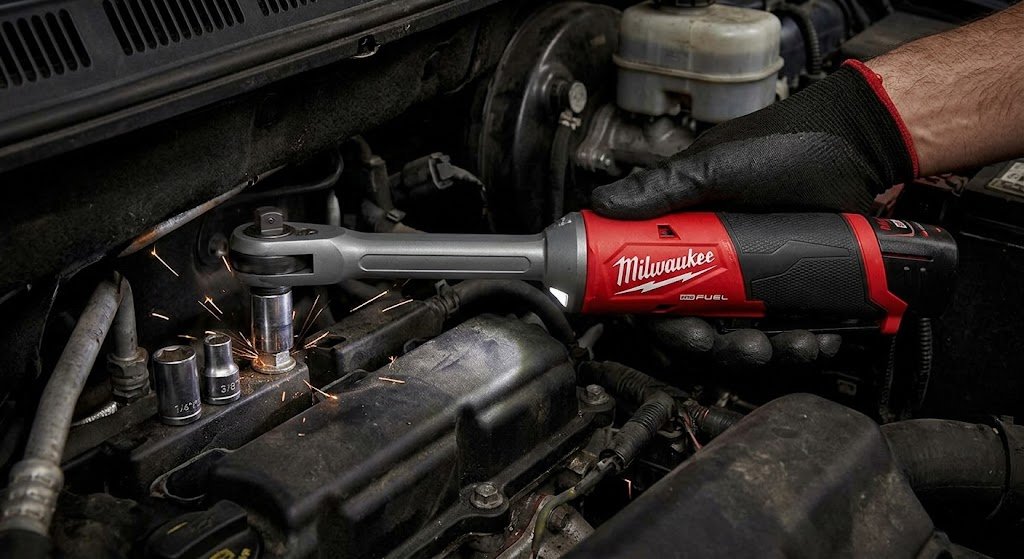
The range includes 1/4-inch, 3/8-inch, and 1/2-inch versions. Their longer necks help mechanics reach fasteners in areas where a normal ratchet may struggle. The low-profile head is also useful when space is limited.
This is a good example of a tool upgrade that solves a specific problem instead of simply adding technology.
Best suited to: Mechanics and automotive repair.
2. Hilti Nuron 14-Inch Cordless Cut-Off Saw
Large cut-off saws have traditionally been associated with gasoline engines, particularly on demanding construction jobs. Hilti’s Nuron DSH 900-22 shows how far cordless equipment has moved.
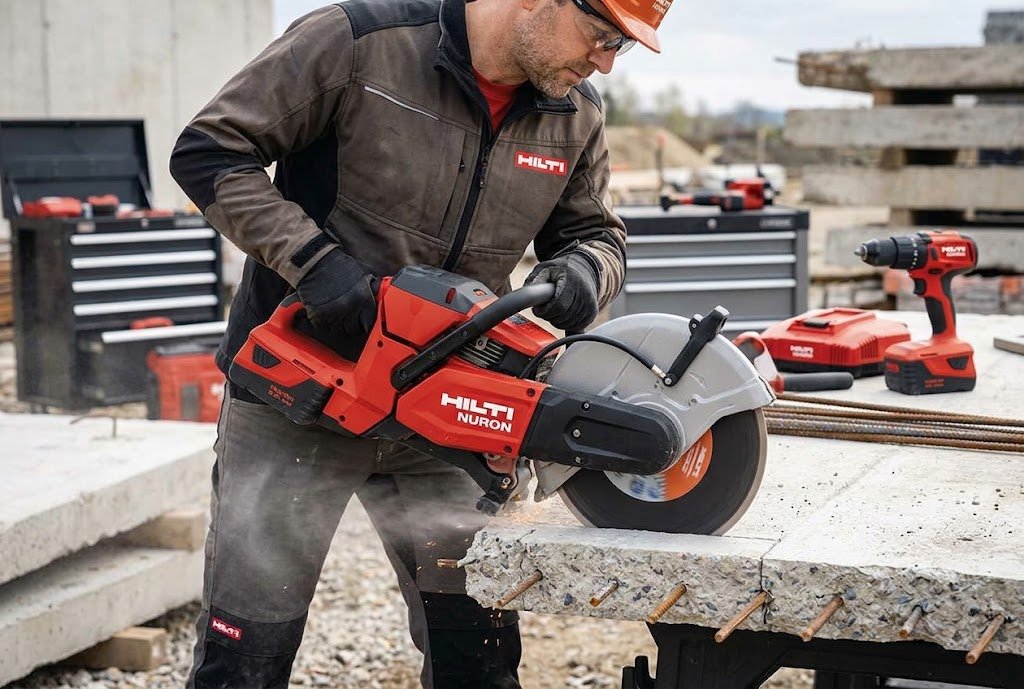
The 14-inch saw is designed for cutting materials such as concrete, metal, and asphalt. It uses Hilti’s 22V Nuron battery system and is aimed at professional users who need substantial cutting capacity without relying on a gas-powered machine.
It is not a tool most homeowners need, but for the right jobsite, removing the gas engine can be a meaningful advantage.
Best suited to: Construction professionals.
3. Skil 20V Brushless Jigsaw
A jigsaw is one of those tools that earns its place in a workshop because of its flexibility. It can make curved cuts that are difficult or impossible with a standard circular saw.
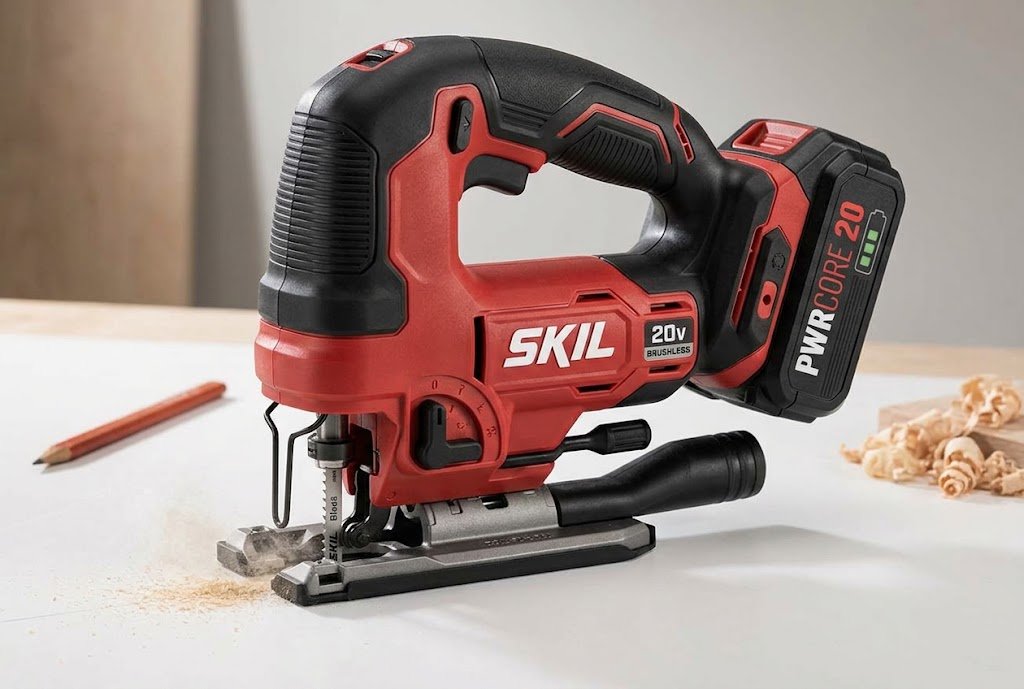
Skil’s newer 20V brushless jigsaw offers a 3,000 SPM maximum no-load speed, a one-inch stroke length, and four orbital settings. Its price also puts it closer to the DIY market than many professional jigsaws.
For someone building a first cordless tool collection, this type of jigsaw can be a practical addition after a drill and circular saw.
Best suited to: DIYers and woodworkers.
4. Makita 40V Max 20-Inch Chainsaw
Battery chainsaws are no longer limited to light pruning work. Makita’s 40V Max XGT 20-inch chainsaw is aimed at users who need considerably more cutting ability.
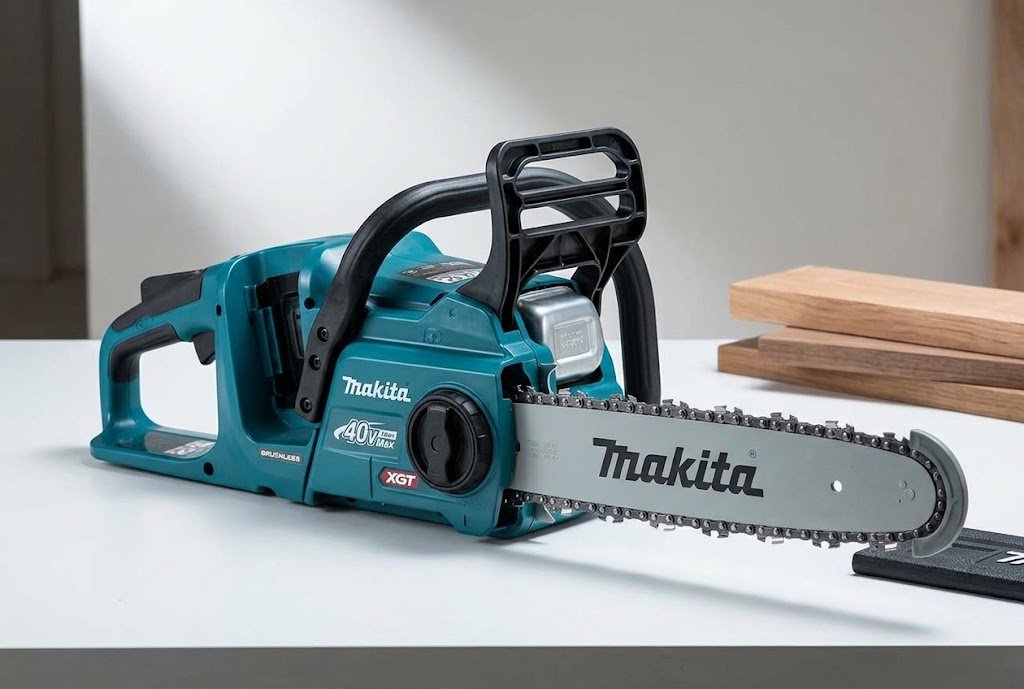
Makita says the brushless model can deliver power comparable to a 50cc gas chainsaw, while its larger battery platform is designed for demanding work.
For occasional homeowners, the price and size may be excessive. But professionals or serious property owners already invested in the XGT platform may find it much more attractive.
Best suited to: Heavy-duty outdoor work.
5. Flex 24V One-Touch Impact Driver
An impact driver is one of the most useful cordless tools for anyone who regularly drives screws or fasteners.
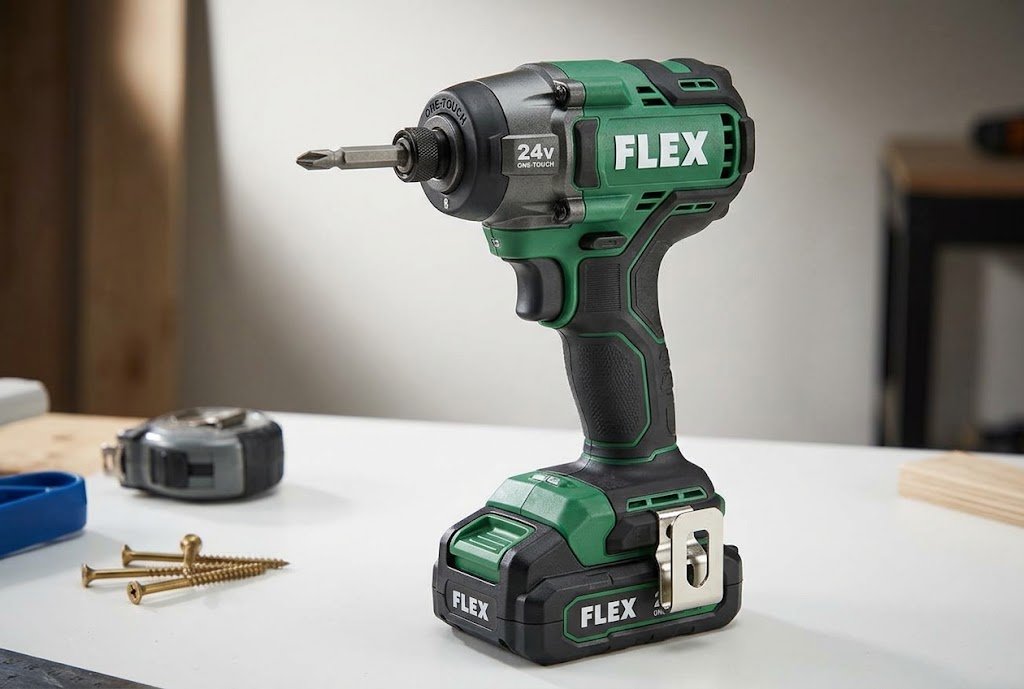
Flex’s 24V One-Touch model focuses on quick bit changes and compact handling. The advantage of this type of tool becomes obvious during larger projects, where repeatedly switching between bits can become surprisingly annoying.
It is especially useful when a drill and impact driver are used together: the drill handles drilling while the impact driver takes care of fasteners.
Best suited to: Construction, woodworking, and home projects.
6. Ridgid 18V Subcompact Brushless Tools
Not every user wants a huge, heavy power tool. Ridgid’s 2026 subcompact brushless lineup takes the opposite approach by concentrating on smaller equipment.
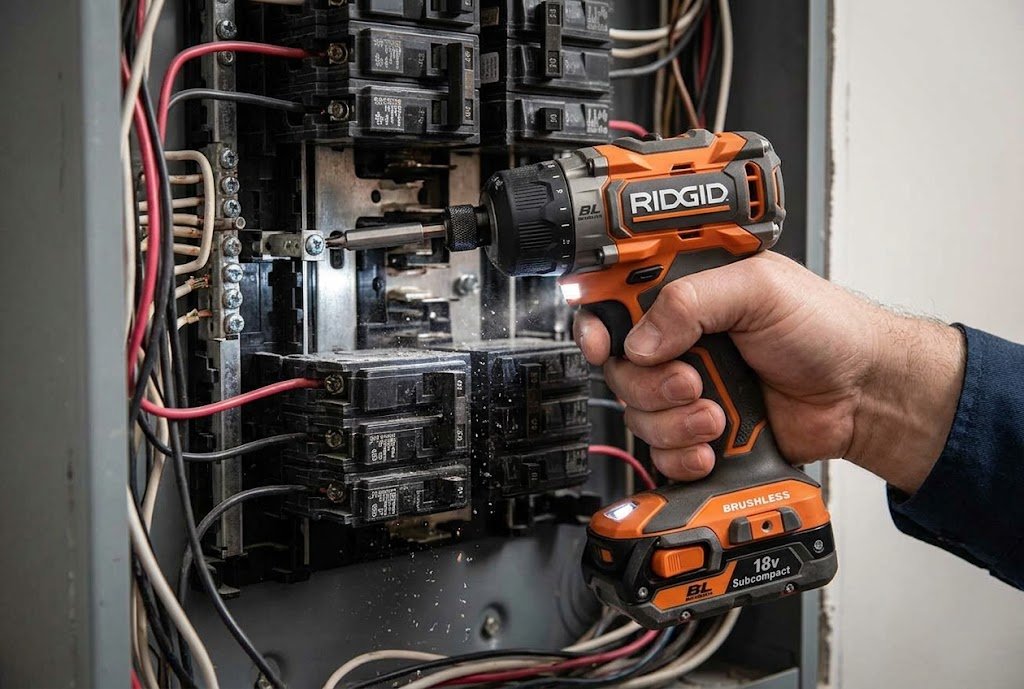
The announced range includes drills, impact drivers, a circular saw, and a blower. The idea is simple: make tools easier to carry and use while keeping enough power for everyday work.
Compact tools can be particularly useful for electricians, installers, maintenance workers, and homeowners who do not need maximum-size equipment.
Best suited to: Everyday professional and DIY work.
7. Ryobi Framework Workbench
Tools are only part of a workshop. The workspace around them matters too.
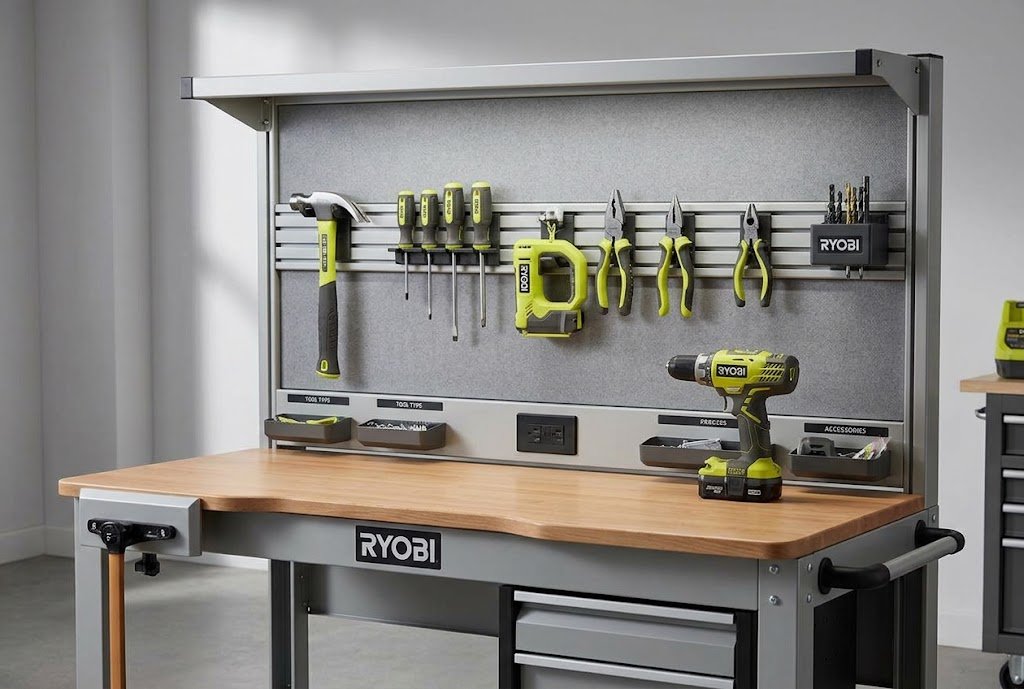
Ryobi’s Framework system is designed around customization, giving users ways to organize a workbench according to their projects and available space. That makes it interesting for people who are building a workshop rather than simply buying another power tool.
A flexible workstation can also help keep tools visible and organized, which sounds minor until you spend ten minutes looking for the screwdriver you used five minutes ago.
Best suited to: Home workshops and DIY users.
8. Battery-Powered Commercial String Trimmers
Outdoor equipment is another category where battery power continues to move into heavier work.
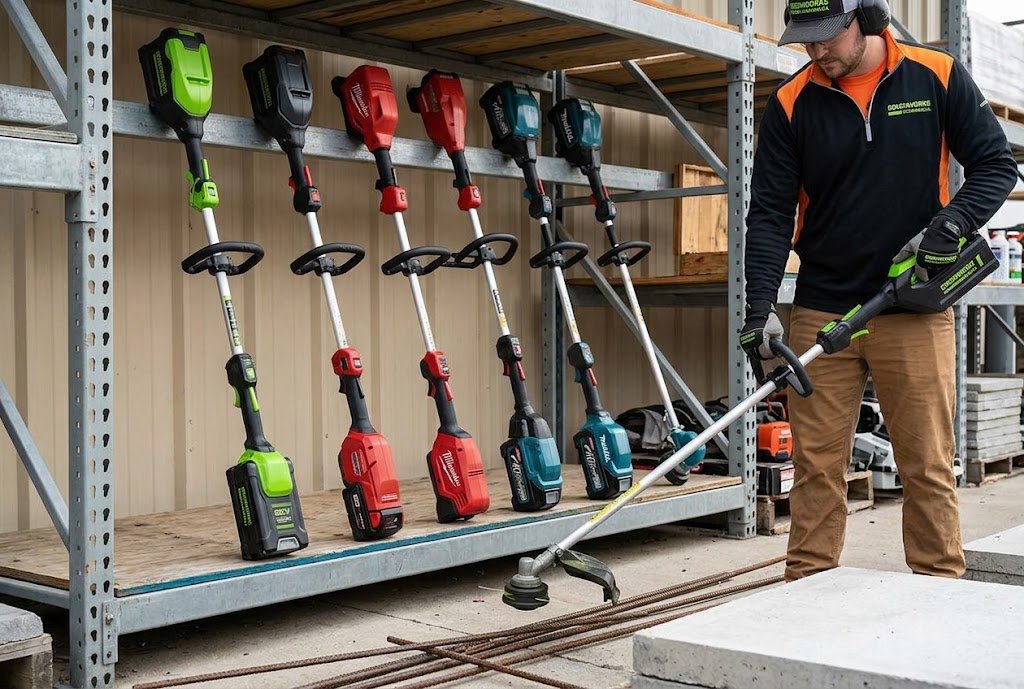
The Greenworks Commercial 82V Optimus string trimmer, for example, is designed for professional landscaping and uses a high-voltage battery platform. In testing reported by Pro Tool Reviews, runtime varied depending on operating speed, showing why real-world use matters more than simply reading the manufacturer’s maximum runtime.
That is an important lesson when shopping for cordless outdoor tools: published runtime is not always the same as the runtime you will experience while doing demanding work.
Best suited to: Landscaping and large-property maintenance.
Best New Hand Tools in 2026
Power tools may attract more attention, but best new hand tools deserve just as much consideration. A workshop cannot run on batteries alone.
Hand tools are quieter, easier to maintain, and often quicker for small jobs. In many situations, grabbing a screwdriver is much more sensible than finding a drill, battery, and bit.
9. Modern Ratchet and Socket Sets
A good socket set remains one of the most useful purchases for a garage.
The improvements in newer sets are often small rather than revolutionary: thinner ratchet heads, better grips, improved socket markings, and more sensible storage.
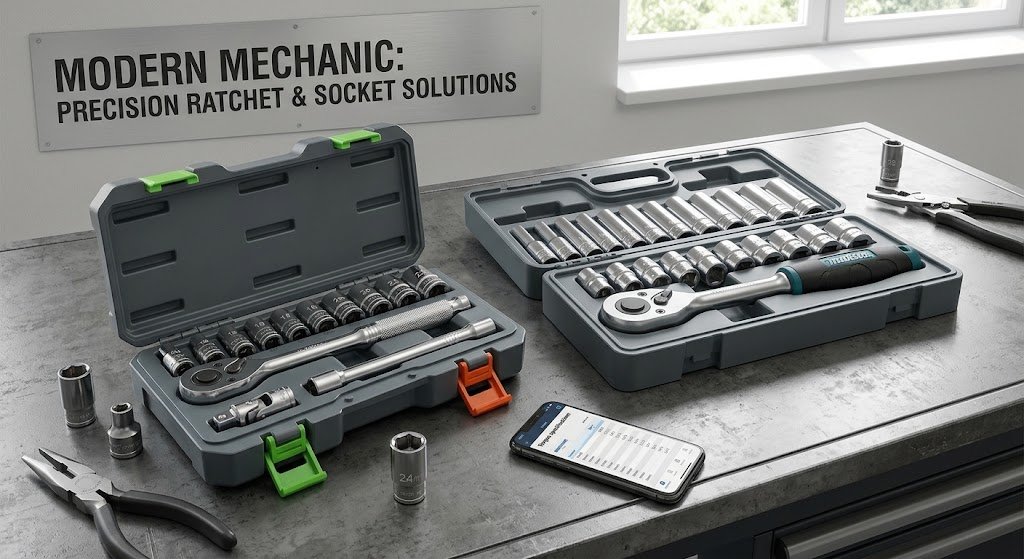
For a homeowner, there is little reason to buy an enormous professional set containing hundreds of pieces that will never leave the case. A carefully selected set covering common sizes is usually more useful.
Good for: Home repairs, automotive work, and maintenance.
10. Ergonomic Screwdriver Sets
The humble screwdriver has not disappeared, and it probably never will.
Newer designs concentrate on grip comfort, tip quality, magnetic tips, and easier identification. These details matter when you are working for an hour rather than tightening one screw.
A useful screwdriver set should cover the sizes you actually encounter rather than simply offering the largest possible number of pieces.
Good for: Everyday household repairs.
11. Precision Pliers
Large pliers are excellent for rough work, but they are not ideal for small components.
Precision pliers provide better control when working with wires, electronics, small mechanical parts, and hobby projects. A good pair should open smoothly and grip without damaging delicate parts.
They are inexpensive compared with many power tools, but they can save a surprising amount of frustration.
Good for: Electronics, hobbies, and detailed repairs.
12. Digital Torque Wrench
There are times when “tight enough” is not good enough.
A torque wrench allows a fastener to be tightened to a specified level rather than relying on guesswork. Digital models can make the reading easier to monitor and can provide alerts when the target is reached.
This is especially important in automotive and mechanical work where incorrect torque can cause damage or create safety problems.
Good for: Automotive and mechanical work.
13. Digital Measuring Tools
Measurement is one area where even a small mistake can ruin an otherwise good project.
Digital measuring devices can make readings easier to record and, depending on the model, may provide additional functions such as memory or digital displays.
They are particularly useful for professionals who repeat measurements throughout the day.
Still, there is nothing wrong with keeping a traditional tape measure nearby. Batteries do eventually run out.
Good for: Construction, woodworking, and renovation.
14. Compact Multitools
A multitool is not designed to replace a full toolbox. Its real strength is convenience.
When you need pliers, a screwdriver, a cutter, or another small function while away from your workshop, carrying several individual tools is inconvenient. A compact multitool gives you several basic functions in one package.
For serious repairs, however, dedicated tools are usually more comfortable and capable.
Good for: Travel, outdoor tasks, and quick repairs.
Smart and Future Tools AI Is Bringing to the Workshop
The phrase may sound like something from a science-fiction movie, but parts of that future are already appearing.
AI is increasingly being connected to physical systems. In August 2026, Anthropic announced a research framework designed to let AI agents interact with programmable physical devices such as laboratory instruments and robotic arms.
That does not mean your screwdriver will suddenly become an AI robot. The more realistic future is gradual: tools and machines becoming better at sensing, measuring, planning, and assisting.
15. AI-Assisted Inspection Equipment
Inspection is a natural area for AI.
A camera or sensor can collect information, while software can help identify unusual patterns that a person might want to investigate further. Similar approaches are already being explored in industrial environments.
The important point is that AI should assist inspection rather than encourage people to ignore professional judgment.
Potential use: Industrial maintenance and construction inspection.
16. Smart Levels and Measurement Devices
A traditional level does one job very well. Smart versions can add digital readings and additional measurement information.
For someone installing cabinets, framing a wall, or doing repeated construction work, these extra functions can be convenient.
However, the best smart measuring device is still one that remains easy to use. If the digital features slow down a simple job, the technology has missed the point.
17. AI-Assisted Project Planning
AI can also help before a physical tool is even picked up.
A user may eventually be able to describe a project and receive a rough materials list, cutting plan, sequence of tasks, or design suggestions. Research is already exploring AI-assisted workflows that connect digital designs with physical fabrication, although human verification remains important.
For DIY users, this could make complicated projects easier to plan.
The key word is assist. AI-generated measurements or plans should always be checked before cutting, drilling, or building.
18. Robotic Outdoor Equipment
Robotic lawn equipment is another area worth watching.
The idea is not particularly complicated: instead of spending an hour doing a repetitive task, let a machine handle some of it automatically.
Robotic outdoor equipment is most attractive when the task is predictable and repetitive. It is less useful when every job requires a different decision.
That distinction will probably remain important as more AI-powered physical products appear.
19. AI-Connected Workstations
A future workshop could be considerably more connected than today’s typical garage.
Imagine a workstation that tracks where tools are stored, displays digital plans, records measurements, and provides instructions based on the project.
The technology is moving in this general direction, although fully autonomous workshops are still a long way from becoming normal for homeowners.
20. Physical AI and Robotic Tools
Perhaps the biggest long-term change is the move from AI that only generates text or images to AI that can interact with the physical world.
Robotics companies are investing heavily in systems that allow machines to understand and respond to real environments. At the same time, researchers and technology companies are working on ways for AI agents to communicate with physical devices.
There is still a large gap between a demonstration and a machine that can reliably perform complicated real-world work. Current humanoid robots, for example, still face major challenges with intelligence, cost, adaptability, and reliable factory work.
So the future is promising, but it is not here yet.
How to Choose the Right Tool in 2026
Before buying anything, start with the job.
If you are mainly doing small household repairs, a screwdriver set, pliers, hammer, adjustable wrench, tape measure, level, and drill will cover a lot of ground.
If you work on cars, your priorities change. Socket sets, ratchets, torque tools, impact equipment, and specialty tools become much more important.
Woodworkers need accurate measuring and cutting tools, while landscapers may get more value from battery-powered outdoor equipment.
Think About the Battery System
Cordless tools are convenient, but batteries can become one of the biggest costs of owning a tool collection.
If you already own several tools from one battery platform, staying with that ecosystem often makes sense. You can buy additional bare tools without purchasing another battery and charger every time.
Before committing to a platform, check the available tools, battery prices, charger options, warranty, and future product range.
Don’t Pay for Features You Won’t Use
A tool can have an impressive list of features and still be the wrong tool for you.
Ask a simple question:
Will this feature make my actual work easier?
If the answer is no, save the money.
This is especially relevant with smart and AI-enabled products. AI is becoming more important in physical technology, but that does not mean every tool needs an AI feature.
Hand Tools vs Power Tools
Both have their place.
| Tool Type | Main Advantage | Best Use |
|---|---|---|
| Hand tools | Simple and precise | Small repairs |
| Cordless tools | Portable and fast | DIY and construction |
| Corded tools | Continuous power | Long jobs |
| Smart tools | Digital convenience | Measurement and precision |
| AI-assisted equipment | Automation and guidance | Advanced applications |
For most beginners, building a reliable hand-tool collection first is a sensible approach. Add power tools when a specific project actually requires them.
Are AI Tools Really the Future?
Probably—but not in the way science fiction suggests.
The more useful future is likely to be a partnership between people and intelligent machines.
AI may help with planning, inspection, measurement, troubleshooting, and repetitive work. Physical machines can then perform parts of the job.
That is already becoming a serious area of technology development. The recent push toward physical AI shows that companies are trying to connect intelligent software with robots, instruments, and other hardware.
But human experience will remain important. A machine can measure something; a skilled worker understands why that measurement matters.
What Tools Should You Buy First?
If you are starting from scratch, do not try to buy everything at once.
A practical starter collection could include:
- Hammer
- Screwdriver set
- Pliers
- Adjustable wrench
- Tape measure
- Level
- Utility knife
- Socket set
- Cordless drill
- Impact driver
- Basic saw
- Work light
From there, add specialized tools according to your work.
This approach is usually better than buying a giant tool set simply because it contains hundreds of pieces. Even current starter-kit recommendations for new homeowners tend to focus on useful core tools rather than unnecessary specialization.
Frequently Asked Questions
What are the best tools of 2026?
The best tools of 2026 include improved cordless power tools, durable hand tools, brushless equipment, advanced measuring devices, automotive tools, and emerging smart and AI-connected systems. The right choice depends on the type of work and your budget.
What are the best new hand tools in 2026?
Useful new hand-tool categories include improved ratchets, ergonomic screwdrivers, precision pliers, digital torque wrenches, digital measuring devices, and compact multitools.
Are cordless tools better than corded tools?
Not always. Cordless tools are easier to move around and are excellent when electricity is unavailable. Corded tools can be better for long jobs where continuous power is more important than portability.
Are AI-powered tools worth buying?
They can be, but only when the AI feature solves a genuine problem. Inspection, measurement, planning, and automation are more useful applications than adding AI simply as a marketing feature.
What tools should every homeowner have?
Most homeowners should start with basic hand tools, a measuring tape, level, drill, socket set, and a few common pliers and screwdrivers. Specialized tools can be added when a project requires them.
Final Thoughts
The best tools of 2026 are not necessarily the tools with the biggest motors, longest feature lists, or highest prices.
Some of the most useful improvements are surprisingly practical: better reach, smaller bodies, stronger cordless platforms, more comfortable handles, improved battery systems, and easier measurement.
At the same time, the industry is moving toward something bigger. AI and robotics are beginning to connect digital intelligence with physical machines. That trend is still developing, and many of the most ambitious ideas are not ready for everyday workshops yet.
For now, the smartest approach is simple. Buy tools for the work you actually do. Choose quality where it matters, avoid features you will never use, and consider the long-term cost of batteries and accessories.
A good tool should not make you think about technology.
It should simply make the job easier.