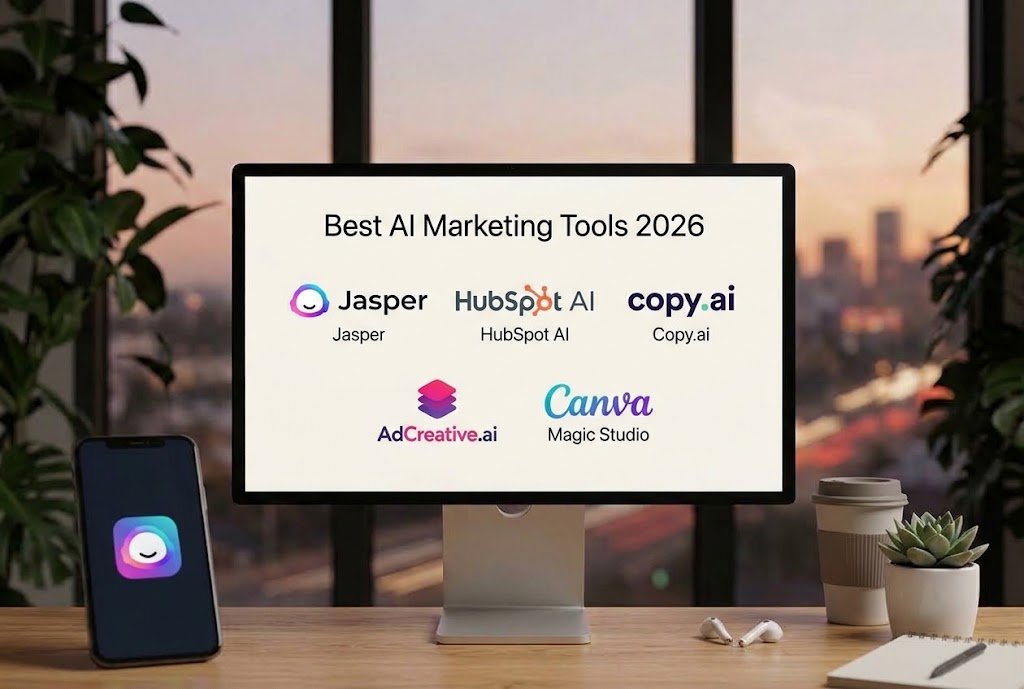
Every marketer I talk to these days is trying to figure out the same thing: which AI tools are actually worth paying for, and which ones are just hype. The search for the best AI marketing tools 2026 has to offer isn’t really optional anymore either — most teams are already using at least one of these tools, whether they realize it or not.
The tricky part is that new tools show up every month, and half of them look identical on the surface. So instead of trying to cover everything, I spent time actually using these tools, reading through user complaints on review sites, and comparing pricing pages line by line. What follows is the shortlist that came out of that — tools that solve a real problem instead of just adding another login to your day.
There’s a mix here for different budgets too. If you’re bootstrapping, a few of these won’t cost you anything. If you’ve got room to spend, there are options that pay for themselves pretty quickly once you see the time saved.
How I Picked These Tools
I didn’t just grab the names everyone’s talking about on Twitter. A few things mattered more than hype: how fast someone could actually learn the tool, whether the price made sense for what it does, and how well it fits into a normal week of marketing work rather than requiring you to rebuild your entire process around it.
I also leaned on real user feedback — the kind you find in G2 reviews and Reddit threads, not just the testimonials on a company’s own landing page. Tools that get updated often and actually respond to feedback made the cut. Ones that felt abandoned or overpriced for what they offer didn’t.
One more thing worth mentioning: I tried to stay away from tools that only look impressive in a demo video. A lot of AI products are great at making a 90-second clip look magical, but fall apart the moment you’re trying to hit a Tuesday deadline with a client waiting. Everything below has actually been used for real work, not just watched from a distance.
Best AI Marketing Tools 2026
Here’s the list, roughly in the order I’d recommend trying them depending on what you need most.
1. Jasper — the one built for actual marketing teams
Jasper’s been around long enough that it’s shaken off most of its early rough edges. What sets it apart from a general chatbot is that it’s trained to hold onto your brand voice, so the tenth blog post still sounds like the first one. Agencies juggling several client accounts tend to like it for exactly this reason.

You get templates for ads, emails, and product pages, plus the ability to have a whole team working inside the same workspace without stepping on each other’s drafts. It starts around $49 a month, and there’s no free tier, so it’s not really for someone just testing the waters. If you’re already producing content at scale though, the price makes sense pretty fast.
The one complaint I’d flag: it can feel like more tool than you need if you only write occasionally.
2. HubSpot’s AI features — automation without extra software
If you’re already running your CRM or email through HubSpot, their AI additions are worth turning on before you go shopping for something new. Instead of bolting on another platform, you get AI-written subject lines, lead scoring that updates itself, and workflows that trigger without you babysitting them.
There’s a free tier to start, and pricing scales up based on your contact list and which features you turn on. The catch is that costs can climb quickly once you’re past the basics — worth checking the pricing page carefully before committing to a paid tier.
Best fit: anyone who wants marketing, sales, and automation living in one system instead of five browser tabs.
3. Copy.ai — fast, no-frills copywriting
Some days you just need a product description or three ad headlines and don’t have time to fight with a complicated interface. That’s where Copy.ai earns its spot — it’s built around short-form copy and gets out of your way quickly.
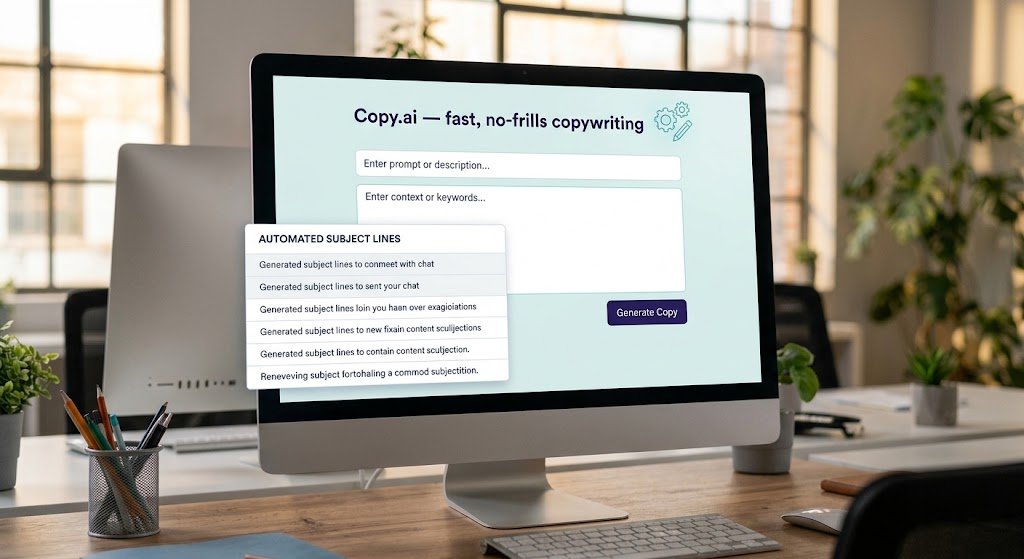
Free plan gives you a limited number of words each month, which is enough to see if it clicks for you. Paid plans start around $36. Longer pieces usually need a pass of editing afterward, but for quick copy it’s hard to beat the speed.
4. AdCreative.ai — for when ad design eats your whole afternoon
Testing ad creatives used to mean hours in Canva or Photoshop, guessing at what might perform. AdCreative.ai generates the banners for you across different sizes and gives you a rough performance prediction before you spend a cent on the actual campaign.
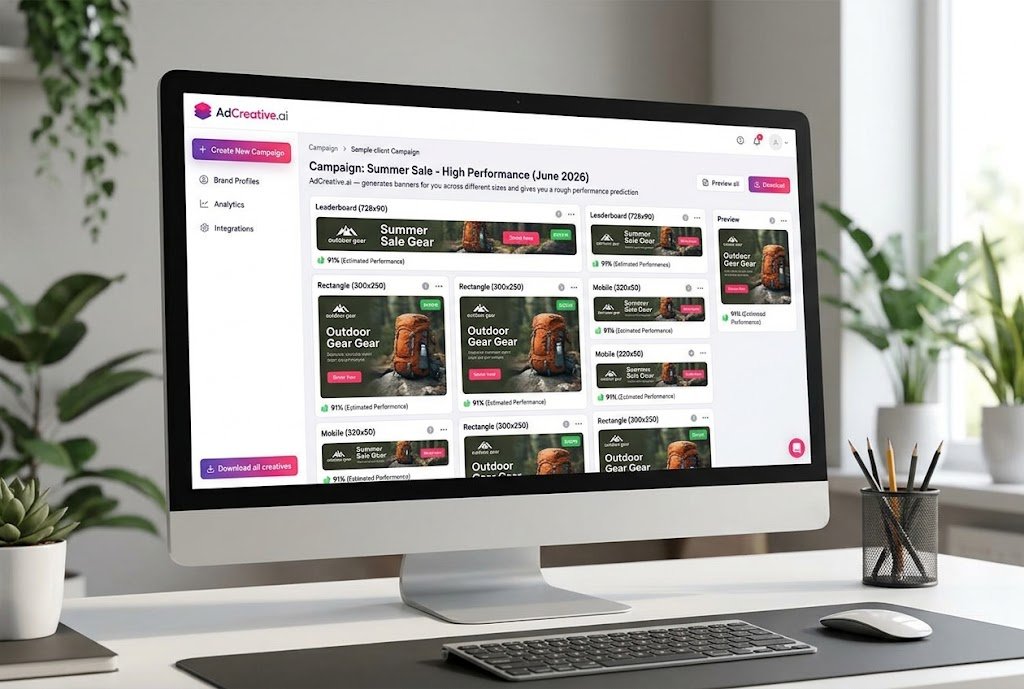
It plugs directly into Meta and Google Ads accounts, which saves the export-import dance. Plans start near $29 a month. I’d still recommend tweaking the winning creatives by hand afterward — the AI gets you 80% there, and that last stretch is where a human eye still helps.
5. ChatGPT — still the best free starting point
It feels almost too obvious to include, but leaving it off would be dishonest. ChatGPT isn’t built specifically for marketing, so you won’t find campaign templates or brand-voice training here. What you do get is a genuinely useful thinking partner for brainstorming, drafting, and outlining — for free.
If your budget is zero right now, this is where to start. Once you outgrow it, the tools further up this list start to make more sense.
6. Canva’s Magic Studio — the small-business all-rounder
A lot of small business owners are doing design, copy, and marketing all by themselves, and Canva leaned into that with Magic Studio. AI image generation, background removal, and some copywriting help are all sitting inside a tool many people already use for their social posts.
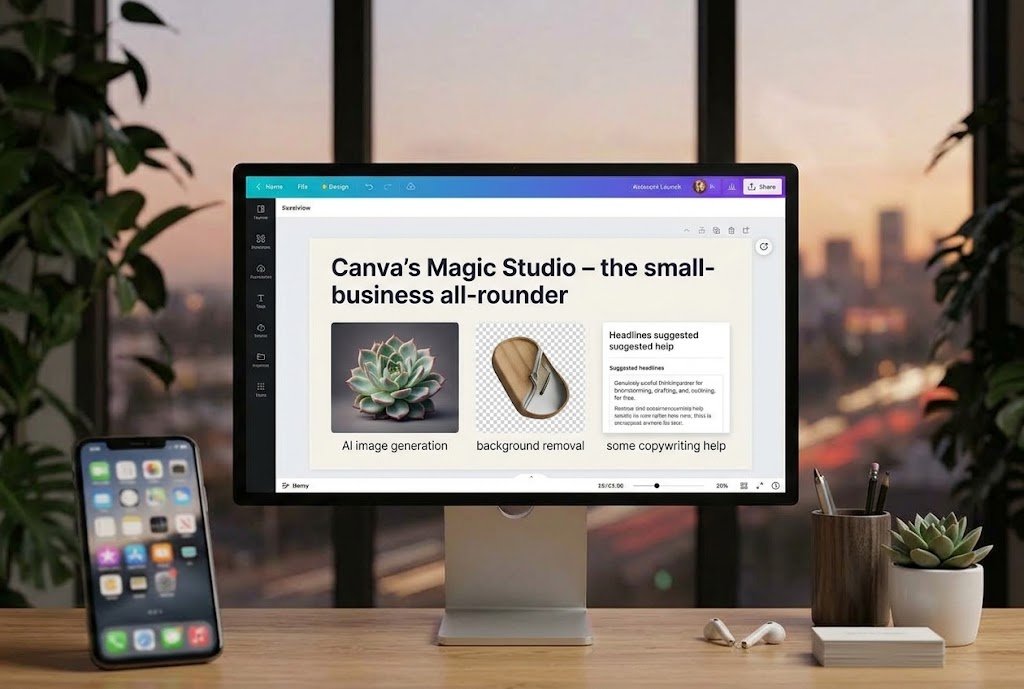
Free plan is solid enough on its own; Pro runs about $15 a month if you want more. It’s not going to replace a dedicated marketing platform for a bigger campaign, but for someone wearing five hats already, having design and content help in one place matters more than raw power.
Automation Tools Worth a Look
Automation tends to be where people notice the biggest time savings, mostly because it removes work you were doing manually without even thinking about it.
ActiveCampaign pairs email marketing with automation that actually pays attention to customer behavior — segmenting your list and sending the right message without you building each workflow from scratch. And then there’s Zapier, which isn’t a marketing tool exactly, but has become the glue connecting everything else. If you’re running two or three tools from this list already, Zapier’s automations can move information between them so you’re not copying data by hand.
The real win with automation isn’t any single tool — it’s getting your tools to talk to each other instead of working in isolation. A workflow where your ad tool, your CRM, and your email platform all quietly share data in the background will save you more hours over a month than any single flashy feature will.
Worth saying too: automation isn’t something you set up once and forget forever. It’s worth checking back on your workflows every couple of months, because customer behavior shifts, and a sequence that worked well in January can start feeling stale by summer if nobody’s paying attention.
What the Ad Platforms Already Give You for Free
Before paying for a third-party tool, it’s worth checking what’s already built into the platforms you’re using. Google Ads has Performance Max, which adjusts bidding and creative combinations on its own based on what’s working. Meta has something similar with Advantage+ campaigns, using its own machine learning to find the right audience without you setting up detailed targeting by hand.
For smaller budgets, these built-in options are genuinely a good place to start since they’re already part of what you’re paying for. Once your ad spend grows, a dedicated tool like AdCreative.ai can pick up the slack on the creative side.
There’s a small trade-off worth knowing about though. Letting Google or Meta’s AI handle everything automatically means you lose some visibility into exactly why a campaign is performing the way it is. That’s fine when things are going well, but it can be frustrating when something dips and you’re trying to figure out what changed. Keeping an eye on the reporting dashboards, even when the AI is technically running the show, is still a good habit.
So Which One Should You Actually Pick?
Honestly, it comes down to three things: your budget, your biggest headache right now, and how your team actually works.
If money’s tight, start with ChatGPT and Canva’s free plan — you can get real value without spending anything. Got a bit more room? Copy.ai or AdCreative.ai offer a decent balance of price and results without a huge learning curve.
Think about where your time actually goes. If writing eats your week, Jasper or Copy.ai will save you the most hours. If ads are the bottleneck, lean on AdCreative.ai or the built-in AI features from Google and Meta. If you’re stuck sending the same follow-up emails over and over, HubSpot or ActiveCampaign will take that off your plate.
And team size matters more than people expect. Solo founders usually do better with something simple like Canva’s Magic Studio, while bigger teams get more value from platforms built for collaboration, like Jasper or HubSpot.
| Tool | Starting Price | Best For |
|---|---|---|
| Jasper | $49/month | Content teams and agencies |
| HubSpot AI | Free to start | Automation and CRM |
| Copy.ai | Free plan available | Quick copywriting |
| AdCreative.ai | $29/month | Ad creatives and PPC |
| ChatGPT | Free | Brainstorming, general use |
| Canva Magic Studio | Free plan available | Small business design |
Keep this table bookmarked if you’re still deciding — there’s no universal “best” here, just the one that matches what you actually need this month.
Questions People Usually Ask
Are AI marketing tools free to use?
Some are, some aren’t. ChatGPT and Canva both have free tiers that cover a lot of ground. Others, like Jasper, skip the free plan entirely because they’re built for teams producing content at volume.
What’s the best AI marketing tool for a small business?
Start free — ChatGPT or Canva’s Magic Studio will cover most early needs. Once you know exactly what’s slowing you down, upgrade to whichever paid tool matches that specific problem.
How do you actually measure ROI on these tools?
The simplest method is comparing before and after — how long tasks used to take versus now, or whether ad performance shifted after switching tools. Most platforms also have their own dashboards that track this for you, so you’re not doing the math by hand.
Which tool is easiest for a total beginner?
ChatGPT, without much competition. No setup, no learning curve, and it’s free. Canva’s Magic Studio is a natural second step once you need visuals too.
Final Thoughts
2026 has brought a genuinely useful crop of AI marketing tools, not just another wave of hype. Whatever’s slowing you down right now — writing, ads, automation, or design — there’s probably something on this list that fixes it.
Don’t feel pressure to adopt all six at once. Pick the one tool that solves your biggest problem today, get comfortable with it for a few weeks, and add more only once you actually feel the gap. The point was never to collect AI tools — it’s to get your time back and see better results from the work you’re already doing.
If you’re still on the fence, here’s the simplest advice I can give: pick whichever free option matches your biggest pain point and use it for two weeks straight. You’ll know within that time whether it’s genuinely saving you effort or just adding another tab to your browser. That two-week test tells you more than any comparison article ever could — including this one.