
Choosing the right air conditioner can make a significant difference in your home’s comfort and electricity bills. During hot summer months, an inefficient cooling system may consume more electricity than necessary. A high efficiency air conditioner can help reduce energy consumption while maintaining a comfortable indoor temperature.
Modern air conditioning systems offer advanced features such as variable-speed compressors, smart thermostats, and improved humidity control. Some models can also provide heating during colder months, making them useful throughout the year.
However, buying an efficient AC involves more than comparing prices. You should consider the system’s size, energy rating, installation requirements, and maintenance needs. In this guide, we will explore the benefits of energy-efficient cooling, different AC types, and practical tips for choosing the right system for your home or business.
Table of Contents
1. What Is a High Efficiency Air Conditioner?
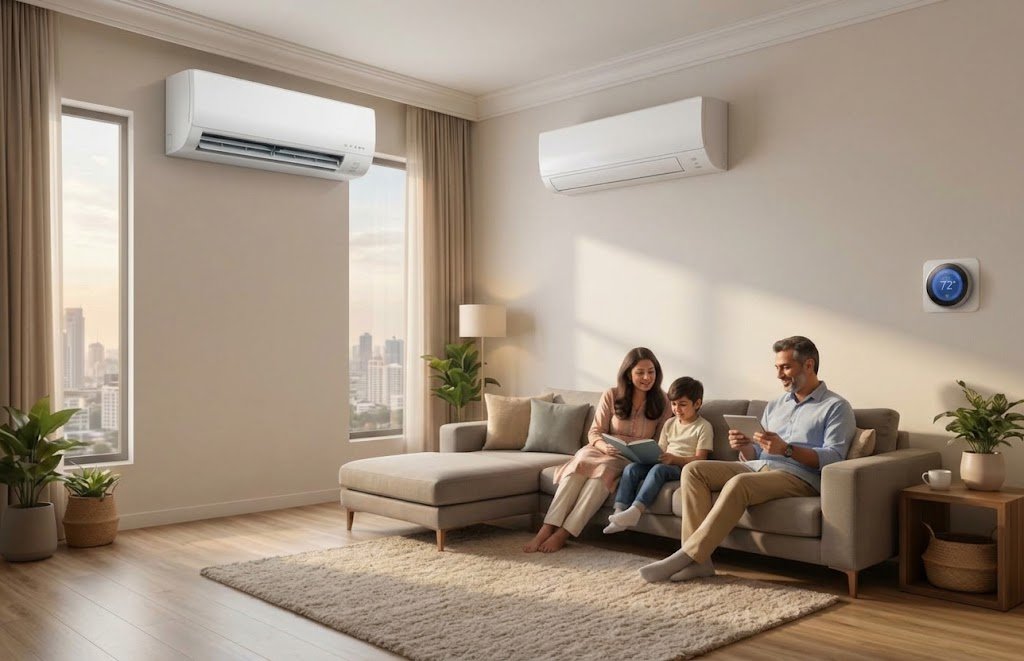
A high efficiency air conditioner is a cooling system designed to remove heat from indoor spaces while using electricity efficiently. Compared with less efficient models, it may provide the same amount of cooling while consuming less energy under comparable operating conditions.
These systems use components such as efficient compressors, well-designed heat exchangers, and advanced fans to improve performance. Some models also adjust their cooling output according to the temperature inside your home.
For example, a traditional air conditioner may switch its compressor on and off frequently. An inverter-based model can adjust compressor speed to match cooling demand, potentially reducing unnecessary energy use.
The actual savings depend on several factors, including your climate, insulation, thermostat settings, and how often you operate the system.
2. How Does an Energy-Efficient Air Conditioner Work?
An air conditioner transfers heat rather than simply producing cold air. It uses a refrigerant that circulates between indoor and outdoor components to move heat outside your home.
The indoor evaporator absorbs heat from the room. The compressor then increases the refrigerant’s pressure, allowing the outdoor condenser to release that heat into the surrounding air.
Afterward, the refrigerant returns to its original operating state, and the cycle repeats.
Several technologies can improve this process:
- Inverter compressors: Adjust their speed according to cooling demand.
- Efficient fans: Move air while using less electricity.
- Advanced thermostats: Help maintain suitable temperatures without unnecessary cooling.
- Improved coils: Support effective heat transfer.
- Smart controls: Allow users to manage schedules and settings more conveniently.
A properly sized system with professional installation is essential because even an efficient model can perform poorly when installed incorrectly.

3. Nine Best Benefits of a High Efficiency Air Conditioner
Understanding the benefits can help you decide whether upgrading your existing cooling system makes financial sense.
3.1 Lower Electricity Consumption
One of the main advantages is the potential to use less electricity for cooling. Efficient compressors and improved components help reduce energy waste.
Your actual savings will depend on the efficiency of your old unit, local weather, and daily cooling requirements.
3.2 Potentially Lower Energy Bills
Using less electricity can reduce monthly cooling expenses. This benefit may be especially noticeable in homes where the air conditioner operates for many hours each day.
Before purchasing a new system, compare its estimated annual energy consumption with that of your existing equipment.
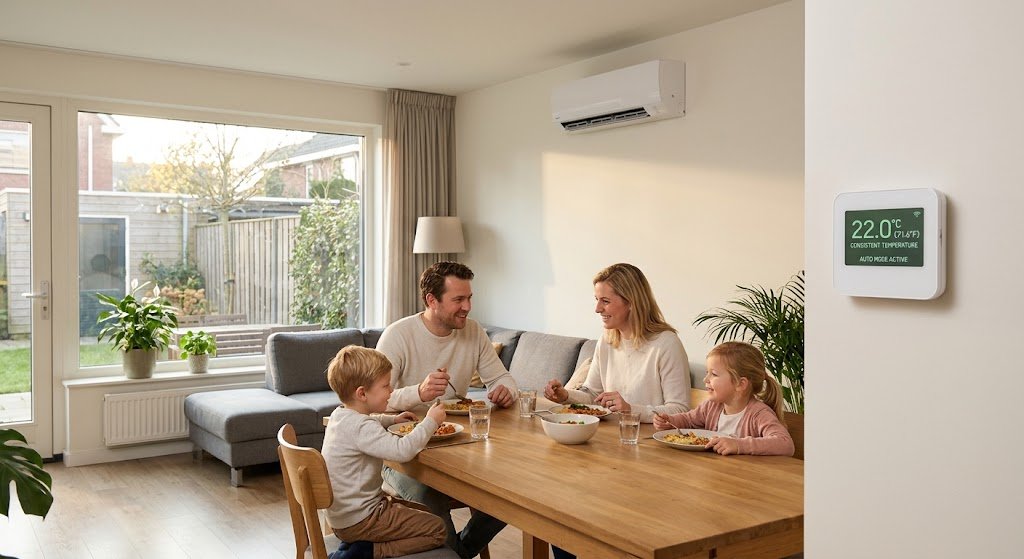
3.3 More Consistent Indoor Temperatures
Some modern systems adjust their output instead of repeatedly switching between full power and no cooling.
This can help maintain a more stable indoor temperature and reduce uncomfortable temperature fluctuations.
3.4 Better Humidity Management
Air conditioning removes moisture from indoor air as part of the cooling process.
Depending on the model, operating conditions, and system sizing, an efficient unit may provide effective humidity control while maintaining a comfortable environment.
3.5 Quieter Operation
Many modern air conditioners are designed to reduce operating noise. Variable-speed compressors and improved fan designs can contribute to quieter performance.
When comparing models, check the manufacturer’s published sound ratings for both indoor and outdoor components.
3.6 Reduced Environmental Impact
Using less electricity can reduce indirect greenhouse gas emissions, particularly when the electricity comes from fossil fuels.
Choosing equipment that uses a suitable modern refrigerant can also be important. Refrigerant selection, leakage prevention, and proper servicing all affect the environmental impact of an AC system.
3.7 Convenient Smart Features
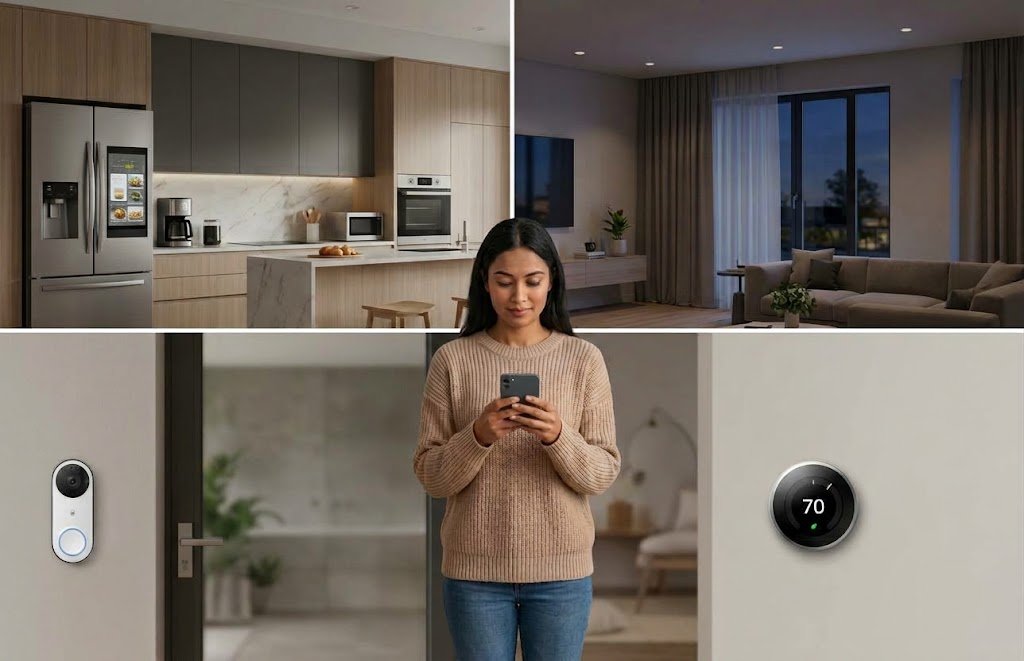
Some models connect to Wi-Fi thermostats or mobile applications. These features allow you to adjust temperatures, create schedules, and monitor settings when you are away from home.
Smart controls are useful, but they do not automatically guarantee energy savings. Their benefits depend on how you use them.
3.8 Improved Long-Term Value
An efficient model may cost more initially than a basic unit. However, lower operating expenses may help offset part of the difference over time.
Consider the purchase price, installation, maintenance, electricity use, and expected service life before making your decision.
3.9 Flexible Heating and Cooling Options
Some systems can cool your home in summer and provide heating during colder weather.
A reversible heat pump is a common example. Instead of relying entirely on separate cooling and heating equipment, you may be able to use one system for both functions.
4. Different Types of High-Efficiency Air Conditioners
The best system depends on your property, budget, and cooling requirements.
Central Air Conditioning Systems
Central AC systems distribute cooled air through ducts to multiple rooms. They are commonly used in houses and larger buildings with suitable ductwork.
Their performance depends on correct sizing, duct insulation, airflow, and installation quality. Leaky ducts can waste energy and reduce comfort.
Ductless Mini-Split Systems
Ductless systems connect an outdoor unit to one or more indoor units. They can be useful for individual rooms, home extensions, and buildings without existing ducts.
Many mini-split models use inverter technology to adjust their output according to demand.
Window Air Conditioners
Window units provide cooling for individual rooms and are often less expensive to purchase than larger systems.
When choosing one, compare its cooling capacity and efficiency rating with your room size. Correct sizing is important for comfort and effective moisture removal.
Portable Air Conditioners
Portable units can be moved between suitable spaces and usually require an exhaust hose to release heat outdoors.
However, they may be less efficient than some alternatives because of their design and the way they exhaust indoor air. Compare performance carefully before buying one for regular use.
Packaged Air Conditioning Systems
A packaged air conditioner combines major cooling components in a single cabinet, usually installed outdoors or on a suitable rooftop.
These systems are often used in commercial properties and some residential buildings. Their suitability depends on available space, building design, and the required cooling capacity.
5. Heat and Cool AC: Can One Unit Do Both?
A heat and cool AC is designed to provide both cooling and heating. Many systems achieve this through heat pump technology, which reverses the direction of heat transfer.
During summer, the system removes heat from indoor air and releases it outside. During winter, it extracts heat from outdoor air and transfers it indoors.
This approach can be energy-efficient under suitable operating conditions because a heat pump moves heat instead of generating all of it directly through electrical resistance.
When shopping, check the heating capacity, cooling efficiency, low-temperature performance, and operating costs.
A combined heating and cooling system can be particularly convenient if you want year-round temperature control without maintaining separate systems for each season.
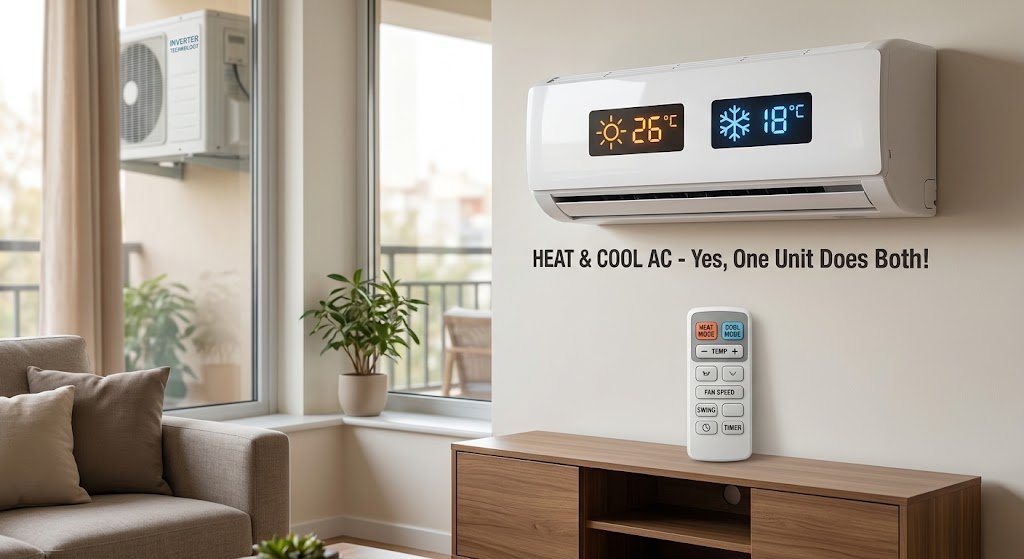
6. AC Heat Pump and Air Conditioning Heating Units
An AC heat pump is a practical option for people who need both summer cooling and winter heating.
Unlike a conventional air conditioner designed only for cooling, a reversible heat pump can change its operating mode. This allows it to transfer heat in either direction.
When comparing air conditioning heating units, consider these factors:
- Heating and cooling efficiency ratings.
- Performance during very hot or cold weather.
- Available heating capacity.
- Indoor and outdoor noise levels.
- Installation and maintenance expenses.
- Compatibility with existing ductwork or electrical systems.
Heat pumps do not perform identically in every climate. Their efficiency and heating capacity vary with outdoor temperature and equipment design.
For homes in regions with very hot summers, choosing a system designed for high outdoor temperatures is particularly important.
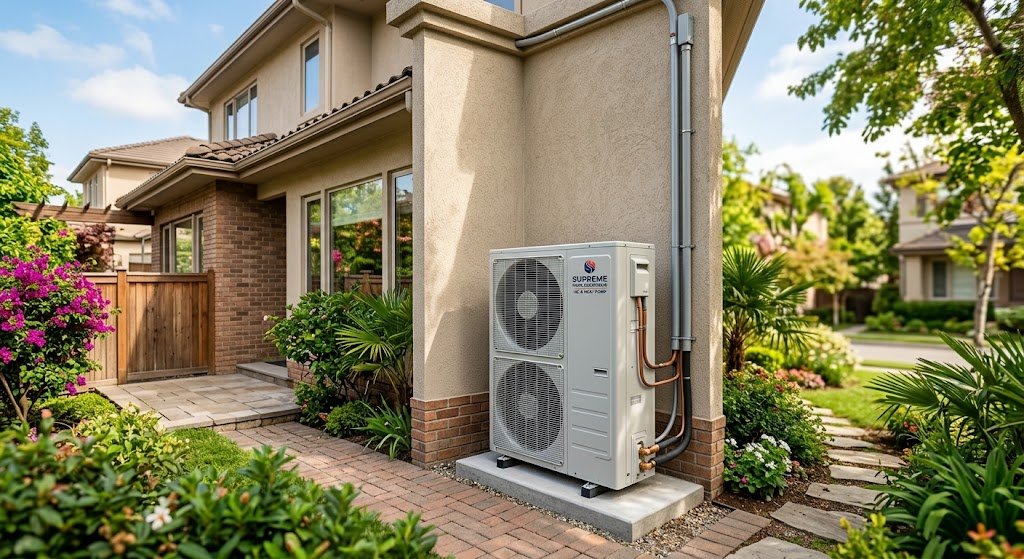
7. Air Con Heater Unit: Features to Compare
An air con heater unit combines cooling and heating functions in one system. Depending on the model, it may include a programmable thermostat, inverter compressor, sleep mode, and remote control.
Before buying, consider how you intend to use the equipment.
If you need cooling throughout most of the year, prioritize cooling capacity and hot-weather performance. If winter heating is also important, examine the heating output and efficiency at relevant outdoor temperatures.
You should also compare installation requirements and the availability of qualified technicians.
Do not choose a unit based only on its advertised energy rating. Check whether the rating reflects cooling, heating, or both, and compare equivalent specifications.
8. Outside Air Conditioner Unit: Installation and Maintenance
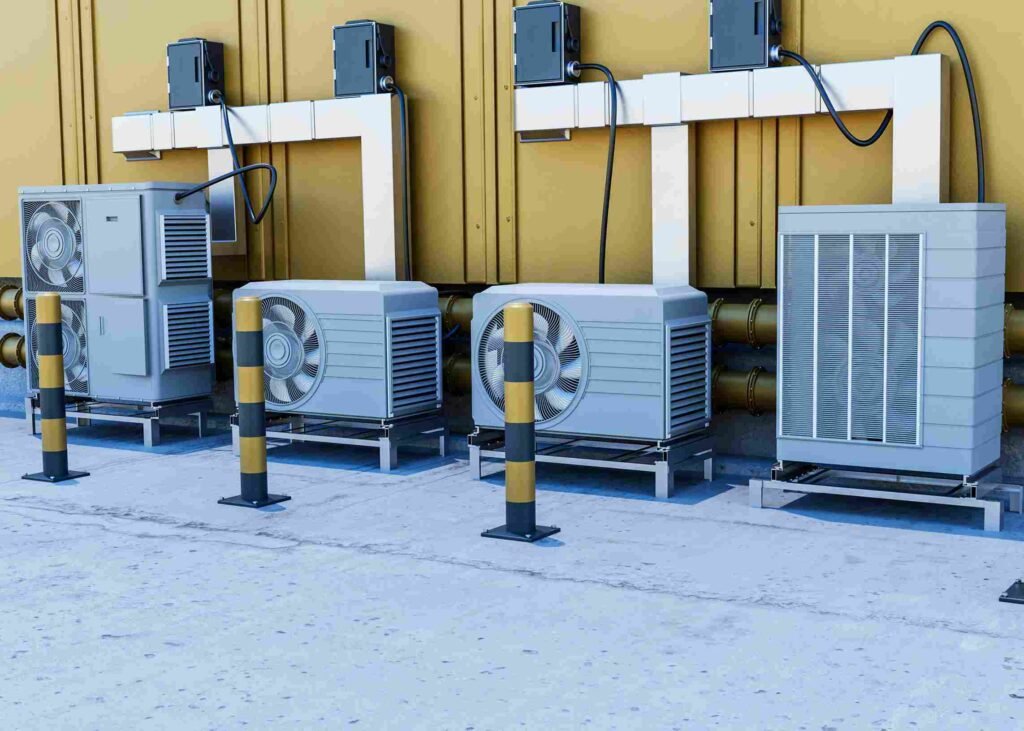
The outside air conditioner unit contains important components, including the compressor and condenser coil in many conventional split systems.
Its job is to release heat removed from the indoor space. If airflow becomes restricted, the system may have difficulty transferring heat effectively.
Follow these maintenance recommendations:
- Keep leaves, grass, and loose debris away from the unit.
- Maintain the manufacturer’s recommended clearance around the equipment.
- Arrange professional coil cleaning when needed.
- Check for unusual noises or visible damage.
- Keep shrubs and other obstructions from blocking airflow.
- Schedule inspections according to the manufacturer’s recommendations.
Avoid opening electrical compartments or handling refrigerant yourself. These tasks should be completed by qualified professionals.
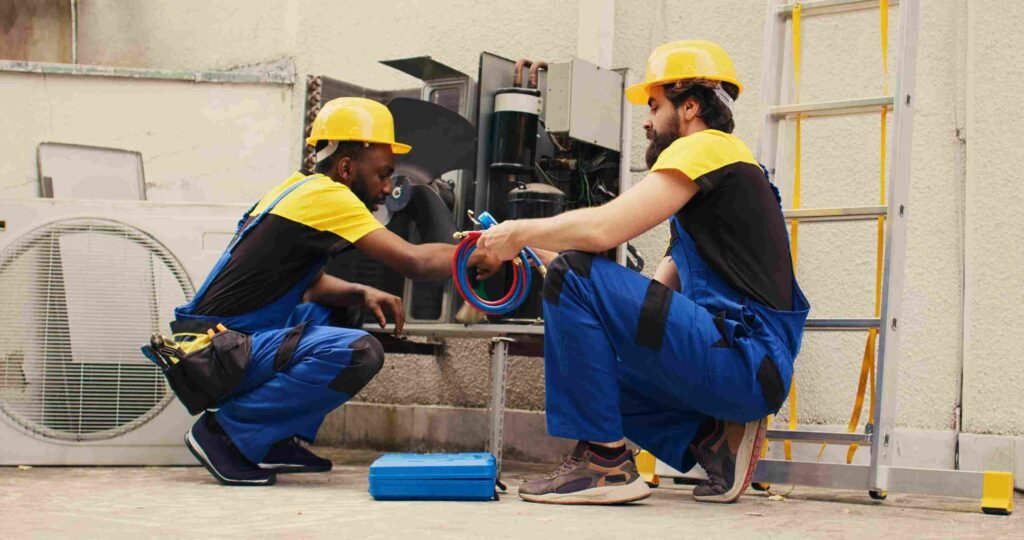
Choosing an Exterior Air Conditioner Location
The location of an exterior air conditioner can affect its performance and serviceability.
Choose a stable location that allows adequate airflow and provides technicians with safe access. Avoid placing the unit where falling debris, flooding, or severe physical damage is likely.
Follow the manufacturer’s installation instructions and applicable local requirements.
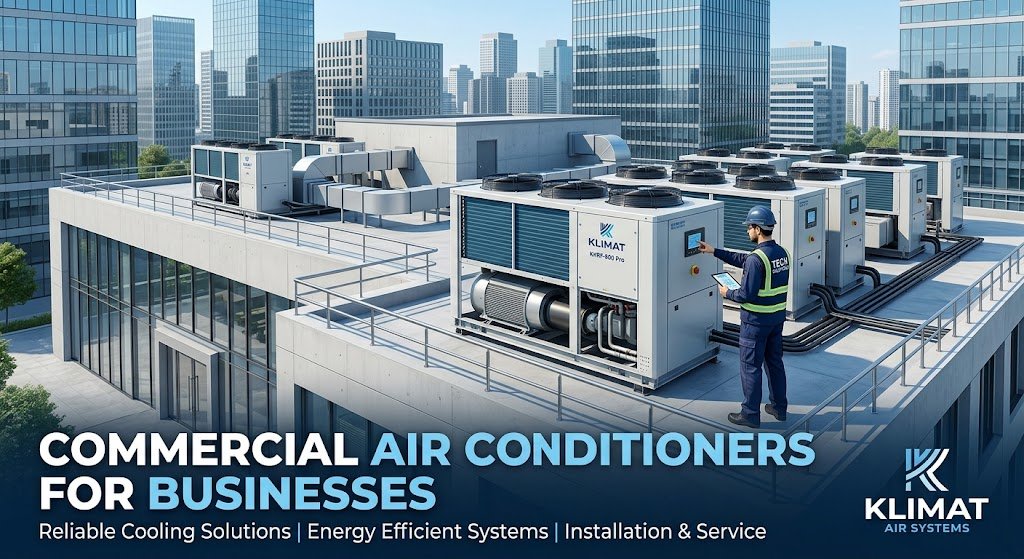
9. Commercial Air Conditioners for Businesses
Commercial air conditioners are designed to meet the cooling requirements of offices, retail stores, restaurants, and other business properties.
These buildings may have different needs from residential homes because they often contain more people, lighting, appliances, and heat-producing equipment.
Common options include rooftop packaged units, commercial split systems, and variable refrigerant flow systems.
When selecting equipment for a business, consider:
- Total building area and room layout.
- Occupancy and internal heat sources.
- Operating hours and cooling schedules.
- Ventilation and indoor air quality requirements.
- Maintenance access and service availability.
- Energy costs over the equipment’s expected life.
A professional load calculation can help determine the correct system size. Oversized equipment may cycle too frequently, while undersized equipment may struggle to maintain the desired temperature.
10. Understanding SEER2 and EER2 Ratings
Energy efficiency ratings help buyers compare air conditioning equipment.
SEER2 measures seasonal cooling efficiency under standardized test conditions. EER2 measures cooling efficiency at a specified set of operating conditions.
Generally, higher ratings indicate greater efficiency under the relevant testing method. However, real-world energy use also depends on climate, installation quality, thermostat settings, and maintenance.
When comparing two models, make sure you are comparing the same rating system and similar cooling capacities.
You should also consider the local climate. Equipment that performs well under one set of conditions may not deliver identical results in another.
11. How to Choose the Best High Efficiency Air Conditioner
Selecting the right system requires more than choosing a model with an impressive rating.
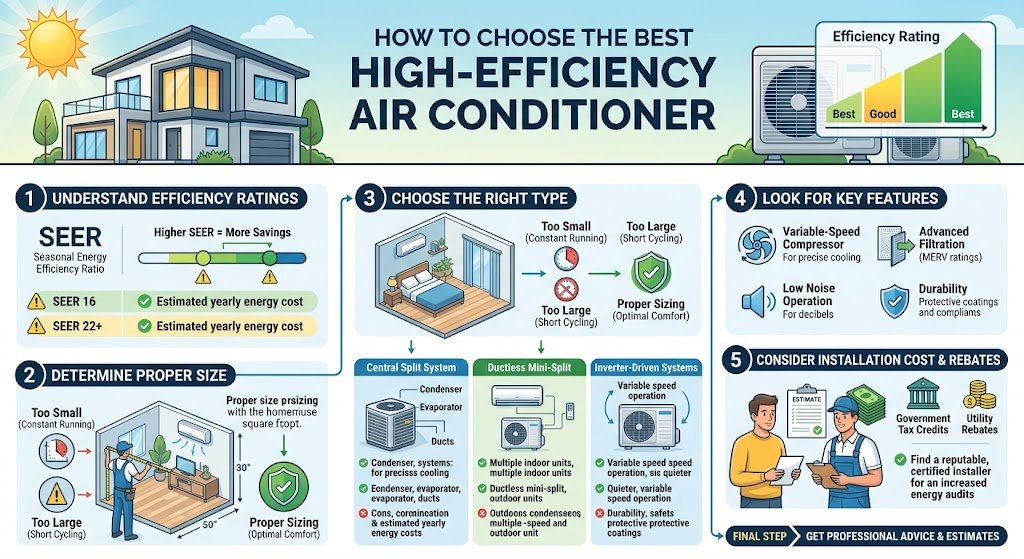
Start by determining the cooling capacity your property needs. A qualified HVAC professional can perform a load calculation based on floor area, insulation, windows, climate, and other factors.
Next, compare the following features:
Energy efficiency: Review comparable efficiency ratings and estimated operating costs.
Cooling capacity: Select equipment suitable for your room or building rather than relying on floor area alone.
Installation costs: Include labor, electrical work, duct modifications, and any necessary accessories.
Noise levels: Check the specifications for indoor and outdoor components.
Smart controls: Decide whether Wi-Fi connectivity and programmable schedules are useful for your routine.
Maintenance: Confirm that replacement filters, spare parts, and qualified service technicians are available.
Warranty: Read the manufacturer’s terms and understand any maintenance or installation conditions.
A slightly more expensive system may offer better long-term value if it matches your needs and operates efficiently.
12. Common Mistakes to Avoid When Buying an AC
Even a good air conditioner can disappoint if you choose or operate it incorrectly.
Avoid these common mistakes:
- Choosing the wrong size: Incorrect sizing can affect comfort, efficiency, and humidity control.
- Ignoring installation quality: Poor airflow, refrigerant problems, and incorrect setup can reduce performance.
- Focusing only on the purchase price: Consider lifetime operating and maintenance costs.
- Neglecting insulation: Air leaks and poor insulation increase cooling demand.
- Skipping maintenance: Dirty filters and obstructed coils can reduce performance.
- Ignoring climate conditions: Select equipment suitable for your local weather.
- Overlooking warranty requirements: Incorrect installation or neglected maintenance may affect warranty coverage.
Taking time to compare your options can help prevent avoidable expenses.
13. Simple Ways to Improve AC Efficiency
You do not always need to replace your entire cooling system to improve energy performance.
Start with a few practical habits:
- Clean or replace air filters according to the manufacturer’s instructions.
- Set the thermostat to a comfortable temperature without excessive cooling.
- Close windows and doors when operating the AC.
- Use curtains or blinds to reduce direct sunlight entering rooms.
- Seal suitable gaps around doors and windows.
- Keep outdoor equipment clear of debris.
- Arrange professional maintenance when required.
- Use programmable schedules to avoid unnecessary operation.
These steps can reduce cooling demand and help your existing equipment operate more effectively.
14. Frequently Asked Questions
What is the most energy-efficient type of air conditioner?
The answer depends on your property and climate. High-efficiency ductless mini-splits and appropriately selected heat pumps can be excellent options, but compare individual models and installation requirements.
Is a high-efficiency air conditioner worth the extra cost?
It may be worth the investment if the energy savings over its useful life offset the additional purchase and installation expenses. Your electricity rates and usage patterns are important factors.
Can an air conditioner provide heating and cooling?
Yes. Reversible heat pumps can provide both functions. Check the manufacturer’s specifications to confirm that a particular model supports heating.
How long does an air conditioner last?
Service life varies with equipment quality, usage, climate, installation, and maintenance. Regular servicing can help identify problems early, but no specific lifespan is guaranteed.
What SEER2 rating should I choose?
Compare available models against local efficiency requirements, climate conditions, and your budget. A qualified HVAC professional can help identify a suitable rating and system size.
How often should an air conditioner be serviced?
Check the manufacturer’s maintenance schedule and arrange professional inspections as recommended. Filters may require more frequent attention, especially in dusty environments or during heavy use.
Does a higher efficiency rating always mean lower bills?
Not necessarily. Actual bills depend on electricity rates, operating hours, system size, weather, insulation, and thermostat settings, as well as equipment efficiency.
Conclusion
A high efficiency air conditioner can help improve indoor comfort and reduce electricity consumption when it is correctly selected, installed, and maintained. Modern options include central systems, ductless mini-splits, packaged equipment, and heat pumps that provide both heating and cooling.
Before purchasing, compare efficiency ratings, cooling capacity, installation costs, noise levels, and maintenance requirements. Consider the climate where you live and how frequently you use your cooling system.
Most importantly, choose equipment that matches your property’s actual needs. With careful planning and regular maintenance, you can make a more informed investment in comfortable, efficient indoor temperatures.