
Having a reliable supply of hot water makes everyday activities easier, from taking a comfortable shower to washing dishes and cleaning your home. A water heater is an important household appliance that heats cold water and delivers it whenever you need it. However, choosing the right system can sometimes be confusing because different models offer different features, energy requirements, and installation costs.
Some households prefer traditional storage tanks, while others choose tankless or energy-efficient heat pump systems. Each option has its own advantages and limitations. Understanding these differences can help you make a smarter purchasing decision.
In this guide, we will explore how these appliances work, discuss nine popular types, explain their energy efficiency, and share practical maintenance and buying tips. Whether you are replacing an old unit or installing a new system, this information will help you find a suitable solution for your household.
Table of Contents
1. What Is a Water Heater?
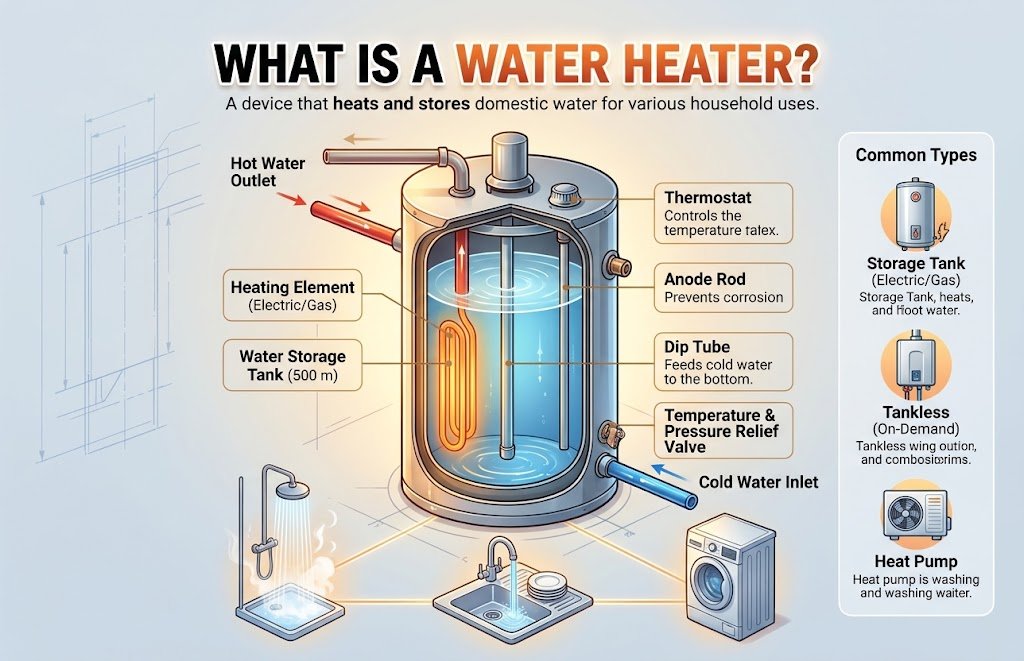
A water heater is a household appliance designed to heat cold water for everyday activities. It uses electricity, natural gas, propane, solar energy, or heat pump technology to raise the water temperature to a comfortable level.
Most homes use these systems for bathing, washing dishes, laundry, and other cleaning activities. Depending on the model, heated water is either stored in an insulated tank or produced when someone opens a hot water tap.
Understanding what a water heater does is important before purchasing one. Different systems provide different amounts of hot water, operate at different energy costs, and require specific installation conditions.
For example, a traditional storage model keeps hot water available in a tank, while a tankless system heats water only when needed. Your household size, daily water consumption, and available energy sources can help determine which option is appropriate.
2. How Does a Water Heater Work?
The basic purpose of a heating system is simple: it takes cold water, increases its temperature, and sends the heated water through household plumbing.
The exact process depends on the technology used.
In a traditional storage system, cold water enters an insulated tank. An electric heating element or gas burner heats the water inside. A thermostat monitors the temperature and controls the heating process.
When someone opens a hot water faucet, heated water travels through the plumbing system. As hot water leaves the tank, fresh cold water enters to replace it.
Tankless models work differently. Instead of storing heated water, they use powerful heating elements or gas burners to warm water as it flows through the unit.
Modern systems may also include safety features such as temperature controls, pressure relief valves, and automatic shutoff mechanisms.
3. Nine Different Types of Water Heaters
There are several heating technologies available for residential and comhttps://techvoltx.com/marketing-technology/mercial properties. Understanding their differences makes it easier to compare performance, installation requirements, and operating expenses.
3.1 Traditional Storage Tank Water Heaters
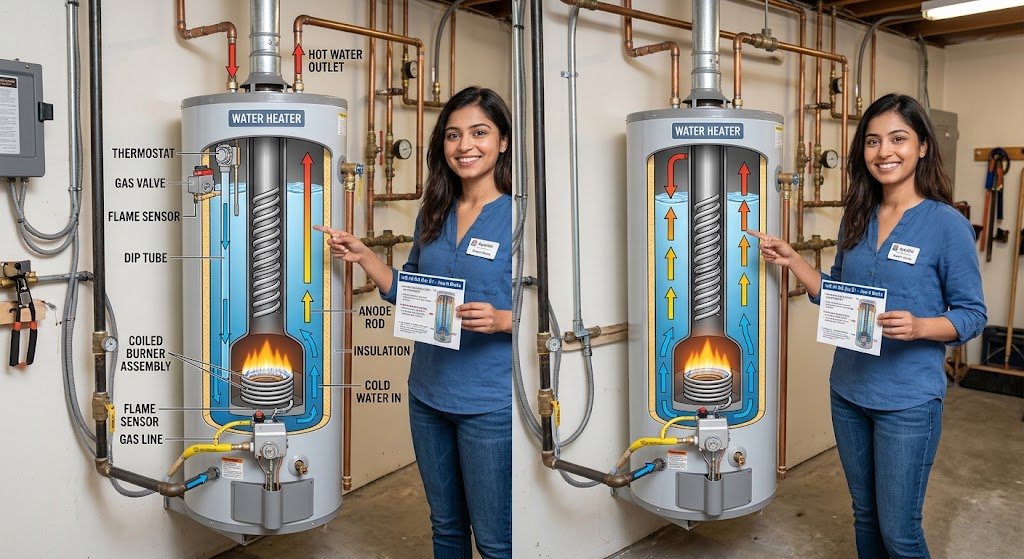
Storage tank models are among the most common options for residential properties. They contain an insulated tank that holds a specific quantity of heated water.
An electric element or gas burner heats the water and maintains its temperature until it is needed.
Benefits:
- Provides stored hot water for everyday use.
- Available in different tank capacities.
- Generally straightforward to operate.
- Suitable for households with predictable hot water requirements.
Limitations:
These models can experience standby heat loss because they continuously maintain stored water temperature. Once the tank becomes empty, users may need to wait for additional water to heat.

3.2 Tankless Water Heaters
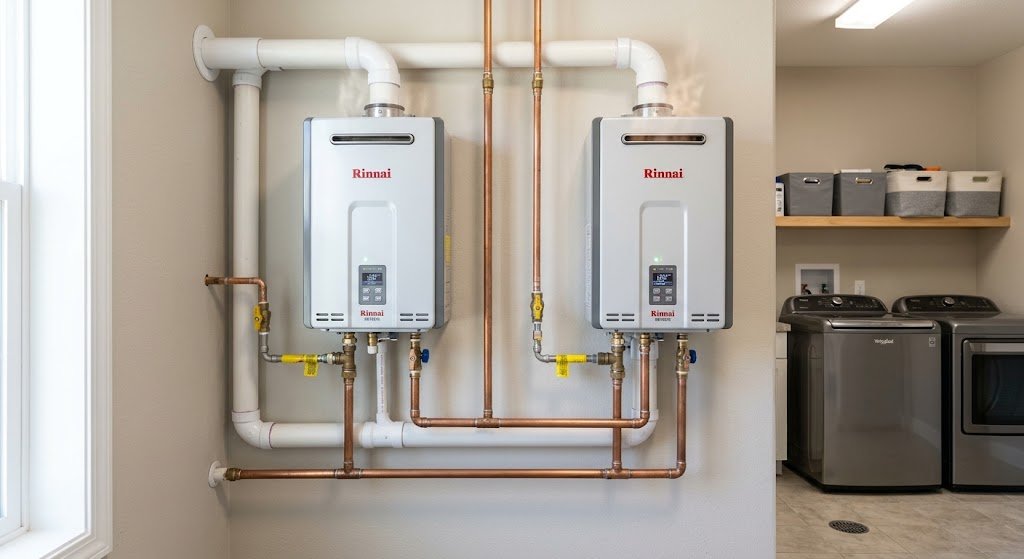
Tankless systems heat water directly as it passes through the appliance. They do not require a large storage tank, making them suitable for properties with limited installation space.
When someone opens a hot water tap, the system activates its heating mechanism and supplies hot water on demand.
Benefits:
- No large storage tank is required.
- Reduces standby heat loss.
- Compact design.
- Can provide hot water continuously within its rated capacity.
However, the unit must have sufficient heating capacity to support the household’s simultaneous hot water demand.
3.3 Heat Pump Water Heaters
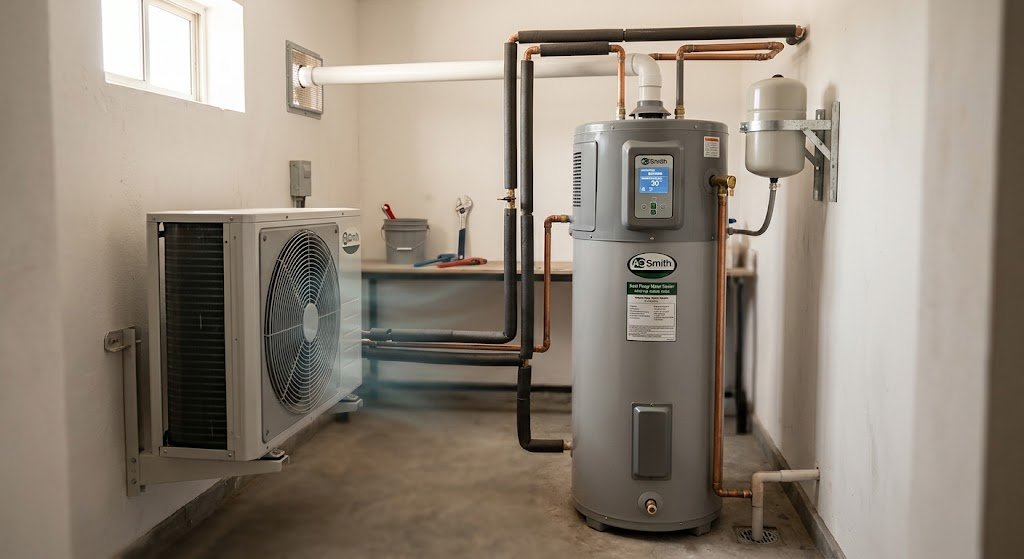
Heat pump models use a different approach to heating. Instead of generating heat directly, they transfer heat from the surrounding air into the water.
This technology can use substantially less electricity than conventional electric resistance heating under suitable operating conditions.
Benefits:
- High energy efficiency.
- Lower electricity consumption.
- Reduced household energy costs.
- Can be an environmentally friendly option.
These systems generally require adequate surrounding air and installation space. Their performance can also depend on the temperature of the installation area.
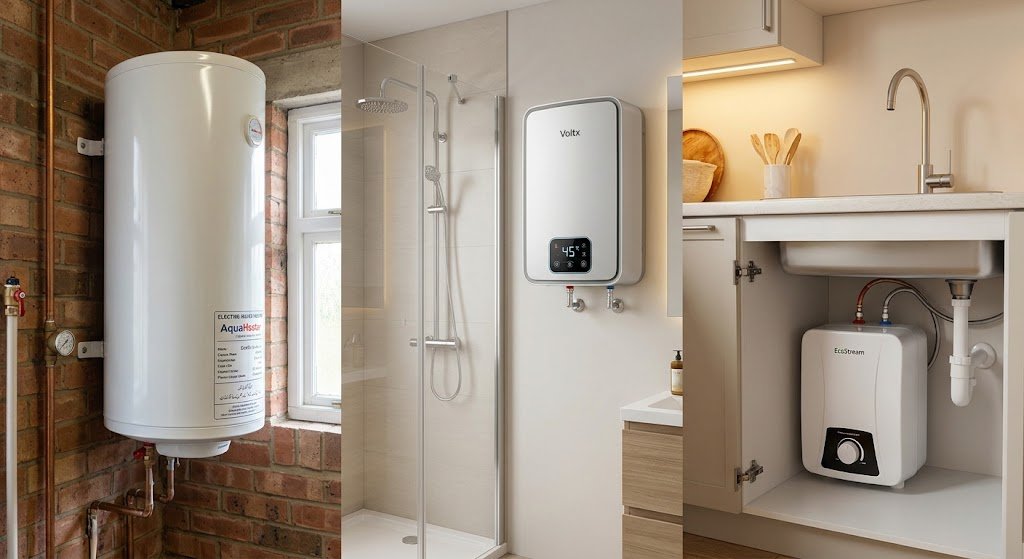
3.4 Electric Water Heaters
Electric models use heating elements to increase water temperature. They are available in traditional tank designs and tankless configurations.
A thermostat regulates the heating process and helps maintain the selected temperature.
Benefits:
- No gas connection is required.
- Available in different sizes.
- Relatively simple operation.
- Suitable for properties with reliable electricity.
Before installation, check the electrical supply, circuit requirements, and operating costs.
3.5 Gas Water Heaters
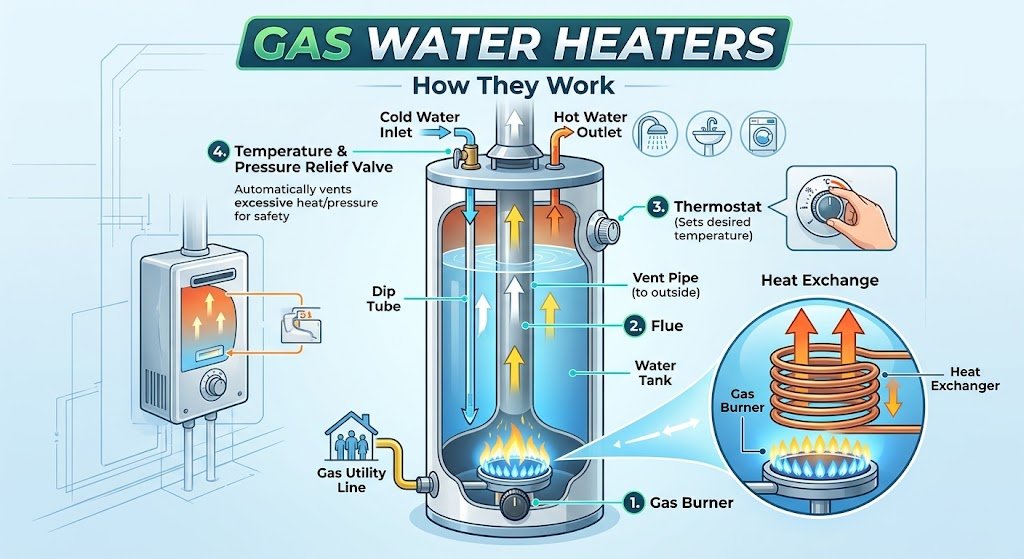
Gas-powered systems use natural gas or propane to heat water. Traditional models generally contain a burner beneath the storage tank.
When the water temperature drops, the thermostat signals the burner to activate. Heat transfers through the tank and raises the water temperature.
Benefits:
- Can heat water relatively quickly.
- Useful where gas is readily available.
- Available in storage and tankless designs.
Proper ventilation and professional installation are essential because gas combustion produces exhaust gases, including carbon monoxide.
3.6 Solar Water Heaters
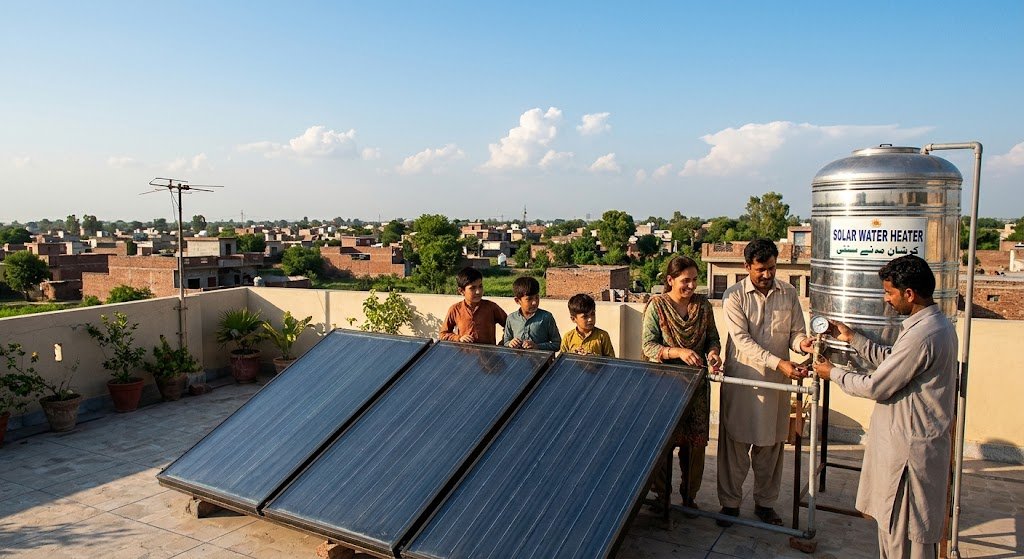
Solar systems use energy from sunlight to heat household water. They typically include solar collectors, a storage tank, and connecting pipes.
Solar collectors absorb sunlight and transfer the captured heat to water directly or through a heat-transfer fluid.
Benefits:
- Uses renewable solar energy.
- Can reduce conventional energy consumption.
- Helps lower operating expenses in suitable climates.
However, solar performance depends on sunlight availability, weather conditions, and system design. Some installations also require a backup heating source.
3.7 Condensing Water Heaters
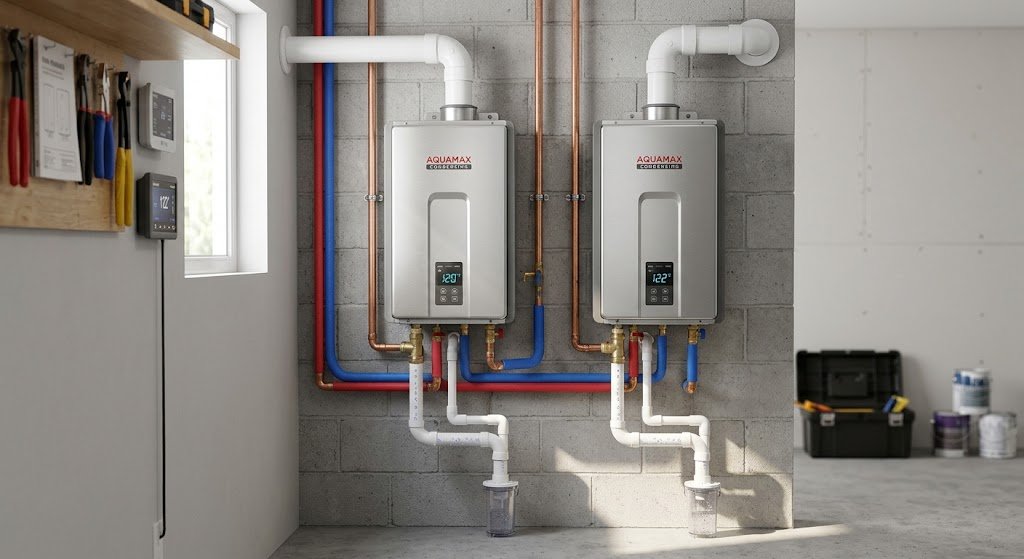
Condensing models are designed to capture additional heat from exhaust gases that would otherwise escape through the ventilation system.
This recovered heat helps warm incoming water, improving overall energy efficiency.
These systems are commonly associated with high-efficiency gas heating technology.
Benefits:
- Better fuel utilization.
- Reduced wasted exhaust heat.
- Can lower operating costs.
Installation may require special venting and drainage arrangements, depending on the model.
3.8 Hybrid Water Heaters
Hybrid systems combine heat pump technology with conventional electric resistance heating.
Under normal conditions, the heat pump handles most heating requirements. When demand increases or operating conditions change, electric resistance elements can provide additional heating.
Benefits:
- Flexible heating operation.
- Improved energy efficiency.
- Additional heating support during high demand.
They are worth considering for households that want a combination of efficiency and reliable performance.
3.9 Point-of-Use Water Heaters
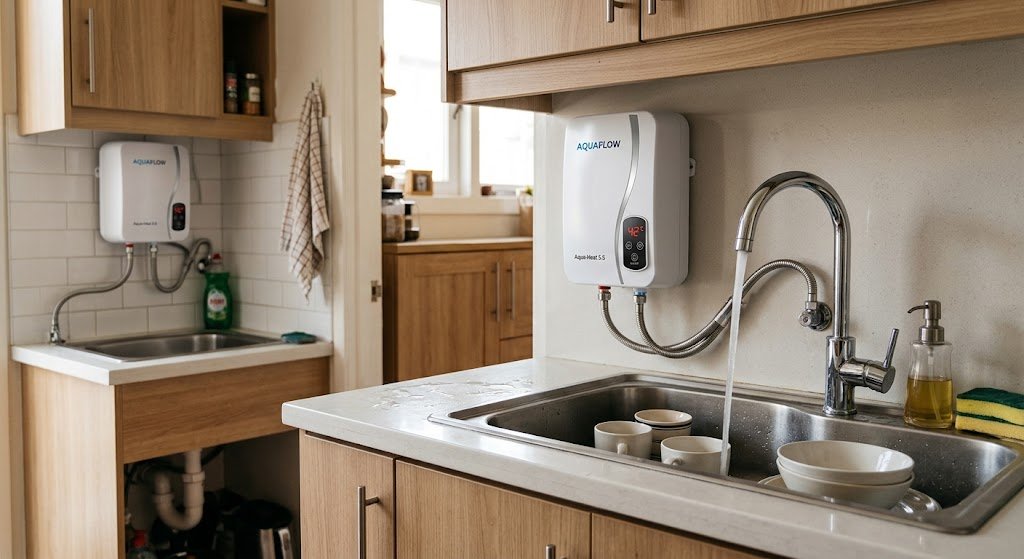
Point-of-use models are compact appliances installed close to the faucet or fixture where hot water is needed.
They are particularly useful for distant bathrooms, kitchen sinks, and small spaces.
Benefits:
- Compact installation.
- Reduced waiting time for hot water.
- Useful for individual fixtures.
- Available in electric and other configurations.
Their capacity is usually limited, so they are not necessarily suitable as the primary heating solution for an entire household.
4. What Is a Heat Pump Water Heater?
A heat pump model is an energy-efficient appliance that transfers heat instead of producing it entirely through electrical resistance.
It works similarly to a refrigerator but operates in reverse. While a refrigerator removes heat from its interior, a heat pump water heater captures heat from surrounding air and transfers it into the water.
These systems generally include an evaporator, compressor, condenser, and refrigerant. Together, these components move heat through the appliance.
One major advantage is energy efficiency. Because the system transfers existing heat, it can provide more heat energy than the electricity it consumes.
However, installation conditions matter. Most models need sufficient surrounding air and space for proper operation. They may also release cooler air into the room where they are installed.
For homeowners looking to reduce electricity consumption, this technology can be worth considering.

5. How Does a Heat Pump Water Heater Work?
Understanding the operating process helps explain why these appliances can be more efficient than conventional electric models.
Here is how the process works:
- Heat absorption: The evaporator absorbs heat from the surrounding air.
- Refrigerant circulation: A refrigerant absorbs this heat and changes into a gas.
- Compression: The compressor increases the refrigerant’s pressure and temperature.
- Heat transfer: The hot refrigerant transfers energy to the water through a heat exchanger.
- Cycle continuation: The refrigerant cools and returns to its original state, allowing the process to repeat.
The system continues transferring heat until the water reaches the desired temperature.
Some models also include conventional electric heating elements to provide additional heating when required.

6. Gas Water Heater: How Does It Work?
A gas-powered system uses fuel combustion to produce heat. In a conventional storage model, a burner is located beneath the water tank.
When the stored water becomes cooler than the thermostat setting, the burner activates. The heat travels through the tank and warms the water inside.
A flue or ventilation system carries combustion exhaust gases safely outside.
Modern gas appliances may include electronic ignition, temperature controls, and safety mechanisms that monitor operation.
Although these systems can provide reliable hot water, correct installation is extremely important. Poor ventilation or faulty combustion equipment can create dangerous carbon monoxide exposure.
Always use a qualified professional for gas connections, ventilation, repairs, and safety inspections.
7. Electric Water Heater Energy Guide
Electric heating systems are convenient, but their energy consumption can influence monthly electricity bills.
Understanding the factors that affect electricity usage can help households operate these appliances more efficiently.
Factors That Affect Electricity Consumption
Tank capacity: Larger storage tanks generally require more energy to heat their water.
Water temperature: Higher temperature settings can increase electricity consumption and heat loss.
Household usage: Frequent showers, laundry, and dishwashing increase hot water demand.
Insulation: Proper insulation helps reduce heat escaping from stored water.
Appliance efficiency: Modern energy-efficient models may consume less electricity than older appliances.
Practical Energy-Saving Tips
- Choose an appropriate tank size for your household.
- Avoid unnecessarily high temperature settings.
- Insulate hot water pipes where appropriate.
- Repair leaking hot water faucets.
- Follow the manufacturer’s maintenance recommendations.
- Consider an energy-efficient model when replacing an old appliance.
A well-maintained system can help reduce unnecessary energy consumption while providing comfortable hot water.
8. How to Choose the Best Hot Water Heaters
Finding the right appliance requires more than comparing prices. You should consider your household’s daily needs, available energy sources, installation space, and long-term operating expenses.
Here are some important factors to evaluate.
1. Household Size: Larger families generally need greater hot water capacity because several people may use hot water throughout the day.
2. Energy Source: Check whether electricity, natural gas, propane, or solar energy is practical and available at your property.
3. Energy Efficiency: Compare energy ratings and estimated annual operating costs instead of focusing only on the purchase price.
4. Tank Capacity: Choose a storage capacity that matches your household’s peak hot water demand.
5. Installation Costs: Consider plumbing modifications, electrical connections, ventilation, and professional installation charges.
6. Available Space: Tankless and point-of-use models may be suitable when installation space is limited.
7. Maintenance: Compare maintenance requirements, replacement parts, and warranty coverage.
8. Long-Term Value: A more efficient appliance may cost more initially but could provide savings over its operating life.
The best choice is the one that meets your household’s requirements without creating unnecessary energy expenses.
9. Essential Water Heater Maintenance Tips
Regular maintenance helps keep heating equipment operating safely and efficiently. Although maintenance requirements differ between models, a few general practices can help extend appliance life.
- Check for leaks: Inspect visible pipes, connections, and the surrounding floor.
- Monitor temperature: Follow the manufacturer’s recommended temperature settings.
- Flush storage tanks: Remove accumulated sediment according to manufacturer instructions.
- Inspect safety components: Have pressure relief valves and other safety devices checked by a qualified technician.
- Check ventilation: Gas-powered models need properly maintained exhaust and ventilation systems.
- Schedule professional servicing: Regular inspections can identify developing problems before they become serious.
Never attempt repairs involving gas connections, electrical components, or pressurized systems unless you are qualified to do so.
10. Common Water Heater Problems and Solutions
Even a reliable appliance can develop problems over time. Recognizing common warning signs can help you decide when professional assistance is necessary.
| Common Problem | Possible Cause |
| No hot water | Power, gas supply, thermostat, or heating element problem |
| Water takes too long to heat | Sediment buildup or insufficient heating capacity |
| Strange noises | Mineral or sediment accumulation |
| Water leaking | Damaged tank, loose connection, or faulty valve |
| Inconsistent temperature | Thermostat or heating component problem |
| Discolored water | Corrosion or sediment inside the system |
Some problems can be caused by minor maintenance issues, while others indicate equipment failure.
If you notice gas smells, a carbon monoxide alarm, electrical burning smells, or significant leakage, stop using the appliance when safe and seek professional assistance immediately.
11. Frequently Asked Questions About Water Heaters
1. What Does a Water Heater Do?
It heats cold water and supplies it to household fixtures for activities such as bathing, washing dishes, and cleaning.
2. How Long Does a Water Heater Usually Last?
Lifespan depends on the model, water quality, installation, and maintenance. Many conventional tank models last around 8–12 years, while some tankless systems can last 15–20 years or longer.
3. Which Type of Water Heater Is Most Energy Efficient?
Heat pump models are generally among the most energy-efficient options for residential water heating when installed in suitable conditions.
4. Are Electric Water Heaters Better Than Gas Models?
Neither option is universally better. Electric models can be convenient where electricity is readily available, while gas models may offer lower operating costs in areas with affordable natural gas.
5. What Is a Heat Pump Water Heater?
It is an appliance that transfers heat from surrounding air into water instead of generating all the heat through conventional electrical resistance.
6. How Does a Tankless Water Heater Work?
It heats water as it flows through the appliance, providing hot water on demand without storing a large quantity in a tank.
7. What Temperature Should a Water Heater Be Set To?
For many residential storage systems, 120°F (49°C) is a common recommended setting that helps balance comfort, energy efficiency, and scald prevention. Follow the manufacturer’s instructions and local safety guidance.
Conclusion
Choosing the right heating system can make everyday household activities more convenient while helping manage energy expenses. From traditional storage tanks and tankless models to solar and heat pump technology, each option offers different advantages.
Before making a purchase, consider your household size, daily hot water requirements, available energy sources, installation costs, and long-term efficiency. Regular maintenance is equally important for reliable performance and safe operation.
A properly selected and maintained water heater can provide dependable hot water for years. Take time to compare different technologies and choose a system that fits your home and budget.