
There was a time when artificial intelligence belonged to science fiction — a distant, almost mythical concept reserved for robots in movies and futuristic labs. Today, that fiction has quietly become fact. AI in daily life is no longer a novelty; it is the invisible engine running in the background of nearly everything we do, from the moment we wake up and check our phones to the second we fall asleep while a smart speaker dims the lights.
Most people don’t realize how deeply artificial intelligence has woven itself into ordinary routines. It doesn’t announce itself with flashing lights or robotic voices. Instead, it works silently — recommending a song you didn’t know you wanted to hear, predicting a traffic jam before it happens, or flagging a suspicious transaction on your bank statement within seconds. This article takes a close, honest look at how AI shows up in real life, the methods that power it, and what its growing presence means for our future.
What is Artificial Intelligence? A Simple, No-Jargon Explanation
At its core, artificial intelligence refers to computer systems designed to perform tasks that normally require human intelligence — things like recognizing patterns, understanding language, making decisions, or learning from experience. Unlike traditional software that simply follows fixed instructions, AI systems are built to adapt, improve, and sometimes even surprise their creators with the conclusions they reach.
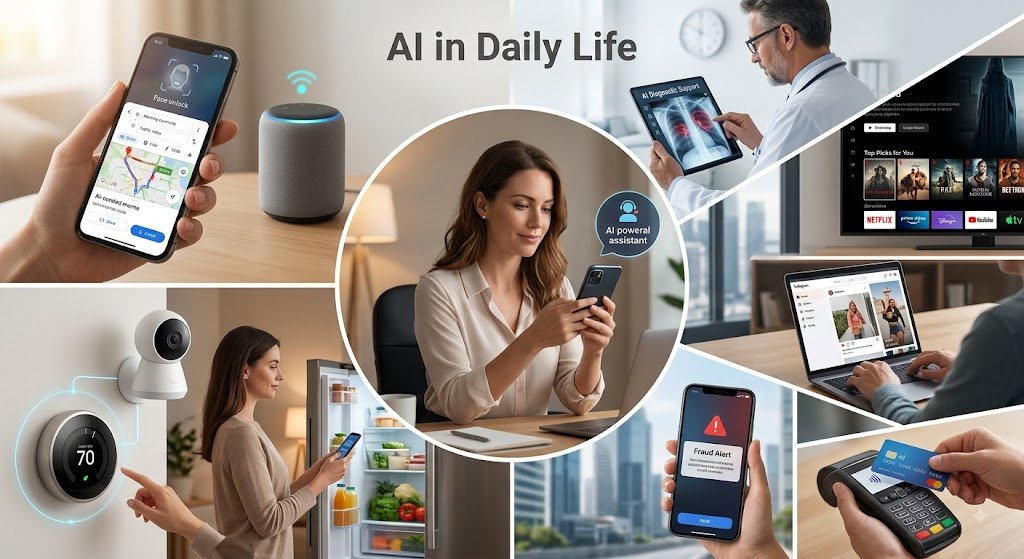
You don’t need a computer science degree to understand AI’s basic idea: feed a system enough data, let it identify patterns within that data, and it starts making predictions or decisions on its own. That’s the foundation on which almost every AI application in daily life is built.
Now let’s look at where this technology actually shows up — because chances are, you’ve interacted with AI multiple times today without even noticing.
Top Uses of AI in Everyday Life
AI in Smartphones and Virtual Assistants
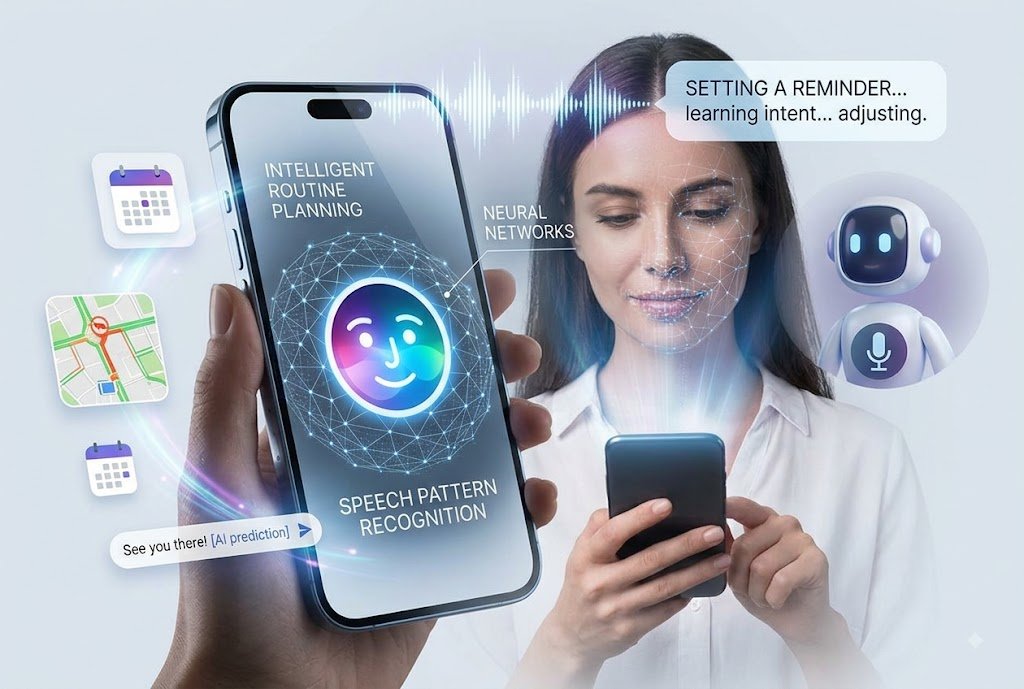
Every time you ask Siri for the weather or tell Google Assistant to set a reminder, you’re using natural language AI. These assistants don’t just follow commands — they interpret intent, learn your speech patterns, and improve their responses the more you use them. Even your phone’s keyboard, which predicts your next word before you type it, is a small but constant example of AI at work.
AI in Social Media
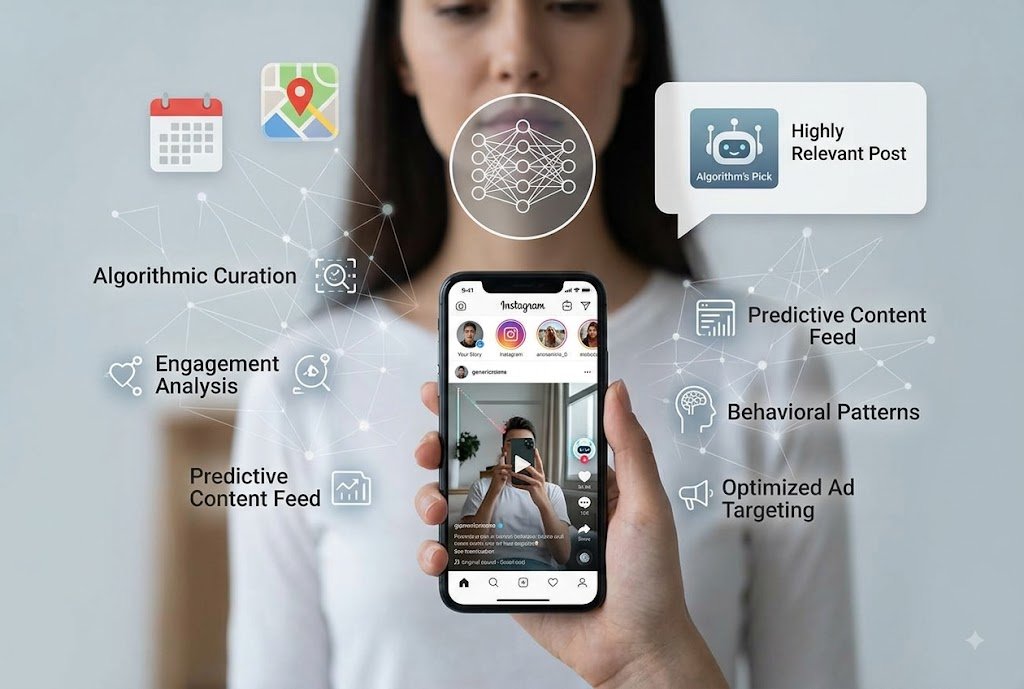
Ever wondered why your social media feed feels almost too accurate at guessing what you want to see? That’s not luck — it’s algorithmic prediction. Platforms like Instagram, TikTok, and Facebook use AI to analyze your scrolling behavior, likes, and watch time to serve content that keeps you engaged. This is one of the clearest uses of AI in everyday life, and also one of the most debated, since it directly shapes what information reaches us.
AI in Healthcare
Perhaps one of the most meaningful applications of AI is in medicine. AI-powered tools now assist doctors in detecting diseases like cancer earlier and more accurately by analyzing medical scans faster than the human eye can process. Wearable devices like smartwatches use AI to monitor heart rate irregularities, sleep patterns, and even detect early signs of conditions such as atrial fibrillation — often before the wearer notices any symptoms.

AI in E-commerce and Shopping
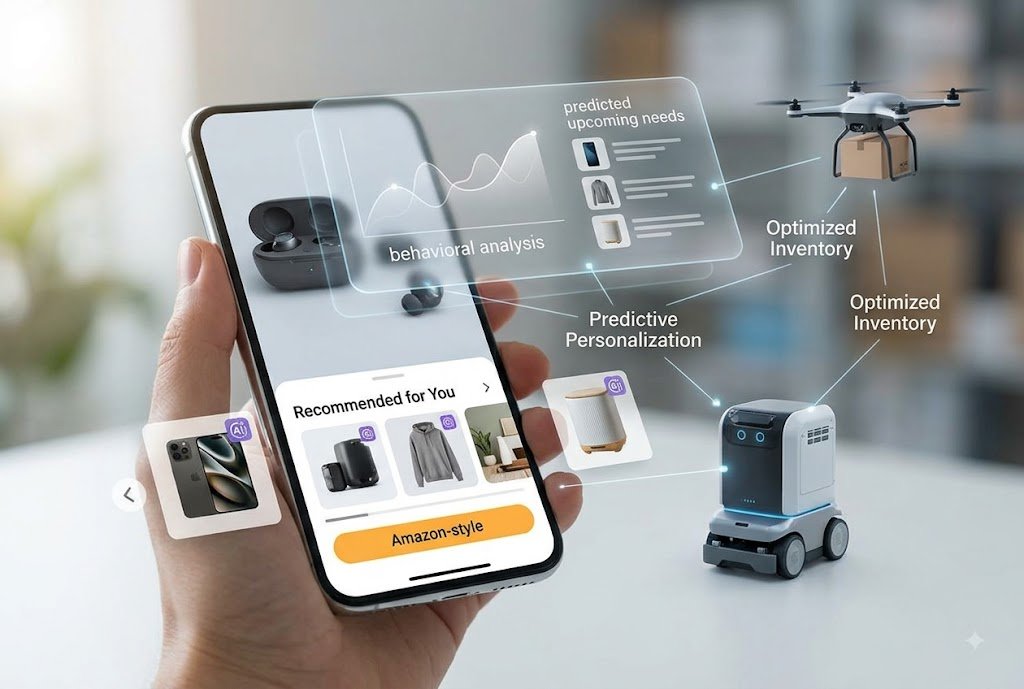
When you shop online and see “Recommended for You” or “Customers who bought this also bought,” that’s AI analyzing your browsing and purchase history to predict what you’re likely to buy next. Retail giants like Amazon have built entire business models around this kind of predictive personalization, making it one of the most profitable uses of AI in real life.
AI in Navigation and Maps
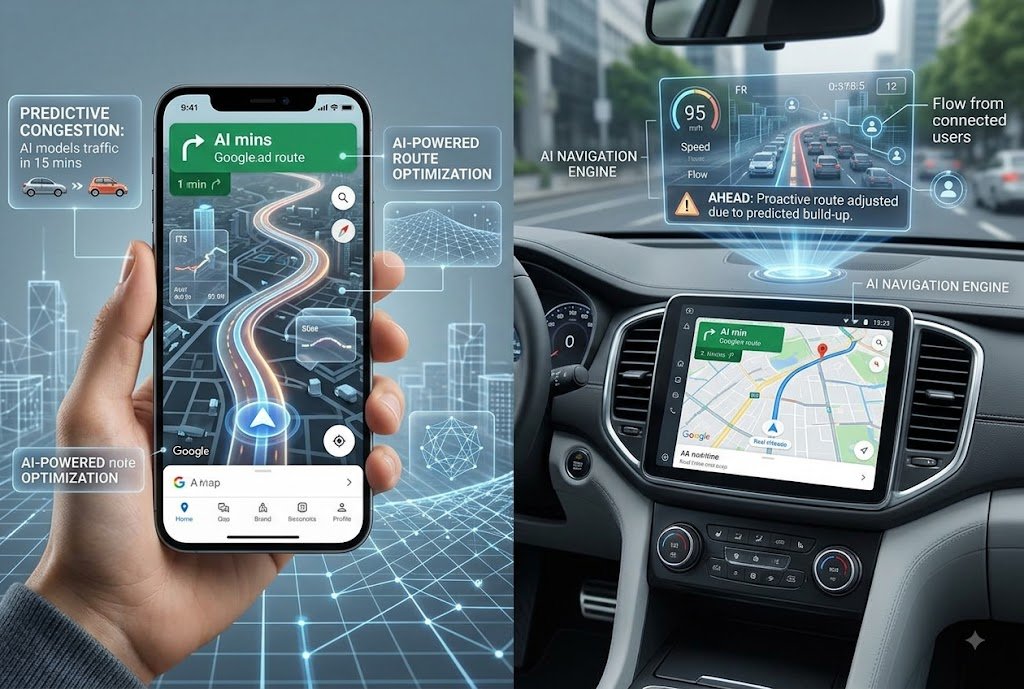
Google Maps and similar apps use AI to study traffic patterns, road closures, and historical data to suggest the fastest route in real time. This isn’t just about reading a map — it’s about predicting congestion minutes or even hours before it forms, based on data collected from millions of users simultaneously.
AI in Banking and Finance
Every time your bank sends an alert about “unusual activity” on your card, an AI fraud-detection system has likely just flagged a transaction that deviates from your normal spending behavior. Banks also use AI for credit scoring, robo-advisors for investment planning, and chatbots that handle customer queries instantly, 24/7.

AI in Smart Home Devices
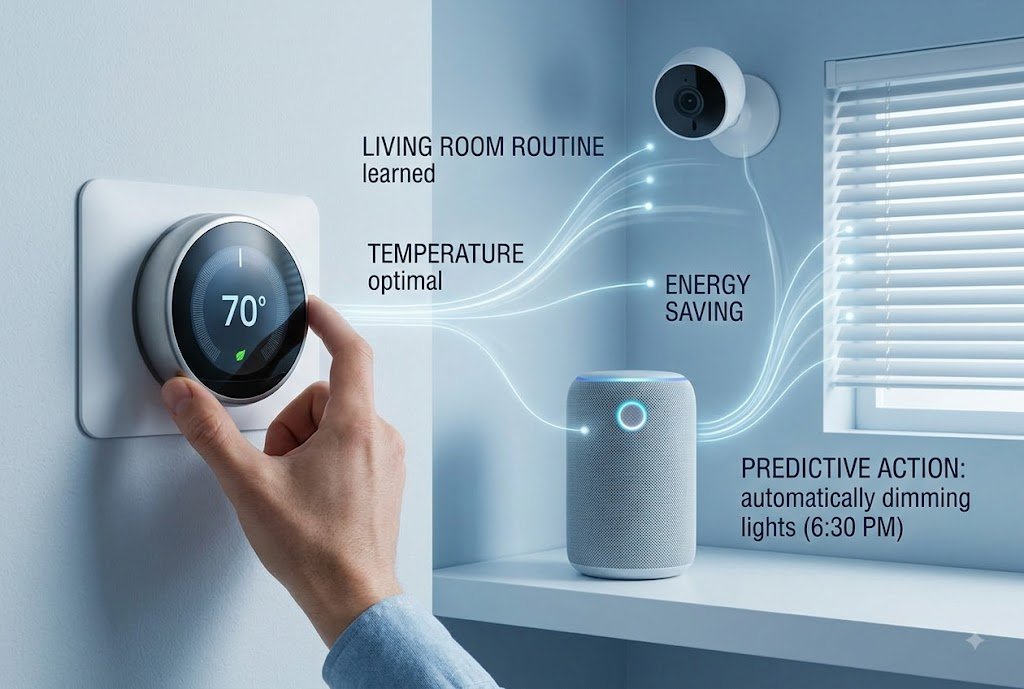
Smart speakers, thermostats, and security cameras now use AI to learn household routines. A smart thermostat, for instance, can learn when you usually leave for work and automatically adjust the temperature to save energy — a small but practical example of how AI simplifies daily decision-making.
How AI Works in Real Life: Understanding Common AI Methods
Behind every AI application mentioned above is a set of underlying methods that make these systems “intelligent.” Understanding these AI methods helps demystify how the technology actually functions.
Machine Learning is the foundation of most modern AI. Instead of being explicitly programmed for every scenario, machine learning systems are trained on large datasets and learn to identify patterns on their own. The more data they process, the more accurate their predictions become — which is why services like Netflix or Spotify seem to “know” your taste better over time.
Natural Language Processing (NLP) is what allows machines to understand and generate human language. This is the technology behind chatbots, voice assistants, translation apps, and even grammar-checking tools. NLP enables a computer to grasp not just words, but context, tone, and intent.
Computer Vision gives machines the ability to interpret visual information, much like human eyesight. It’s used in facial recognition for unlocking phones, quality control in manufacturing, and even in agriculture, where AI-powered cameras assess crop health from drone footage.
Deep Learning, a more advanced subset of machine learning, uses layered neural networks inspired loosely by the human brain. It’s responsible for some of the most impressive AI feats today, including image generation, complex speech recognition, and self-driving car perception systems.
Together, these AI methods form the technical backbone of nearly every “smart” feature we now take for granted.
AI in Real Life: Industry Examples Beyond the Obvious
While smartphones and social media get most of the attention, AI’s real-life impact runs far deeper across industries.
In education, AI-powered platforms now personalize learning paths for students, identifying knowledge gaps and adjusting difficulty levels automatically — something a single teacher managing 30 students could rarely do in real time.
In transportation, self-driving technology continues to advance, with AI systems processing sensor data from cameras, radar, and lidar simultaneously to make split-second driving decisions safer than human reaction time in many controlled scenarios.
In entertainment, streaming platforms like Netflix and Spotify rely almost entirely on AI recommendation engines to keep users engaged, analyzing viewing habits, pause points, and even the time of day you watch content to fine-tune suggestions.
Even agriculture has been transformed, with AI-driven systems predicting crop yields, detecting plant diseases early, and optimizing irrigation schedules based on weather data — proving that AI’s reach extends well beyond tech-centric industries.
The Real Benefits of AI in Daily Life
The growing presence of AI isn’t just about convenience — it delivers measurable value in several ways.
Time-saving is perhaps the most immediate benefit. Tasks that once took hours, like sorting through emails or researching a topic, can now be handled in minutes with AI assistance.
Better decision-making is another significant advantage. AI can process massive datasets far beyond human capability, helping doctors diagnose more accurately, businesses forecast demand more reliably, and individuals make more informed financial choices.
Personalization has also reached a level that was unimaginable a decade ago. From curated playlists to tailored news feeds, AI adapts digital experiences to individual preferences in ways that feel almost intuitive.
Challenges and Concerns Surrounding AI
No honest discussion of AI in daily life would be complete without acknowledging its downsides.
Privacy remains one of the biggest concerns. The same data collection that powers personalized recommendations also raises questions about how much companies know about our habits, and how that information is stored, sold, or used.
Job displacement is another widely discussed issue. As AI automates repetitive tasks in fields like manufacturing, customer service, and even some aspects of writing and design, concerns about job security are valid and worth taking seriously, even as new roles emerge alongside these changes.
Bias in AI systems is a subtler but equally important concern. Since AI learns from historical data, it can inadvertently absorb and amplify existing societal biases, leading to unfair outcomes in areas like hiring or lending if not carefully monitored.
These challenges don’t diminish AI’s value, but they do highlight the importance of thoughtful regulation, transparency, and ethical development as the technology continues to expand.
The Future of AI in Everyday Life
Looking ahead, AI’s role in daily life is only expected to deepen. We’re likely to see more seamless integration between AI and everyday devices, with systems becoming proactive rather than reactive — anticipating needs before we even express them.
Healthcare will likely see AI move from diagnostic support to more active roles in personalized treatment plans. Education may shift further toward AI-guided, individualized learning at scale. And as natural language processing continues to improve, interacting with technology through simple conversation will likely become the default, not the exception.
At the same time, growing awareness around privacy and ethical AI use will probably shape how these systems are built and regulated in the coming years, striking a balance between innovation and responsibility.
How to Start Using AI Tools Responsibly in Your Own Routine
For readers wondering how to make practical use of everything discussed above, the good news is that adopting AI in daily life doesn’t require technical expertise. Start small: use a voice assistant to manage reminders and calendar events, enable smart recommendations on platforms you already trust, or try an AI writing tool to speed up routine emails.
The key is to stay intentional. Review privacy settings on apps that use AI-driven personalization, understand what data is being collected, and periodically check permissions granted to smart devices at home. Treating AI as a tool to be managed — rather than a background process to ignore — allows individuals to enjoy its benefits while minimizing unnecessary exposure of personal data.
Businesses, too, are increasingly adopting AI-driven tools for customer service, marketing analytics, and operational efficiency. Even small businesses now have access to affordable AI solutions that were once available only to large corporations, leveling the playing field in ways that didn’t exist just a few years ago.
Frequently Asked Questions
What are the most common uses of AI in everyday life? The most common uses include virtual assistants, personalized recommendations on social media and shopping platforms, navigation apps, fraud detection in banking, and smart home devices.
How is AI used in real life industries? AI is used across healthcare for diagnostics, education for personalized learning, transportation for autonomous driving, agriculture for crop monitoring, and entertainment for content recommendations.
What are the main AI methods used today? The core AI methods include machine learning, natural language processing (NLP), computer vision, and deep learning — each serving different functions depending on the application.
Is AI safe to use in daily life? Generally, yes, though users should remain mindful of data privacy and understand how their information is being collected and used by AI-powered platforms.
Final Thoughts
Artificial intelligence has moved far beyond the realm of futuristic speculation. It’s here, embedded quietly in the apps we use, the devices we rely on, and the decisions made on our behalf every single day. Understanding the uses of AI in everyday life — along with its benefits and its genuine risks — allows us to engage with this technology more thoughtfully, rather than simply accepting it as an invisible background process.
As AI methods continue to evolve, one thing is clear: the line between human routine and artificial intelligence will only continue to blur, making it more important than ever to stay informed about the systems shaping our daily lives.