A ceiling fan is a practical addition to almost any home because it helps circulate air, improves comfort, and can complement your interior design. Whether you are furnishing a bedroom, updating your living room, or looking for better lighting, choosing the right model can make a noticeable difference. Modern designs offer much more than spinning blades, including energy-efficient motors, remote controls, integrated LED lights, and decorative finishes.
However, not every model suits every room. Some fans work well in spaces with low ceilings, while others are designed to provide stronger airflow in larger rooms. You can also find models that combine lighting and ventilation in one attractive fixture.
In this guide, you will discover nine important ceiling fan types, features, and buying considerations. You will also learn how to compare lighting options, select the right size, maintain your fan, and avoid common purchasing mistakes. These practical tips will help you choose a model that balances comfort, performance, safety, and style.
Table of Contents
1. What Is a Ceiling Fan and How Does It Work?
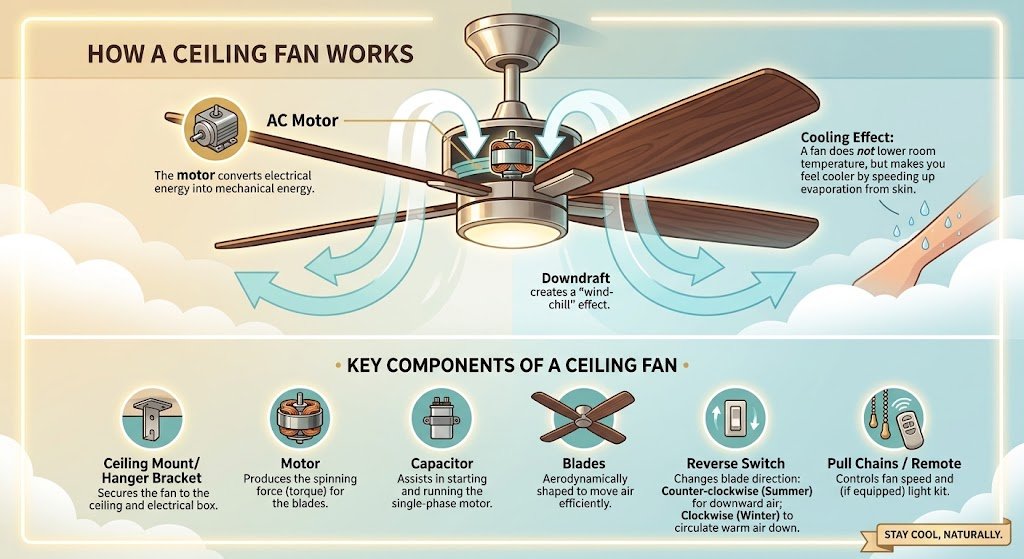
A ceiling fan is an electrical appliance installed overhead to circulate air throughout a room. Its motor rotates the blades, creating airflow that helps people feel cooler by encouraging moisture to evaporate from their skin.
Unlike an air conditioner, a ceiling fan does not normally lower the actual room temperature. Instead, it improves personal comfort by moving air around the space. This makes it useful in bedrooms, living rooms, home offices, dining areas, and covered outdoor spaces when the selected model is rated for that location.
Most models include a motor, blades, a mounting system, and speed controls. Some also feature lights, remote controls, reversible motor settings, or smart-home connectivity.
Blade size, motor quality, room dimensions, and installation height all affect performance. A properly selected fan can provide comfortable airflow without needing to operate at its highest speed all the time.
When shopping, look beyond appearance. Check airflow ratings, noise levels, energy consumption, and manufacturer specifications to determine whether a particular model suits your needs.
2. What Are the Best Types of Ceiling Fans?
Different fan designs offer different combinations of airflow, appearance, and convenience. Understanding the main options can make your purchasing decision easier.
Traditional Ceiling Fans
Traditional models feature familiar blade designs and straightforward controls. They are often available in neutral finishes that work well with classic or simple interiors.
These fans can be suitable for bedrooms, kitchens, living rooms, and other everyday spaces. Their practical design makes them a useful choice for homeowners who prioritize reliable airflow over decorative details.

Modern Ceiling Fans
Modern models often feature streamlined blades, contemporary finishes, and advanced motor technology. Some include integrated lighting, remote controls, adjustable color temperatures, and smart-home features.
Before choosing one, compare the available functions rather than assuming that an expensive design will automatically deliver better airflow.
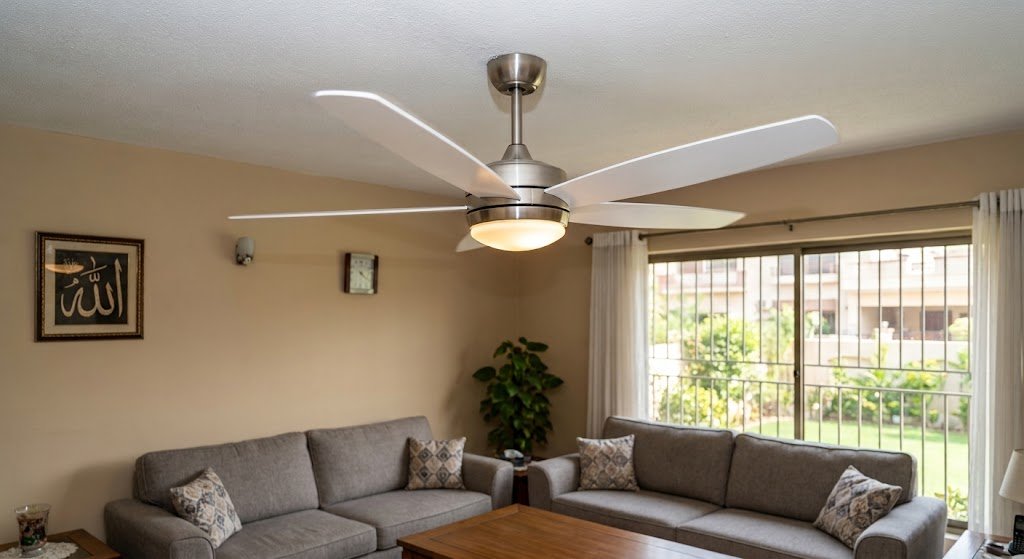
4 Blade Ceiling Fan
A 4 blade ceiling fan features four blades arranged around its motor. Its balanced appearance can complement modern, traditional, or minimalist interiors.
However, the number of blades alone does not determine how much air a fan moves. Blade pitch, diameter, motor performance, and overall design also influence airflow.
Some four-blade models prioritize quiet operation and visual appeal, while others are designed for everyday cooling. Compare the manufacturer’s airflow and noise specifications before making a decision.
Enclosed Ceiling Fan
An enclosed ceiling fan places its blades inside a surrounding housing or cage. This design can create a compact, distinctive appearance and may be useful in rooms where a traditional exposed-blade style is not preferred.
These models are sometimes selected for children’s rooms or smaller spaces. However, an enclosed design should not automatically be considered completely safe for every environment.
Check the manufacturer’s safety instructions, installation requirements, and suitability for the intended room before purchasing.
3. Why Choose a Ceiling Fan with a Light?
Combining lighting and airflow can be a convenient way to use overhead space efficiently. Instead of installing a separate fan and ceiling light, you can select a model that performs both functions.
This arrangement can work particularly well in bedrooms, guest rooms, apartments, and smaller living spaces. The right design can also become an attractive part of your interior decoration.

Ceiling Fan Lamp
A ceiling fan lamp combines a fan with an integrated light or lamp assembly. Depending on the model, it may use built-in LEDs or replaceable light bulbs.
Integrated LED options can provide efficient lighting and a clean appearance. Models with replaceable bulbs may offer more flexibility when a bulb eventually needs replacement.
Before buying, check whether the light is dimmable, whether bulbs are replaceable, and whether the brightness suits your room.
Ceiling Fan with Bright Light
A ceiling fan with bright light can be useful in areas where clear visibility matters, such as kitchens, study rooms, and multipurpose living spaces.
To select the right model, check its brightness in lumens rather than relying only on wattage. Lumens indicate the amount of light produced, while watts measure electrical power consumption.
Color temperature also matters. Warm lighting can create a relaxing atmosphere in bedrooms, whereas neutral or cooler lighting may be preferable for reading and detailed tasks.
For larger rooms, you may still need additional lamps or task lighting. A bright fan light does not necessarily replace every other light source.
Light Fixture on Ceiling Fan
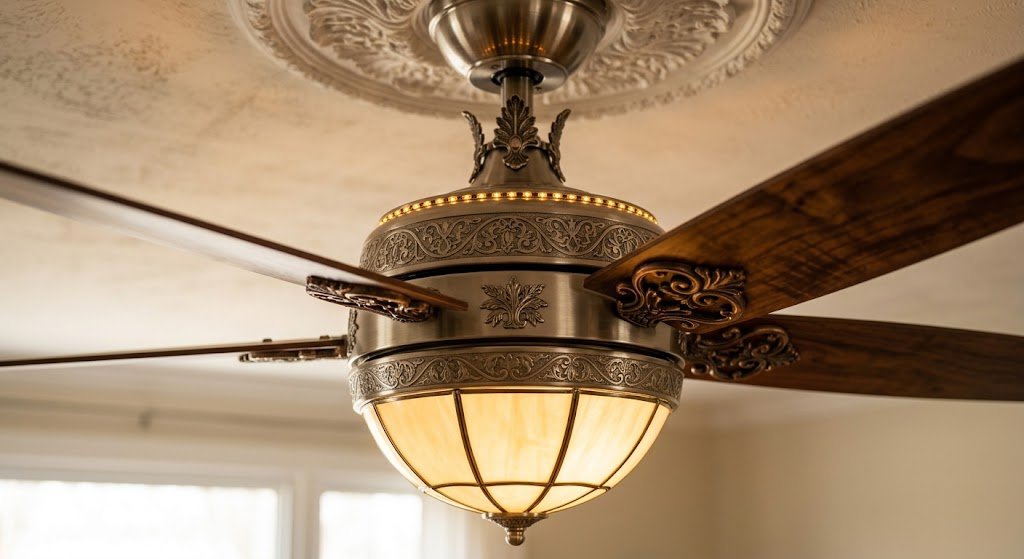
A light fixture on ceiling fan models can range from a simple enclosed LED panel to a decorative assembly with multiple bulbs or glass shades.
Integrated fixtures often create a streamlined look, while replaceable bulbs make it easier to change brightness or color temperature.
Consider how easy the fixture will be to clean and maintain. You should also check whether the manufacturer provides replacement parts if the light assembly stops working.
The best choice depends on your lighting preferences, room layout, and the amount of maintenance you are comfortable performing.
4. Is a Ceiling Hugger Fan Light Best for Low Ceilings?
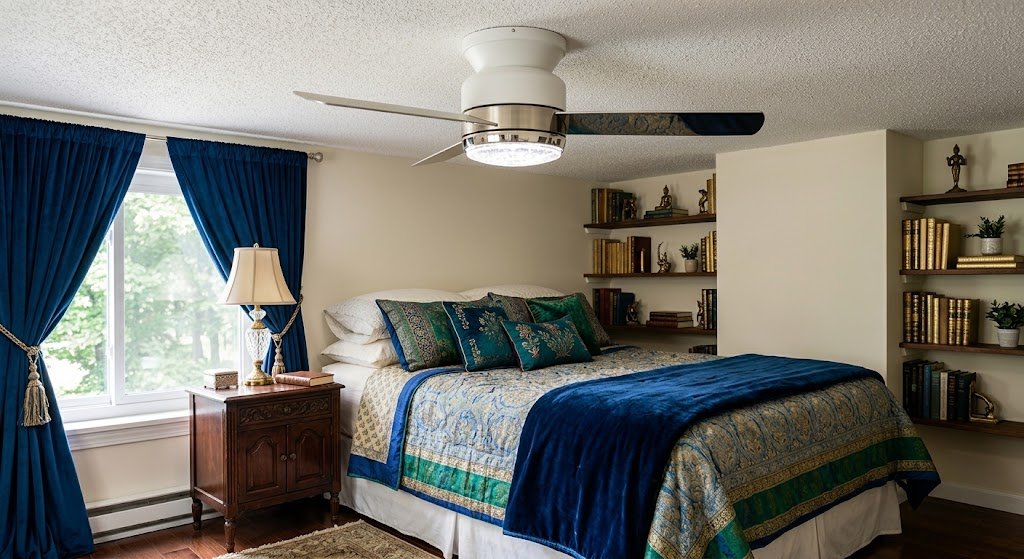
A ceiling hugger fan is designed to sit close to the ceiling rather than hanging from a long downrod. This configuration can be useful in rooms with limited vertical clearance.
A ceiling hugger fan light combines this compact mounting style with an overhead light. It may be suitable for smaller bedrooms, apartments, and other spaces where a hanging fixture would take up too much vertical room.
However, not every low-profile fan is suitable for every low ceiling. The distance between the floor and the fan blades must remain within the manufacturer’s recommended clearance requirements.
You should also consider the room’s dimensions, furniture arrangement, and lighting needs. A compact fan with a suitable light can help maintain an open appearance without sacrificing everyday functionality.
Before installation, check the product specifications and local electrical requirements. If you are unsure whether your ceiling can safely support the fan, consult a qualified electrician.
5. What Is a Flush Mount Ceiling Fan with Remote?
A flush mount ceiling fan with remote is designed to sit close to the ceiling and includes a handheld remote control.
This combination offers two practical benefits. The compact mounting arrangement can suit rooms with limited ceiling height, while the remote allows you to adjust settings without reaching a wall switch.
Depending on the model, the remote may control fan speed, light brightness, color temperature, or a timer. Some advanced models also support smart-home systems.
Not every remote-controlled fan includes the same features, so review the product specifications carefully.
A flush-mount design is especially useful when a long downrod would create insufficient clearance. Nevertheless, you should verify the manufacturer’s recommended installation height and blade clearance before buying.
Consider the remote’s battery requirements, replacement availability, and whether the fan can also be operated using a wall control. These small details can make everyday use more convenient.

6. Can a Fan Ceiling Chandelier Improve Your Home’s Style?
A fan ceiling chandelier combines decorative lighting with a fan, creating a fixture intended to provide both visual appeal and airflow.
Some designs feature crystal-like elements, decorative shades, or concealed blades. Others use contemporary shapes that blend into modern interiors.
These fixtures can suit dining rooms, bedrooms, and stylish living areas where appearance matters as much as everyday functionality.
However, decorative features should not be your only consideration. A beautiful fixture may not provide enough airflow for a large room, and its light output may not be sufficient for reading or detailed work.
Check the fan’s airflow rating, motor noise, light output, dimensions, and installation requirements before making a purchase.
Also consider ceiling height. Larger decorative fixtures can occupy more vertical space than expected, particularly when they include hanging elements.
The ideal model should complement your interior while providing the practical features you need.
7. How to Choose the Right Ceiling Fan for Your Room
Choosing a fan becomes easier when you evaluate the room and your daily requirements before comparing products.
Consider Room Size
The fan’s diameter and airflow capacity should match the size of the room. A small model may not circulate air effectively in a large living room, while an oversized model may look disproportionate in a compact bedroom.
Check manufacturer recommendations for room dimensions and airflow ratings before purchasing.
Check Ceiling Height
Ceiling height affects both comfort and safety. Low ceilings may require a flush-mount design, while higher ceilings may accommodate a properly sized downrod.

Always follow the manufacturer’s minimum clearance requirements and applicable building codes.
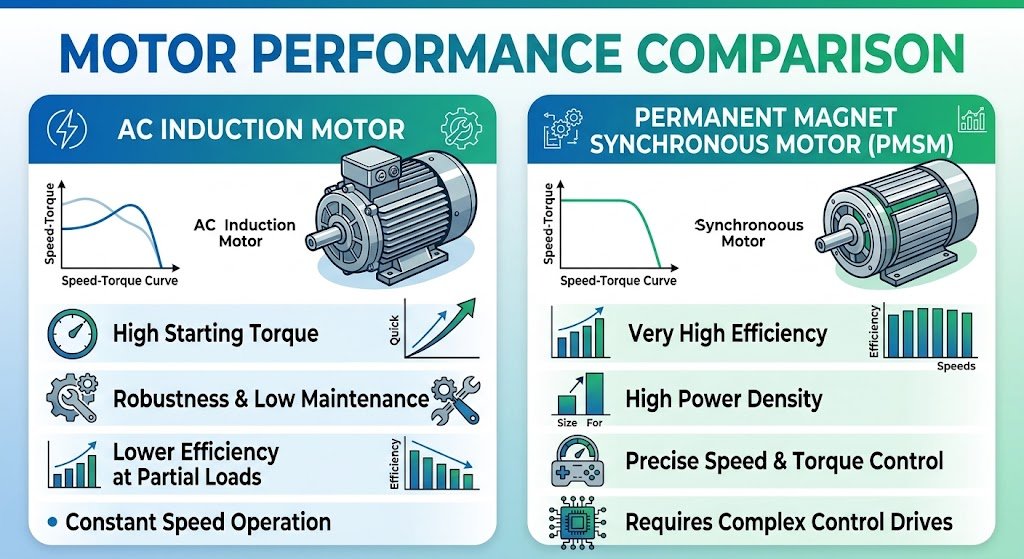
Compare Motor Performance
A quality motor can contribute to smooth operation, consistent airflow, and reasonable energy consumption.
Look for clearly stated airflow ratings, energy information, and noise specifications. If you are buying a fan for a bedroom, quiet operation may be particularly important.
Choose Suitable Lighting
If you need a fan with a light, compare brightness, color temperature, dimming options, and bulb replacement requirements.
A model with adjustable lighting may offer more flexibility than one with a fixed brightness level.
Look for Convenient Features
Remote controls, reversible motor settings, timers, and smart-home compatibility can improve convenience.
However, avoid paying extra for features you are unlikely to use. Focus on the combination of airflow, lighting, durability, and ease of operation that best suits your household.
8. How to Install and Maintain a Ceiling Fan Safely
Correct installation is essential for safe operation and dependable performance. A ceiling fan must be attached to an electrical box or support system specifically rated for the fan’s weight and operating forces.
An ordinary light-fixture box may not provide adequate support. Follow the manufacturer’s installation instructions and local electrical requirements.
If you are unfamiliar with electrical wiring, hire a qualified electrician instead of attempting a complicated installation yourself.
Regular maintenance can also help keep your fan operating smoothly.
Clean the blades: Dust can accumulate on the blades and affect appearance. Switch off the power before cleaning and follow the manufacturer’s instructions.
Check for wobbling: Excessive movement may indicate an imbalance, loose fittings, or an installation problem. Stop using the fan if you notice unusual movement until the issue has been inspected.
Listen for unusual sounds: New clicking, grinding, or persistent rattling may indicate a mechanical problem.
Inspect the light fixture: If your fan includes a light, check for loose shades or damaged components after switching off the power.
Follow service recommendations: Do not open the motor housing or attempt electrical repairs unless you are qualified to do so.
These simple precautions can help protect your household and support long-term performance.

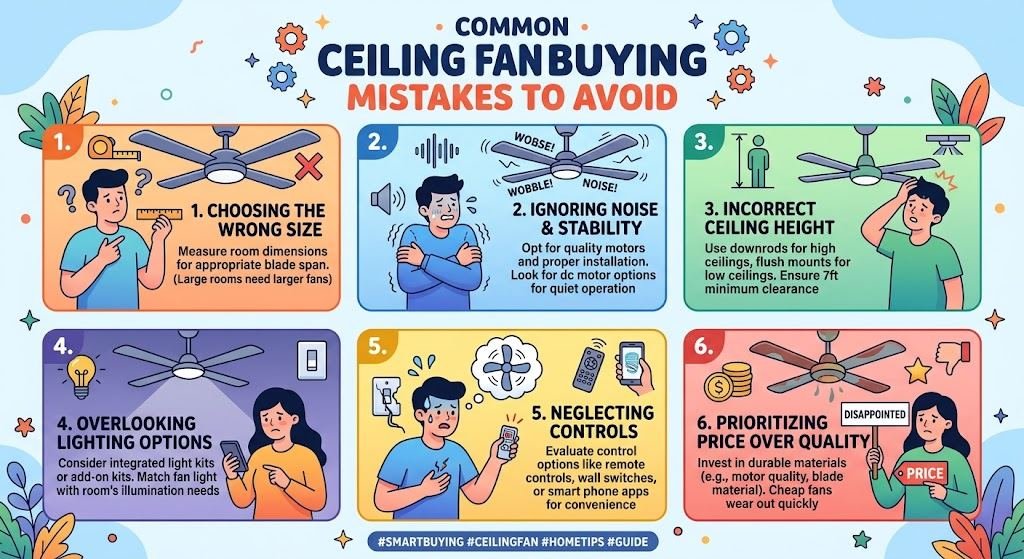
9. Common Ceiling Fan Buying Mistakes to Avoid
Even an attractive model can disappoint if it does not match your room or requirements. Avoid these common mistakes when comparing products.
Choosing the wrong size: Always consider room dimensions and recommended airflow rather than selecting a fan based on appearance alone.
Ignoring ceiling clearance: A fan that hangs too low may be unsuitable for your room. Check the installation measurements before ordering.
Focusing only on blade count: A four-blade design is not automatically more powerful than a three-blade model. Motor quality, blade pitch, and overall design matter too.
Overlooking lighting requirements: A built-in light may not provide enough brightness for your activities. Check the lumen rating and consider additional lighting where necessary.
Buying unnecessary features: Smart controls and decorative finishes can be useful, but they should not replace essential performance and safety considerations.
Ignoring maintenance and warranty: Review the warranty terms, replacement-part availability, and cleaning instructions before purchasing.
Taking time to compare these factors can help you choose a product that remains useful long after installation.
Frequently Asked Questions About Ceiling Fans
1. How do I choose the best ceiling fan for my room?
Consider room size, ceiling height, airflow ratings, motor noise, energy consumption, and lighting requirements. Compare these specifications with the manufacturer’s recommendations.
2. Is a 4 blade ceiling fan better than a 3 blade model?
Not necessarily. Both designs can perform well. Airflow depends on factors such as blade diameter, pitch, motor performance, and the fan’s overall design.
3. Does a ceiling fan with a light provide enough brightness?
It depends on the room size, lumen output, and intended activity. Some rooms may require additional lamps or task lighting.
4. What is the difference between a flush-mount fan and a ceiling hugger fan?
Both terms commonly describe fans installed close to the ceiling. Exact terminology can vary by manufacturer, so compare the mounting design and clearance specifications.
5. Is an enclosed ceiling fan suitable for every room?
No. Suitability depends on the model’s design, airflow, installation requirements, and intended environment. Always follow the manufacturer’s guidance.
6. Can I install a remote-controlled ceiling fan on a low ceiling?
Yes, if the selected model is designed for the available ceiling height and can maintain the required blade clearance. A flush-mount model may be a suitable option.
Conclusion
Choosing the right ceiling fan involves more than selecting an attractive design. You should consider room size, airflow, ceiling height, motor performance, lighting quality, and installation requirements before making a decision.
Options such as a four-blade model, enclosed design, ceiling hugger fan light, or flush-mount fan with remote offer different benefits depending on your space and preferences. Decorative models can also combine useful airflow with attractive lighting.
Compare product specifications carefully, prioritize safe installation, and choose features that support your daily routine. With the right balance of performance, comfort, and style, you can find a fan that works well for your home.