
The Internet of Things (IoT) has changed how devices communicate, collect information, and perform everyday tasks. From smart lights and security cameras to connected cars and industrial machines, many devices can now connect to the internet and share data.
But these devices need more than an internet connection to work together. They need a reliable network that allows them to communicate, send information, receive instructions, and respond to changing conditions.
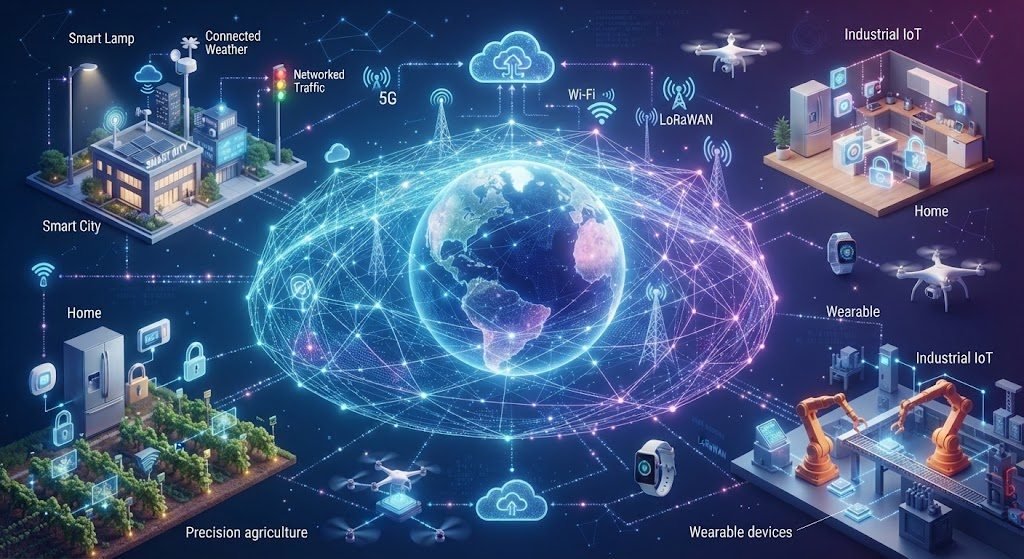
So, what is an IoT network and how does it actually work? An IoT network connects smart devices, sensors, gateways, software, and other technologies so they can exchange data and perform useful tasks. These networks are now used in homes, businesses, healthcare, agriculture, manufacturing, transportation, and smart cities.
In this guide, we will explore how IoT networks work, their main components, common technologies, benefits, security challenges, and real-world applications.
What Is an IoT Network?
An IoT network is a communication system that connects internet-enabled devices and sensors so they can collect, exchange, and process data. These connected devices can communicate with other devices, cloud services, applications, or users.
For example, imagine a smart home with a temperature sensor, smart thermostat, smartphone, and air conditioner. The temperature sensor can collect information about the room. The network sends that information to the appropriate system, which can then adjust the thermostat automatically.
Unlike a traditional network that mainly connects computers, phones, and servers, an IoT network can connect a much larger variety of physical objects. These objects may include appliances, vehicles, machines, wearable devices, cameras, and industrial equipment.
The main purpose is to make connected devices more useful through communication, monitoring, automation, and data analysis.
How Does an IoT Network Work?
Understanding how these networks operate becomes easier when we break the process into several steps.
1. Devices Collect Data
The process usually starts with an IoT device or sensor. Sensors can measure things such as temperature, movement, pressure, humidity, location, light, or energy consumption.
For example, a smart agricultural sensor can measure soil moisture. A fitness tracker can collect information about physical activity, while a smart security camera can detect movement.
2. Devices Connect to a Network
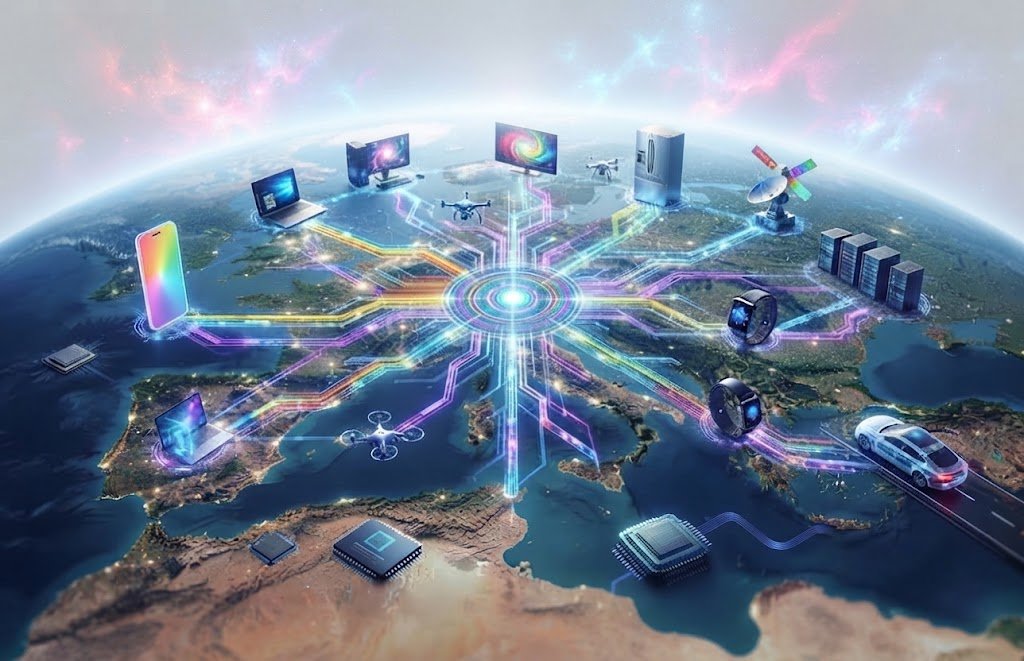
After collecting information, the device needs a way to transmit it. Depending on the application, it may use Wi-Fi, Bluetooth, Zigbee, cellular networks, Ethernet, or another communication technology.
The selected connection depends on factors such as range, speed, power consumption, cost, and the environment in which the device operates.
3. Data Is Transmitted
The collected information travels through the network to another device, gateway, local computer, or cloud service.
A gateway can be particularly useful when many sensors need to communicate with a central system. It can collect information from devices and forward it to the appropriate destination.
4. Data Is Processed
Once the data reaches the processing system, it can be analyzed to identify useful information. Processing may happen in the cloud, on a local server, or through edge computing.
For instance, if a temperature sensor detects that a room is too warm, the system can analyze that information and determine whether the air conditioner should be turned on.
5. The System Takes Action
The final step is often an action or notification. The system may automatically control another device, send an alert, display information on a dashboard, or store the data for future analysis.
This ability to collect information and respond automatically is one of the most useful features of IoT technology.
Key Components of an IoT Network
Several components work together to create a functional IoT environment.
IoT Devices and Sensors
These are the physical objects that collect information or perform actions. Examples include smart thermostats, cameras, wearable devices, industrial machines, smart locks, and environmental sensors.
Some devices only collect information, while others can both collect data and respond to commands.

Network Connectivity
Connectivity allows devices to communicate. Common options include Wi-Fi, Bluetooth, Zigbee, Ethernet, cellular networks, and low-power wide-area networks.
Choosing the right connection is important because different applications have different requirements.
IoT Gateway
An IoT gateway acts as a communication point between connected devices and other systems. It can collect information from multiple devices, filter data, provide protocol conversion, and help manage communication.
Gateways can also provide an additional layer of security in some IoT environments.
IoT Platform
An IoT platform provides software and services for managing connected devices and their data. Depending on the platform, it may support device management, data collection, analytics, monitoring, security, and application development.
For organizations operating many connected devices, an IoT platform can make the overall environment easier to manage.
Cloud and Edge Computing
Cloud computing provides centralized storage, processing, analytics, and remote access. Edge computing processes data closer to where it is generated.
Edge processing can be useful when an application needs quick responses or wants to reduce the amount of information sent to a remote cloud server.

Types of IoT Networks
IoT networks can be found in many environments, and their design depends on the purpose of the connected system.
Home IoT Networks
Smart homes use connected lights, thermostats, cameras, locks, appliances, speakers, and sensors. These devices can communicate with each other and can often be controlled through smartphones or voice assistants.
Industrial IoT Networks
Factories use connected machines and sensors to monitor production, equipment performance, temperature, pressure, and other conditions. Industrial IoT can support automation and predictive maintenance.
Healthcare IoT Networks
Healthcare environments can use connected monitoring devices, wearable technology, smart equipment, and other systems to collect and manage information.

Agricultural IoT Networks
Farmers can use sensors to monitor soil moisture, weather conditions, crop environments, and irrigation systems. This can help them make more informed decisions about resources.
Smart City Networks
Smart cities can connect traffic systems, public lighting, environmental sensors, parking systems, waste management equipment, and other infrastructure.
Internet of Things in Smart Home Networks
The internet of things in smart home environments is one of the easiest ways to understand how connected devices can work together.
Consider a home with smart lights, a security camera, a smart door lock, a thermostat, and motion sensors. Each device can collect or receive information through the network.
For example, a motion sensor may detect movement near the entrance. The system could then turn on a smart light or send an alert to the homeowner. A smart thermostat could also adjust the temperature according to programmed settings or sensor information.
The benefit is not simply connecting individual devices. The real value comes from allowing those devices to communicate and automate tasks.

IoT Network Technologies and Connectivity
Different IoT applications require different communication technologies.
Wi-Fi is common in homes, offices, and other locations where reliable internet access is available.
Bluetooth is useful for short-range communication and low-power devices such as wearables and personal accessories.
Zigbee is designed for low-power wireless communication and is commonly associated with smart home devices.
Ethernet provides a wired connection and can be useful when reliability and consistent network performance are important.
Cellular networks can connect devices across larger geographical areas, making them useful for connected vehicles, tracking systems, and remote equipment.
LPWAN technologies are designed for applications that need long-range communication while using relatively little power.
5G can support high-speed connectivity and large numbers of connected devices, making it relevant to advanced industrial, transportation, and smart city applications.
What Is IoT Management Software?
When an organization has hundreds or thousands of connected devices, managing them manually becomes difficult. This is where IoT management software becomes important.
Such software can help organizations monitor devices, configure settings, track device status, manage updates, collect data, and identify potential problems.
For example, a company operating smart sensors across several facilities may use management software to see which devices are online, which need an update, and whether unusual activity has been detected.
Effective management can make an IoT environment easier to maintain and scale as more devices are added.

What Is INTER-IoT?
INTER-IoT refers to an approach focused on interoperability between different IoT systems and platforms.
Interoperability is important because IoT environments can contain devices from different manufacturers that use different technologies, communication methods, or data formats.
Without interoperability, these systems may have difficulty communicating with each other. INTER-IoT concepts aim to help different IoT systems work together more effectively.
For example, a smart building could have security devices, lighting systems, energy meters, and climate-control equipment from different providers. Interoperability can help these systems exchange information and support more coordinated operations.

Benefits of IoT Networks
IoT networks can provide several practical benefits across different industries.
Automation
Connected devices can perform tasks automatically based on sensor information, schedules, or predefined rules.
Real-Time Monitoring
Organizations can monitor equipment, environments, vehicles, and other systems in real time instead of relying only on manual inspections.
Better Efficiency
IoT systems can help businesses identify wasted energy, inefficient processes, equipment problems, and other areas that need improvement.
Remote Access
Many connected devices can be monitored and controlled remotely through applications or dashboards.
Data-Driven Decisions
Continuous data collection can provide useful insights that help businesses and individuals make better-informed decisions.
Predictive Maintenance
Sensors can monitor machines and identify unusual patterns that may indicate a developing problem. This can allow maintenance teams to investigate issues before a major failure occurs.
IoT Network Security and Challenges
Although connected networks provide many benefits, they also create important security and management challenges.
Security is one of the biggest concerns. Every connected device can potentially become a point of attack if it is poorly secured. Strong passwords, authentication, encryption, access controls, and regular software updates can help reduce risks.
Privacy is another consideration because IoT devices can collect large amounts of information. Organizations should carefully manage what data is collected, where it is stored, and who can access it.
Compatibility can also be difficult. Devices from different manufacturers may use different protocols and data formats.
Scalability is important as well. A network designed for ten devices may need a different management approach when it grows to thousands of devices.
Connectivity problems, power consumption, maintenance requirements, and data management can also create challenges.
Real-World Examples of IoT Networks
IoT networks are already used in many everyday and professional situations.
Smart homes connect appliances, lighting, security systems, and climate controls.

Smart factories use sensors and connected machines to monitor production and equipment.
Connected vehicles can collect information about location, performance, and driving conditions.
Agricultural systems can monitor soil, crops, weather, and irrigation.
Healthcare environments can use connected devices to collect and transmit health-related measurements.
Smart cities can connect traffic lights, public lighting, parking systems, environmental sensors, and other infrastructure.
These examples show that IoT networks are not limited to one industry. They can be adapted to many different environments.
Future of IoT Networks
The future of IoT networks is closely connected to advances in artificial intelligence, edge computing, connectivity, and automation.
AI can help IoT systems analyze large amounts of data and identify patterns. Edge computing can allow devices and local systems to process information closer to where it is generated.
Faster and more reliable connectivity can also support larger networks with more connected devices. At the same time, better interoperability can make it easier for different systems to communicate.
As these technologies develop, IoT networks may become more intelligent, automated, and integrated into everyday environments.
Frequently Asked Questions
What is an IoT network in simple words?
An IoT network connects smart devices and sensors so they can communicate, exchange data, and perform automated tasks.
What are the main components of an IoT network?
The main components include IoT devices, sensors, connectivity, gateways, an IoT platform, data processing systems, and applications.
What is an IoT platform?
An IoT platform is software that can help organizations connect, monitor, manage, and analyze data from IoT devices.
Is Wi-Fi an IoT network?
Wi-Fi itself is a wireless networking technology. It can be used as the connectivity method within an IoT network, but an IoT network usually includes devices, sensors, software, data processing, and other components as well.
What are some examples of IoT networks?
Smart home systems, connected vehicles, industrial monitoring systems, smart agriculture, healthcare devices, and smart city infrastructure are common examples.
Are IoT networks secure?
They can be secure when organizations use appropriate protections such as strong authentication, encryption, access controls, secure updates, and regular monitoring. However, security needs to be managed throughout the entire IoT environment.
Final Thoughts
An IoT network provides the communication foundation that allows connected devices to collect information, exchange data, and perform useful actions. From smart homes and connected vehicles to factories and smart cities, these networks are becoming an important part of modern technology.
The value of IoT comes from more than simply connecting devices. Reliable connectivity, data processing, device management, security, and interoperability all work together to create useful connected systems.
As AI, edge computing, and advanced connectivity continue to develop, IoT networks are likely to become even more capable and integrated into everyday life.