
Augmented reality (AR) is changing the way people interact with digital information in the real world. From smartphones and smart glasses to retail, healthcare, education, and manufacturing, AR can place digital content over a physical environment.
Behind these experiences is information that helps AR systems understand what users see and how digital objects should appear. This information is commonly described as Augmented Reality Data.
It can include location details, images, 3D models, environmental information, user interactions, device information, and other digital elements needed to create an interactive AR experience.
Understanding how this data works is important for businesses, developers, educators, and everyday users. It helps explain why some AR applications feel realistic, responsive, and useful while others may feel limited.
In this complete guide, we will explore what AR data means, how it works, its major uses, benefits, challenges, and what the future may bring.
What Is Augmented Reality Data?
Augmented Reality Data refers to the digital information used by an augmented reality system to create and manage interactive experiences in a real-world environment.
An AR application needs different types of information to understand the user’s surroundings and decide what digital content should appear on the screen.
For example, an AR shopping application may use product images, 3D models, measurements, camera information, and surface data to place a virtual product inside a room.
This information can come from cameras, sensors, GPS, databases, cloud platforms, mobile devices, and other digital sources.
Unlike virtual reality, which creates a completely digital environment, augmented reality adds digital elements to the physical world. The quality and accuracy of the underlying information can have a major effect on how natural the AR experience feels.
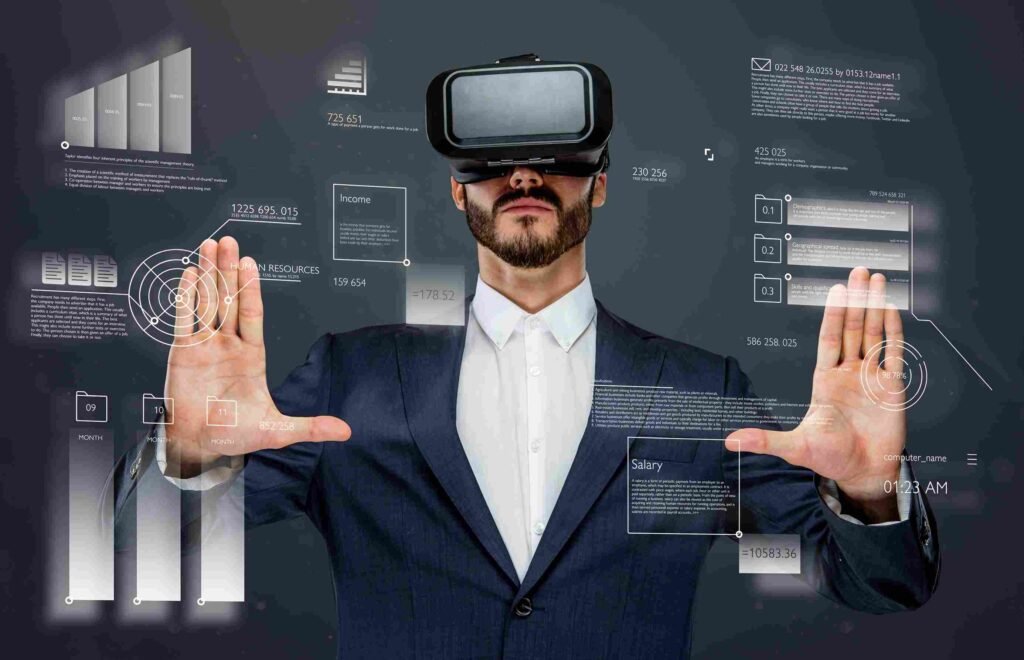
How Does Augmented Reality Data Work?
AR systems generally collect information from the user’s device and surrounding environment. The system then processes this information to determine where and how digital objects should be displayed.
Here is a simplified process:
- Data collection: The device collects information through cameras, sensors, GPS, microphones, or other hardware.
- Environment analysis: The AR application identifies surfaces, objects, movement, and other environmental details.
- Data processing: Software processes the collected information to understand the scene.
- Digital placement: Virtual objects or information are positioned within the real environment.
- User interaction: The user can move, rotate, select, or interact with digital elements.
- Continuous updates: The system keeps updating the experience as the user or device moves.
For example, when someone uses an AR furniture application, the camera can scan a room while the software identifies a suitable surface. A virtual chair can then be placed on the floor and adjusted as the camera moves.

Types of Data Used in Augmented Reality
Different AR applications require different kinds of information. Some of the most common types include:
Location Data
GPS and location information can help an AR application understand where the user is. This is useful for navigation, tourism, maps, and location-based experiences.
Visual Data
Cameras collect visual information about the surrounding environment. This can help an AR application identify surfaces, objects, shapes, and movement.
Spatial Data
Spatial information helps the system understand the position and dimensions of objects and surfaces. It is especially important when virtual objects need to appear realistically inside a physical environment.
3D Model Data
Many AR experiences depend on 3D models. These models can represent products, buildings, machinery, furniture, characters, or other digital objects.
Sensor Data
Mobile devices and AR glasses can use sensors such as accelerometers and gyroscopes to understand movement and orientation.

User Interaction Data
Touch, gestures, voice commands, eye movement, and other interactions can provide information about how users interact with an AR experience.
Major Uses of Augmented Reality Data
The practical applications of AR continue to expand across many industries.
1. Retail and Online Shopping
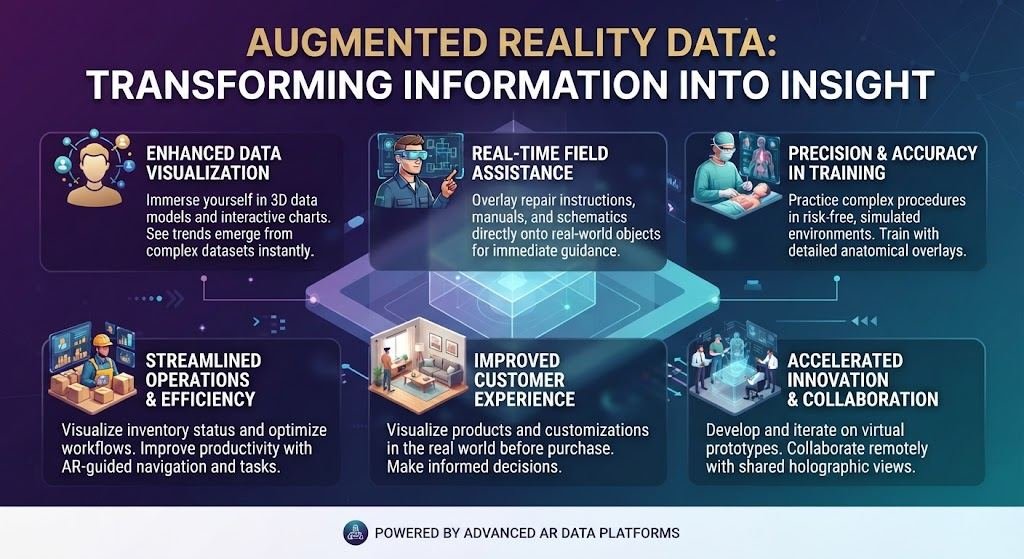
Retailers can use AR to let customers preview products before buying them. A customer might see how furniture looks inside a room or preview how a product could fit within a specific space.
Accurate data helps these experiences provide better size, position, color, and product information.

2. Healthcare
Healthcare professionals can use AR applications for training, visualization, medical education, and procedure support.
For example, students can study interactive 3D models instead of relying only on traditional images. In some specialized applications, digital information can also help professionals understand complex anatomical structures.
3. Education
AR can make learning more interactive by placing digital information directly into the student’s environment.
Students may explore 3D objects, historical scenes, scientific models, or geographic information. This can make abstract concepts easier to visualize.
4. Manufacturing
Manufacturers can use AR to support assembly, maintenance, inspection, and employee training.
Workers may view digital instructions over physical machinery, helping them identify components and follow procedures more easily.
5. Navigation and Travel
AR navigation can combine maps, location information, camera views, and directional instructions.
Instead of looking only at a traditional map, users can see directions displayed over their real surroundings.
6. Gaming and Entertainment
Games use AR to combine physical environments with digital characters, objects, and challenges.
The system needs accurate environmental and positional information so digital elements can respond appropriately to the user’s movement.

7. Architecture and Real Estate
Architects and property professionals can use AR to visualize buildings, rooms, furniture, and design changes.
A proposed design can be displayed within a physical location, helping people understand how a finished space might look.
Benefits of Augmented Reality Data
Well-organized and accurate information can provide several benefits for AR applications.
Better User Experiences
Accurate environmental and spatial information can help virtual objects appear more naturally within the real world.
More Interactive Learning
Educational applications can use 3D models and interactive information to create engaging learning experiences.
Improved Productivity
In workplaces, AR can provide instructions and information without requiring employees to constantly switch between physical equipment and separate manuals or screens.
Better Product Visualization
Customers can see digital versions of products before purchasing them, which can make online shopping more interactive.
Faster Access to Information
AR can display relevant information directly where users need it. This can be especially useful for navigation, maintenance, training, and technical support.
Augmented Reality Data and Artificial Intelligence
Artificial intelligence can make AR applications more intelligent and responsive. AI can help analyze images, recognize objects, understand environments, process language, and predict user actions.
For example, an AR application may use computer vision to recognize a particular machine. It could then display relevant instructions or maintenance information on top of that machine.
AI can also help AR systems understand context. Instead of simply displaying a digital object, an intelligent system may determine what information is most useful based on the user’s activity and surroundings.
This combination of AR and AI is likely to play an important role in future applications.
Challenges of Augmented Reality Data
Although AR has many applications, managing the required information can be challenging.
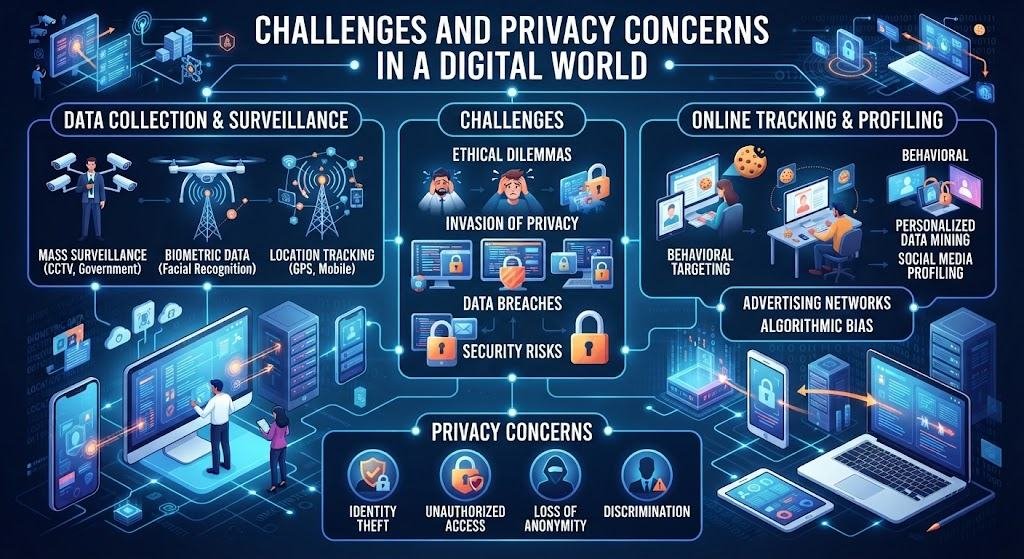
Privacy
AR applications may collect information through cameras, sensors, location services, and user interactions. Developers need to handle this information responsibly and clearly explain how it is used.
Data Accuracy
Incorrect or outdated information can reduce the quality of an AR experience. A virtual object that appears in the wrong position or has incorrect dimensions can make an application frustrating to use.
Device Limitations
Not every smartphone or AR device has the same processing power, sensors, camera quality, or battery capacity. These differences can affect AR performance.
Storage and Processing
Large 3D models, images, video, and environmental information can require significant storage and processing resources.
Security
AR systems may connect with cloud platforms, databases, and other services. Protecting these systems from unauthorized access is an important consideration.
How Businesses Can Use Augmented Reality
Businesses can use AR to improve customer experiences, employee training, marketing, product demonstrations, and technical support.
For example, a furniture company could create an AR application that lets customers preview products in their homes. A manufacturer could provide AR instructions for equipment maintenance. A real estate company could allow potential buyers to visualize a property before construction is complete.
The most useful approach depends on the business goal. AR should solve a practical problem rather than simply being used because the technology is new.
Future of Augmented Reality Data
The future of Augmented Reality Data is closely connected with improvements in artificial intelligence, computer vision, sensors, mobile devices, cloud computing, and AR glasses.
Future AR systems may become better at understanding physical environments in real time. Instead of simply placing digital objects on a screen, applications may understand rooms, objects, people, and activities with greater accuracy.
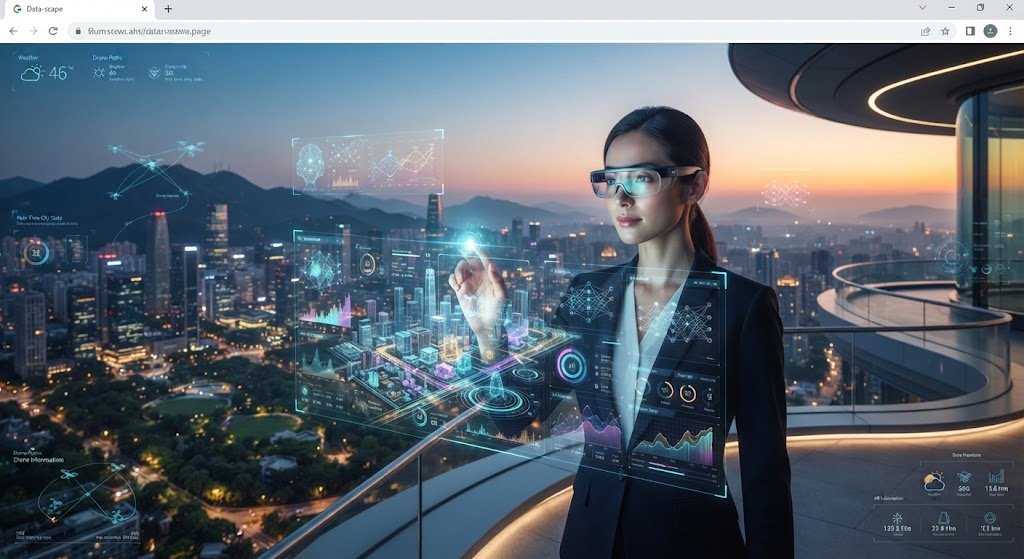
Wearable AR devices could also make digital information more accessible. Lightweight glasses may eventually provide directions, translations, product information, workplace instructions, and other useful information without requiring users to hold a smartphone.
Another important development is the growth of spatial computing. This approach focuses on interacting with digital content as though it exists within a physical space.
As these technologies improve, the quality, speed, privacy, and organization of information will become increasingly important.

Augmented Reality vs. Virtual Reality
Augmented reality and virtual reality are related but different technologies.
Augmented reality adds digital content to the user’s real-world surroundings. A smartphone camera showing a virtual piece of furniture inside a real room is an example.
Virtual reality creates a fully digital environment that replaces the user’s physical surroundings.
The main difference is the environment in which the digital experience takes place. AR combines real and digital elements, while VR generally creates an entirely virtual experience.
Tips for Creating Better AR Experiences
Developers and businesses should consider several factors when creating AR applications:
- Keep the user experience simple and easy to understand.
- Use accurate spatial and visual information.
- Optimize 3D models for performance.
- Protect user and location information.
- Test applications on different devices.
- Make digital objects easy to interact with.
- Provide useful information instead of unnecessary visual effects.
- Regularly update important information and content.
A successful AR application should be useful, responsive, and comfortable to use.
Final Thoughts
Augmented Reality Data plays an important role in creating useful and interactive augmented reality experiences. It can include location information, visual information, spatial details, 3D models, sensor readings, and user interaction data.
From retail and healthcare to education, manufacturing, navigation, and entertainment, AR is becoming useful in many different areas. When the underlying information is accurate and responsibly managed, AR applications can provide more realistic and practical experiences.
As artificial intelligence, computer vision, sensors, and wearable devices continue to improve, AR experiences are likely to become more responsive and connected to the world around us.
For businesses and developers, the key is not simply using AR technology. The goal should be to use reliable information and thoughtful design to solve real problems and provide genuine value to users.
Frequently Asked Questions
What is Augmented Reality Data?
It is the digital information used by AR systems to understand an environment and display interactive digital content. It can include location, visual, spatial, sensor, 3D model, and interaction information.
How is data used in augmented reality?
AR applications use information from cameras, sensors, GPS, databases, and other sources to understand the user’s surroundings and position digital content correctly.
Why is accurate data important for AR?
Accurate information helps digital objects appear in the correct location, size, and orientation. Poor-quality information can lead to an unrealistic or confusing AR experience.
What industries use augmented reality?
Retail, healthcare, education, manufacturing, gaming, tourism, architecture, real estate, and many other industries use AR for different purposes.
Is augmented reality the same as virtual reality?
No. AR adds digital content to the real world, while VR generally places the user inside a completely digital environment.
What is the future of augmented reality?
The technology is expected to develop alongside AI, computer vision, spatial computing, sensors, cloud computing, and wearable AR devices. Future applications may provide more natural and context-aware digital experiences.