
Artificial intelligence has changed the way people create, edit, and share digital content. Images, videos, and even voices can now be generated or changed with impressive realism. This technology has many useful applications, but it can also be misused. One name that became closely associated with this darker side of AI was Mr Deepfake.
Mr Deepfake was associated with a website known for distributing non-consensual AI-generated intimate imagery. The platform attracted significant attention because it demonstrated how quickly deepfake technology could be used to create harmful content involving real people. In May 2025, the site announced that it was shutting down permanently after losing a critical service provider and experiencing data loss.
Understanding this history is important because deepfakes are much bigger than one website. They raise questions about privacy, consent, digital literacy, online safety, and responsible artificial intelligence.
This guide explains what deepfakes are, what happened to Mr Deepfake, the risks of synthetic intimate content, and how people can become better at recognizing and responding to manipulated media.
Table of Contents
1. What Is Mr Deepfake?
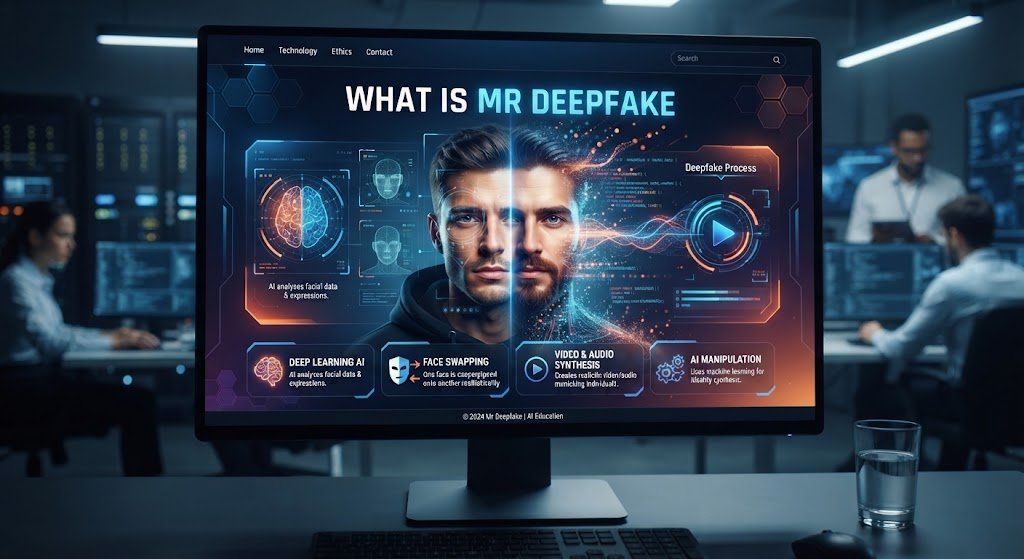
The term Mr Deepfake is commonly associated with MrDeepFakes, a website that became known for AI-generated non-consensual intimate imagery. Unlike ordinary photo editing, deepfake technology can use artificial intelligence to alter a person’s face or identity in an image or video.
The platform became part of a larger online ecosystem surrounding synthetic media. Its content and community attracted attention from journalists and researchers because real people’s likenesses were being used without their permission.
It is important to distinguish between the website and deepfake technology itself. Deepfake technology has legitimate applications in areas such as filmmaking, education, accessibility, entertainment, and visual effects. The problem arises when the technology is used deceptively, abusively, or without consent.
Reports in 2025 said that the original MrDeepFakes site was no longer operating and that its operators stated they would not relaunch it.
2. What Are Deepfakes and How Do They Work?
What Are Deepfakes?
If you have wondered what are deepfakes, the simple answer is that they are digitally manipulated or AI-generated media designed to make a person appear to say or do something that did not actually happen.
Deepfakes can involve:
- Photos
- Videos
- Audio recordings
- Facial expressions
- Voice cloning
- Synthetic characters
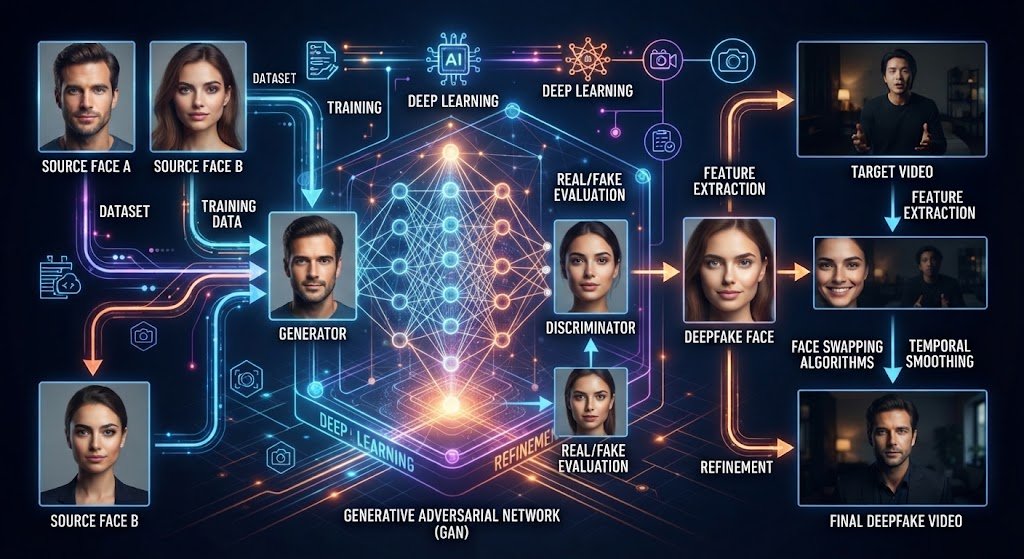
Modern AI systems can analyze patterns in faces, voices, and movements and then generate new content based on those patterns.
How Deepfake Technology Works
Deepfake systems can use machine learning models to study large amounts of visual or audio information. Depending on the technology, an AI model may learn facial features, expressions, voice patterns, or movement.
The result can be highly convincing, particularly when viewed briefly or without additional context. However, deepfakes can still contain clues such as unnatural lighting, strange facial movement, inconsistent audio, or unusual details.
The technology itself is not automatically harmful. Its impact depends heavily on how it is created, distributed, and used.
3. The Rise of Mr Deepfake and AI-Generated Content
The growth of generative AI made synthetic media increasingly accessible. What once required significant technical knowledge gradually became easier for ordinary internet users to encounter.
Mr Deepfake became a notable example of how this technology could be used to create non-consensual intimate material. Investigative reporting has described the site as a major hub for this type of content before its shutdown.
The broader issue is not limited to a single platform. Researchers and journalists have continued to document websites, social networks, and other online spaces where synthetic intimate imagery can spread.
This is why discussions about AI safety increasingly include consent, privacy, content moderation, and accountability.
4. What Happened to Mr Deepfake?
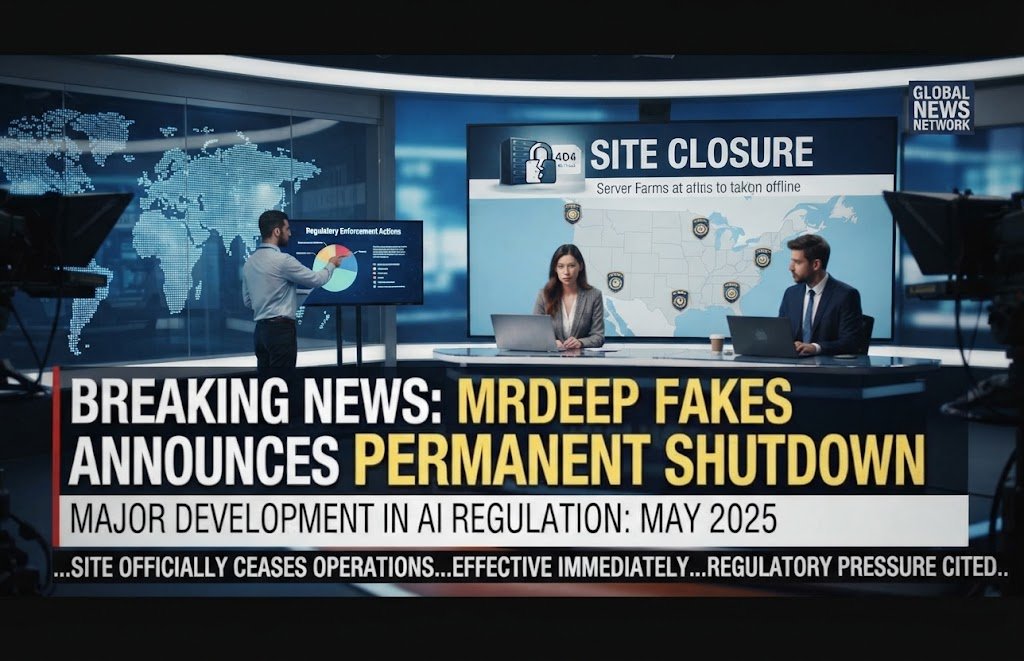
A major development occurred in May 2025 when MrDeepFakes announced that it was shutting down permanently.
According to reporting by 404 Media, a notice on the site said that a critical service provider had permanently terminated service and that data loss made continued operation impossible. The notice also stated that the site would not be relaunched. The exact reason the service provider terminated its relationship with the site was not publicly established in that report.
The shutdown became significant because it showed how important online infrastructure can be to websites distributing harmful material.
However, shutting down one website does not eliminate the wider problem. Deepfake tools and synthetic media can exist across many different platforms and services. In 2026, research and reporting continued to examine how infrastructure and search systems can contribute to the availability of non-consensual AI-generated imagery.
5. Celebrity Deep Fakes and Consent
Celebrity deep fakes have become a major part of public discussions about synthetic media. Well-known people can have thousands of publicly available photographs and videos online, which can make their likenesses easier to misuse.
There is an important difference between an obvious parody and deceptive or intimate material created without permission. A humorous fictional edit may be clearly presented as a joke, while a realistic manipulated video can mislead viewers or cause significant harm.
Being a public figure does not mean a person has automatically agreed to every possible use of their face or voice.
For this reason, consent should remain an important principle when discussing AI-generated media. Using someone’s identity in synthetic content can affect their reputation, privacy, employment, and personal life.
6. Deepfake NSFW Content: Major Risks
The term deepfake NSFW generally refers to synthetic content involving sexually explicit or otherwise adult material.
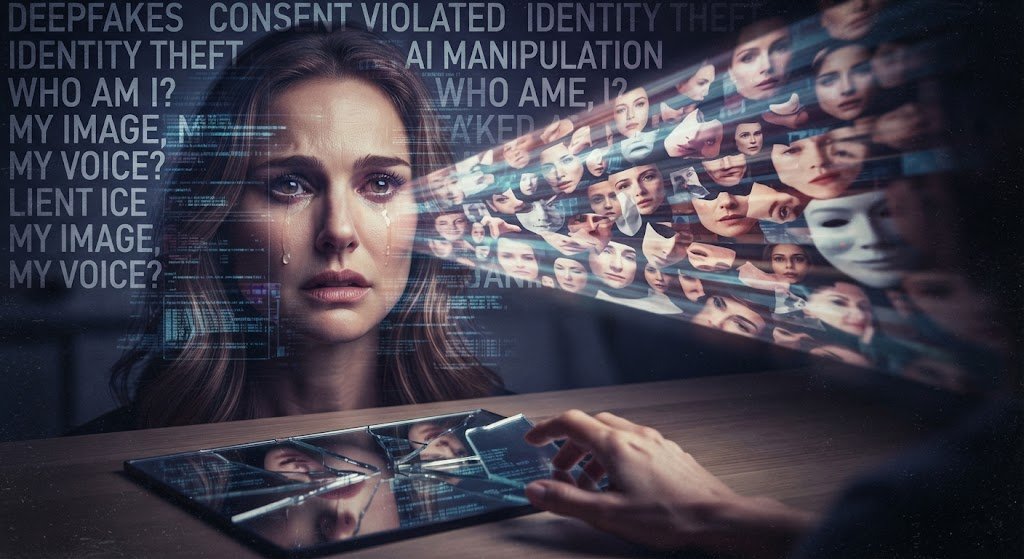
One of the most serious concerns is non-consensual intimate imagery. A person’s face or likeness may be placed into artificial content without their knowledge or permission. Even though the resulting material is fake, the consequences for the person represented can be very real.
Potential harms include:
- Privacy violations
- Harassment
- Reputation damage
- Workplace problems
- Social consequences
- Emotional distress
- Continued unwanted sharing
The important point is that technology does not remove the need for consent. AI-generated content can still cause serious harm when someone’s identity is used without permission.

7. Porndeepfakes and Non-Consensual Content
The search term porndeepfakes is often used to describe AI-generated explicit material involving manipulated identities.
From a digital-safety perspective, the key issue is not simply whether the material is real or artificial. The central concern is whether a person’s likeness was used without consent.
Victims may have difficulty controlling how quickly manipulated content spreads because digital files can be copied, reposted, and uploaded to different websites.
Research and reporting have also shown that victims can spend considerable time trying to locate and report unwanted synthetic content.
This makes prevention, responsible AI use, platform moderation, and effective reporting systems important parts of the wider solution.
8. What Is a Deepfake Porn Website?
A deepfakeporn website is generally a website that hosts, indexes, or distributes AI-generated explicit content involving manipulated identities.
Users should be particularly careful with unknown websites in this area. A suspicious website can create risks beyond the content itself, including:
- Phishing attempts
- Malicious downloads
- Fake buttons
- Tracking
- Unwanted advertisements
- Collection of personal information
People should never assume that a website is trustworthy simply because it appears in search results.
It is also important not to upload personal photographs, identification documents, private videos, or other sensitive information to unfamiliar AI services.

9. Digital Literacy and Deepfake Detection
Digital literacy deepfake awareness is becoming increasingly important because realistic synthetic media can influence what people believe and share online.
The first step is to avoid immediately trusting emotionally powerful content. A surprising video may look convincing while still being manipulated.
Check the Original Source
Find out where the image or video originally appeared. Anonymous accounts and reposted clips provide less context than established sources.
Compare Multiple Sources
If an important event appears in a video, check whether reputable news organizations or other independent sources are reporting the same event.
Watch for Visual Problems
Possible warning signs include:
- Unnatural facial movements
- Strange shadows
- Blurred facial edges
- Inconsistent lighting
- Unusual blinking
- Lip-sync problems
- Distorted objects or backgrounds

Listen Carefully
AI-generated voices may sometimes contain unusual pauses, pronunciation, tone, or background sounds.
No single clue proves that something is a deepfake. The best approach is to combine several signals with source verification and context.
10. What Does AllDeepfake Mean?
The term alldeepfake may appear in searches related to deepfake websites, communities, and synthetic media.
Readers should be careful not to treat every website or search result containing a deepfake-related keyword as trustworthy. Search terms can be used by websites for visibility even when their actual content does not match what users expect.
The safest approach is to check the website’s reputation, privacy practices, security, and purpose before interacting with it.
More importantly, deepfake technology should be understood as a broad category rather than as one particular website or service.
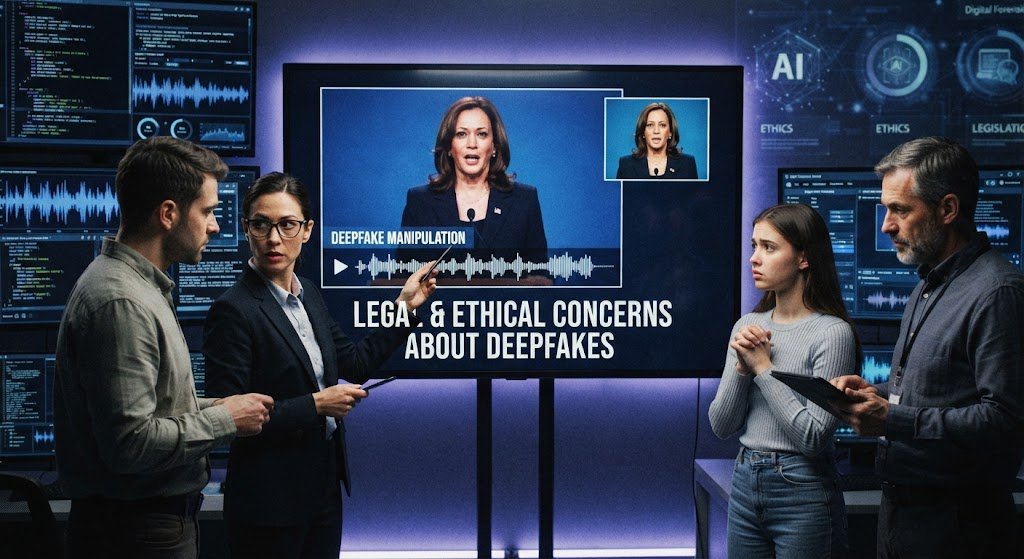
11. Legal and Ethical Concerns About Deepfakes
Deepfake laws vary between countries and can change as governments respond to advances in AI.
Depending on the circumstances and jurisdiction, harmful synthetic content can raise issues involving privacy, harassment, identity misuse, defamation, intellectual property, or non-consensual intimate imagery.
There is also an ethical question that exists even when a specific legal rule is unclear: Does the person depicted have consented to the use of their identity?
In the United States, for example, federal legislation addressing non-consensual intimate imagery and synthetic sexual content was enacted in 2025. The broader legal landscape continues to develop, while other countries have their own rules and procedures.
Because laws differ, anyone dealing with a serious incident should consider obtaining advice appropriate to their location.
12. What to Do If Someone Creates a Deepfake of You
Discovering a manipulated image or video of yourself can be upsetting. A practical response can help preserve evidence and reduce further spread.
1. Save Evidence
Record relevant URLs, screenshots, dates, usernames, and other details. Avoid downloading suspicious files simply to preserve evidence.
2. Report the Content
Use the platform’s privacy, harassment, or non-consensual intimate imagery reporting process where available.
3. Protect Your Accounts
Review account privacy settings and use strong, unique passwords. Enable multi-factor authentication where possible.
4. Seek Appropriate Help
Depending on the circumstances, legal professionals, law enforcement, trusted organizations, or platform support teams may be able to help.
5. Avoid Re-Sharing the Material
Sharing the content further can increase its visibility. When reporting it, provide only the information necessary for the relevant platform or authority to investigate.
13. How to Use AI Responsibly
AI can be a powerful creative and productivity tool when used responsibly.
Responsible use includes:
- Getting permission before using someone’s likeness
- Clearly labeling synthetic media
- Avoiding deceptive manipulation
- Respecting privacy
- Protecting personal information
- Avoiding non-consensual intimate content
- Checking AI-generated information before publishing it
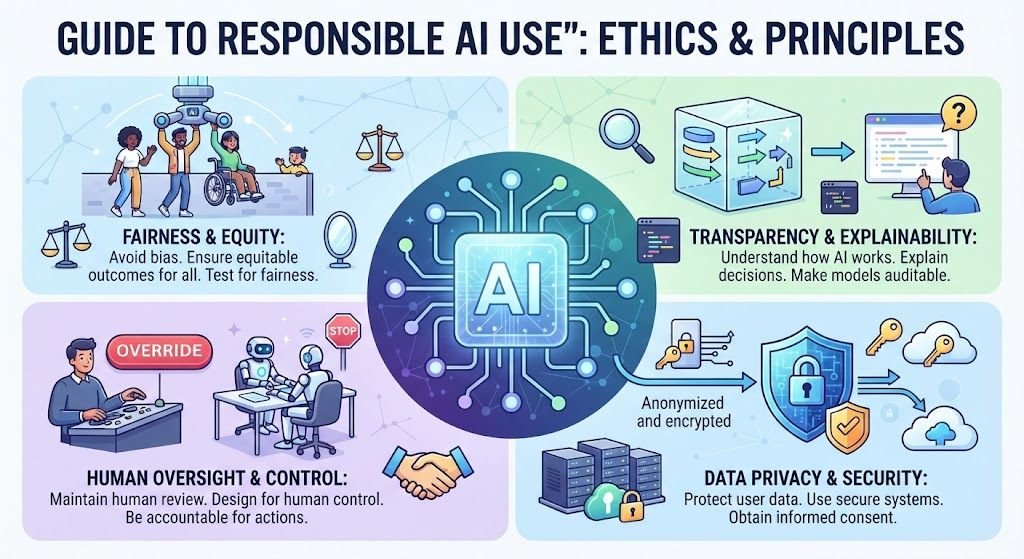
The goal should not be to reject AI technology. Instead, users should understand its capabilities and limitations and use it in ways that respect other people’s rights.
14. Frequently Asked Questions About Mr Deepfake
Is Mr Deepfake still active?
The original MrDeepFakes platform announced in May 2025 that it was shutting down permanently and would not relaunch.
What are deepfakes?
Deepfakes are AI-generated or digitally manipulated images, videos, or audio designed to make someone appear different from reality.
Why are deepfakes dangerous?
They can be used for misinformation, fraud, identity misuse, harassment, and non-consensual intimate imagery.
What are celebrity deep fakes?
They are manipulated or AI-generated media that use the likeness of celebrities or other public figures. Their use can raise serious questions about consent, privacy, and deception.
What is deepfake NSFW content?
It refers broadly to AI-generated adult or sexually explicit material involving manipulated identities. The major concern arises when someone is depicted without consent.
How can I identify a deepfake?
Check the original source, compare reliable reports, inspect facial and audio details, and consider whether the context makes sense. No single visual clue is always reliable.
What should I do if a deepfake of me appears online?
Preserve evidence, report the material through the relevant platform, protect your accounts, and consider professional or legal assistance when appropriate.
Conclusion
Mr Deepfake became an important example in the wider conversation about AI-generated media, online privacy, and non-consensual synthetic content. Although the original platform announced its permanent shutdown in 2025, the broader challenge has not disappeared. Deepfake tools and manipulated media continue to develop across the internet.
The best defense is a combination of digital literacy, careful source checking, strong privacy habits, and responsible AI use. People should think carefully before believing or sharing suspicious content and should respect consent when creating or using synthetic media.
AI itself is neither automatically good nor bad. Its impact depends on how people develop, use, distribute, and regulate it. Understanding that distinction can help internet users make safer and more informed decisions in an increasingly AI-driven digital world.